

Listen to this article
Estimated 4 minutes
The audio version of this article is generated by AI-based technology. Mispronunciations can occur. We are working with our partners to continually review and improve the results.
While the federal government is considering whether to list the Grays Bay road and port as a project of national interest to be fast-tracked, some hunters close to it remain strongly against it.
A new film called Kugluktuk Harvesters on the Grays Bay Road and Port was released this week by a Kugluktuk Angoniatit Association, a hunters and trappers organization responsible for managing wildlife near where the road will be built.
The film explores how elders and hunters closest to the project feel — one of the main concerns is the effect on caribou populations and the hunters who harvest them.
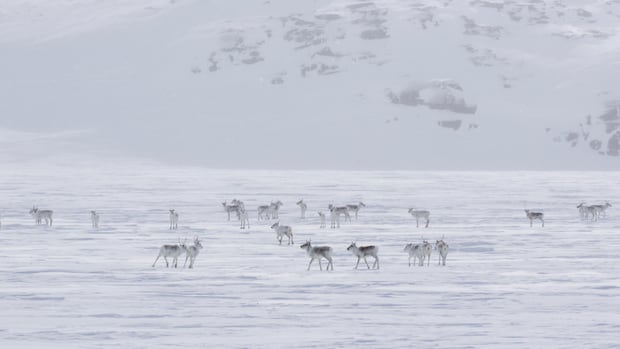
The proposed road would cut through the habitat of the Dolphin and Union caribou herd.
“It’s home, it hits my heart. And if my family or generations after us lose that animal, it’s a loss, and I’m sorry we didn’t do enough sooner,” said Allen Niptanatiak, the chair of the association.
He said it’s important for the HTO to make sure the point of view of hunters is heard.
Even though the Grays Bay project has been on the books for years, renewed federal interest in it is now driving concerns about the port and road’s environmental impact. Niptanatiak said the Ottawa needs to do more consultation with the HTO and people in Kugluktuk.
The Grays Bay project itself involves a 230-kilometre all-season road connecting Nunavut to the Northwest Territories and the Canadian highway system, a deepwater port on the Northwest Passage, close to Kugluktuk, and a roughly 1.8 kilometre-long airstrip.
 Allen Niptanatiak, the chair of the Hunters and Trappers Organization in Kugluktuk, said he worries about the impacts the road will have on caribou. (Submitted by Allen Niptanatiak)
The hunters and trappers organization have spoken for years about their fear over what the project will do to to Dolphin and Union caribou herd.
Niptanatiak said the herd has been in a state of decline over the past couple of years.
An abundance estimate report from the Government of Nunavut shows that in 1997 the herd had a population of over 30,000, but that number had dropped to around 4,000 by 2023.
The herd migrates between mainland Nunavut and its calving grounds on Victoria Island, travelling over sea ice.
Andrea Hanke is a researcher with Cloudberry Connections, a research and media company that helped produce the film.
Producers combined data from the HTO, the government of Nunavut, Calgary-based Kutz Research Group and Cloudberry Connections to find the hotspots for caribou harvesting.
Data came from a community-based monitoring project, harvest data from the government of Nunavut, and traditional mapping data.
They found that a main location used for harvesting is the land between Tree River and Wentzel River, where the road is going to be built.
“If the project does go forward it would mean that would mean a road and a port through a really important traditional harvesting ground for Inuit,” said Hanke.
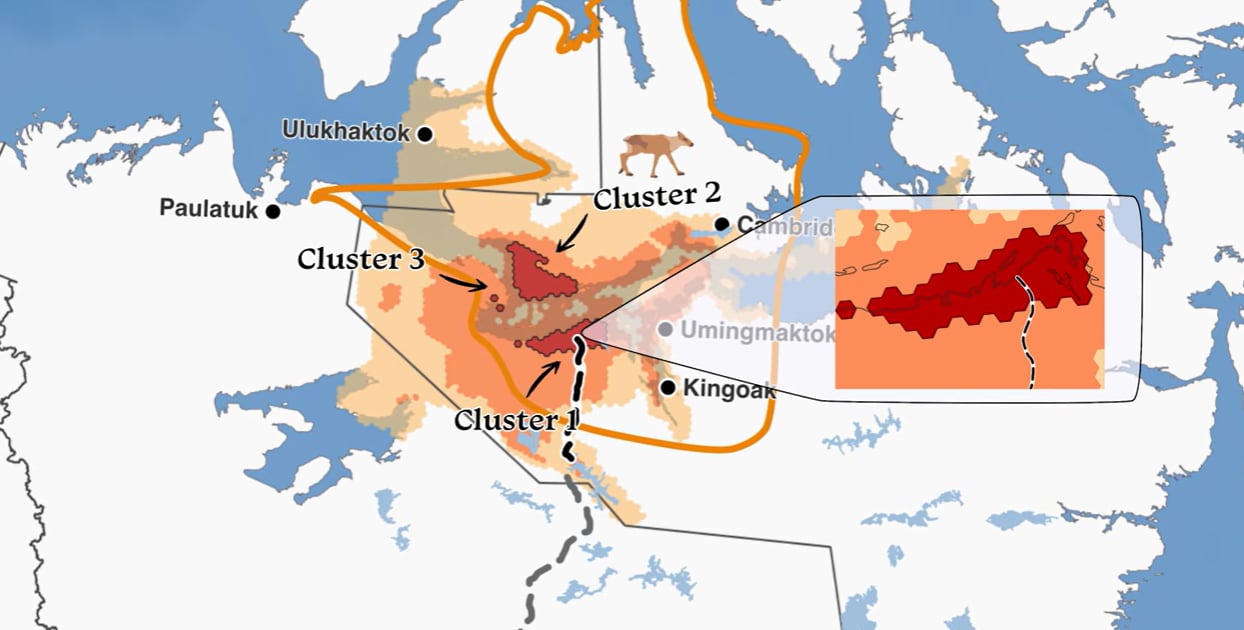 The hot spot shown where Dolphin and Union Caribou gather. The dotted line shows the road for the Grays Bay project. (Kugluktuk HTO)
The documentary calls for the Dolphin and Union Caribou to be listed as endangered under the federal Species At Risk act, which Hanke said would allow for there to be more habitat protection for the herd.
The project is currently undergoing a review with the territory’s regulatory body, the Nunavut Impact Review Board.
In a statement, the West Kitikmeot Resources Corp., the proponent spearheading the project, said company officials will view the film to understand the HTO’s concerns. The company said it expects the Nunavut Impact Review Board process will hear the same concerns.
A spokesperson for the federal Privy Council Office also said in an email that it’s currently getting ready to begin consultations with Indigenous groups on the Grays bay road and port project should be listed as a project of national interest.
Niptanatiak said government representatives have frequently consulted with the HTO but their voices haven’t been heard properly.
“The elders have always said that we need to have a voice, we need to be heard. And so we are just carrying that part out again,” he said.
He hopes people will walk away from the film with a better understanding of the concerns from the hunters and trappers as well as what the project is about, so they can make their own decision.
“It’s very important that the rest of the world knows what’s happening here.”