

Published on Jul. 12, 2026, 1:45 PM
Extreme heat has pushed onto the southern Prairies as other parts of the region continue to deal with a persistent, daily threat of severe weather
The Prairies have been the centre of much of the country’s severe weather in recent days, and is now the focus of the heat, as well, for the time being.
In fact, some all-time temperature and humidex records are at risk, in Canada and the U.S., with the extreme heat that has moved in. Meanwhile, Sunday will see the risk of severe weather pop up again, with different at-risk regions for the day and nighttime.
DON’T MISS: Why extreme heat is one of the world’s deadliest weather disasters
Stay aware of severe weather watches and warnings in your area, and heat alerts, especially if you have outdoor plans. Heed all warnings and stay hydrated.
Sunday storm threat shifts during the day and overnight
The severe thunderstorm threat rolls into Sunday with the same storm system sticking around.
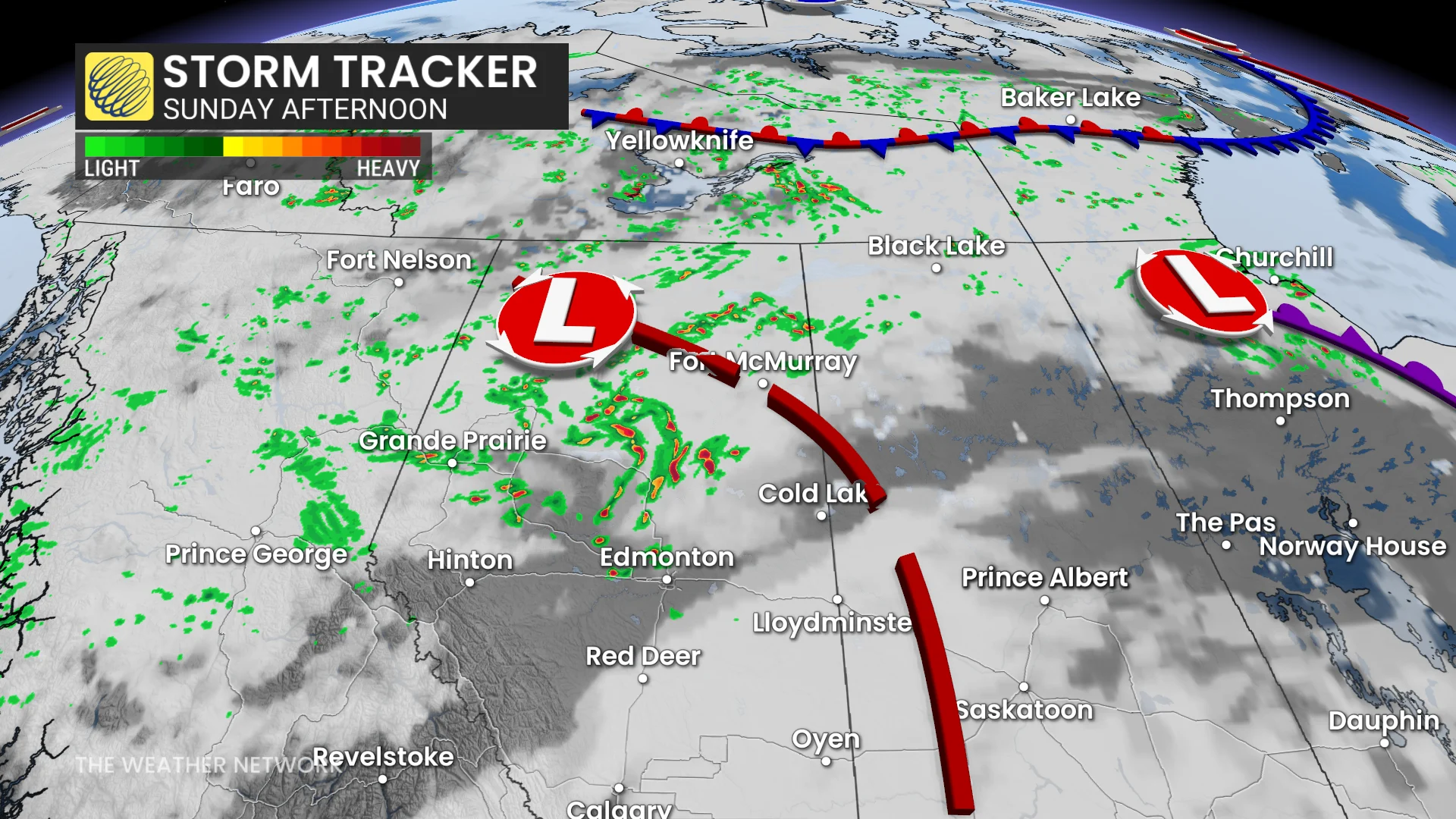
The strengthening jet stream overhead continues to pull energy and organization for potential storms.
Storms will develop into the afternoon and evening across central Alberta, with the Edmonton to Fort McMurray corridor being the area to watch most closely.
Slow-moving storms could bring heavy downpours and localized flooding to some areas, but once again hail and strong winds will be the primary threats.
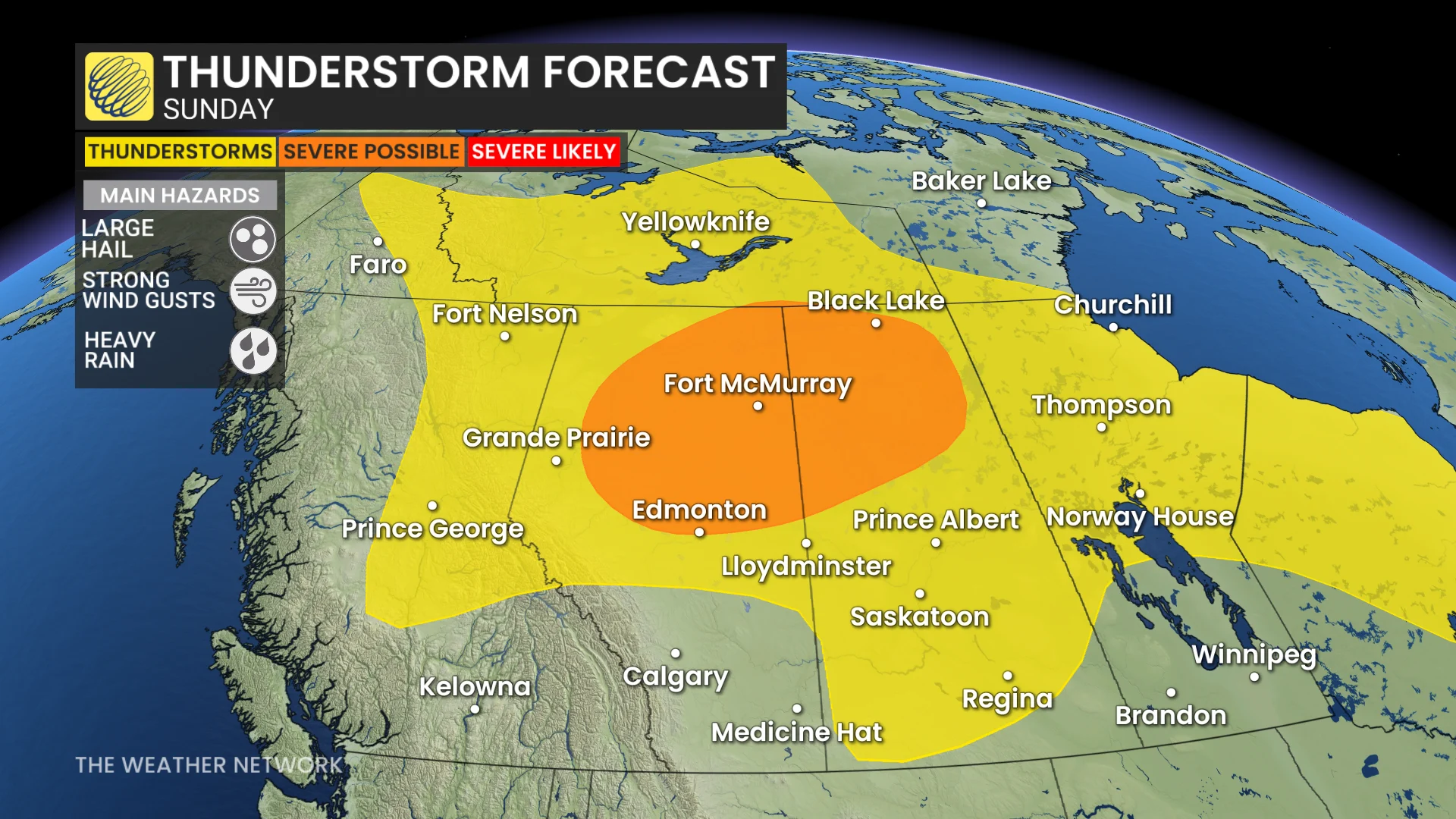
Farther south, a lid on the atmosphere is expected to keep storms at bay across the southern Prairies, but if the cap breaks, storms could fire up quickly.
The storm threat will shift south and east overnight, moving into Saskatoon and into the Interlake region of Manitoba–with severe possible in that swath.
Hail and strong winds look to be the primary hazards with those storms.
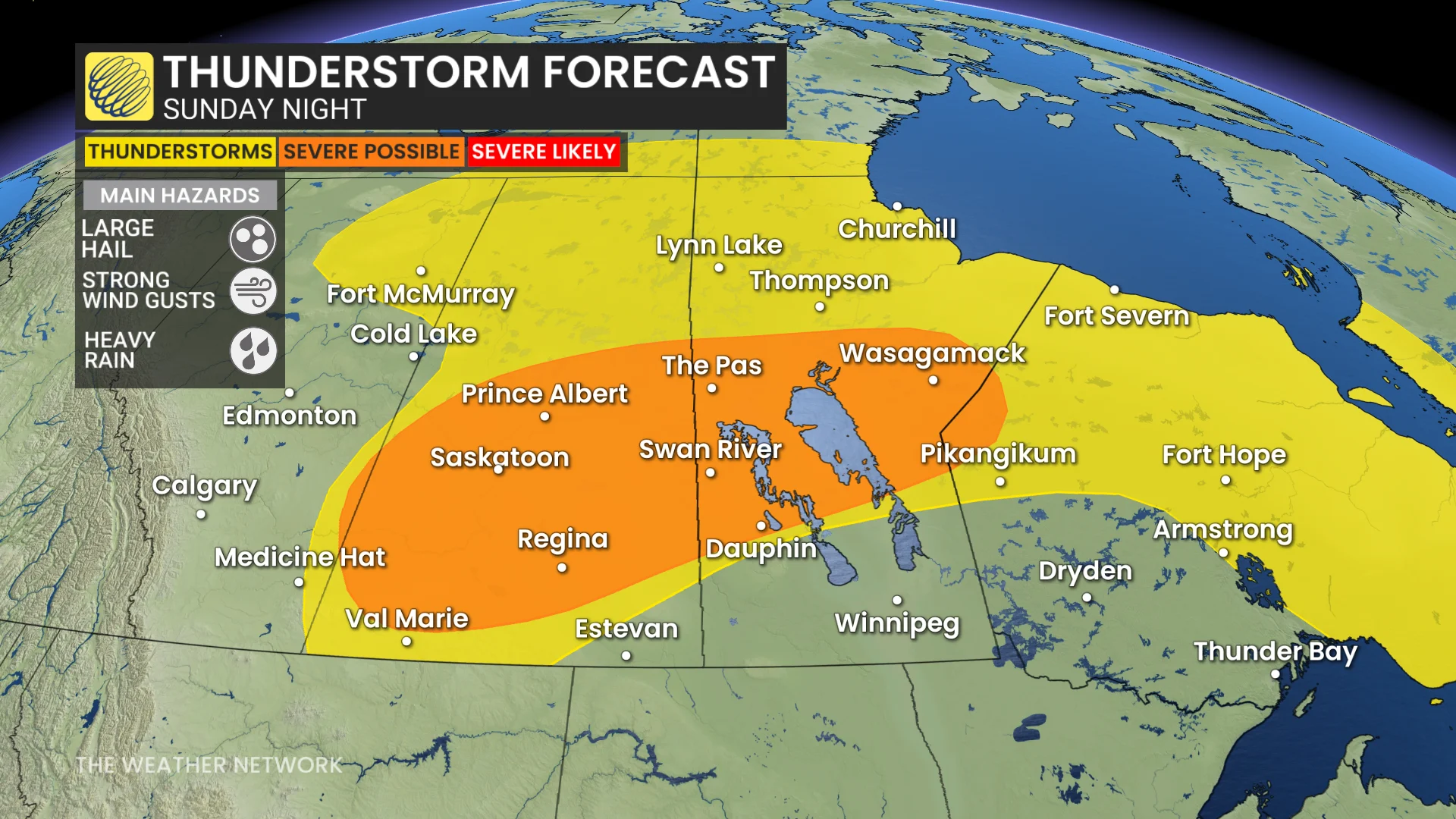
A separate batch of storms pushing north from the U.S. could bring a second round of severe weather overnight on parts of the Prairies.
Major heat building through the middle of July
We’re watching a significant ridge of high pressure, known as a heat dome, building over the north-central United States.
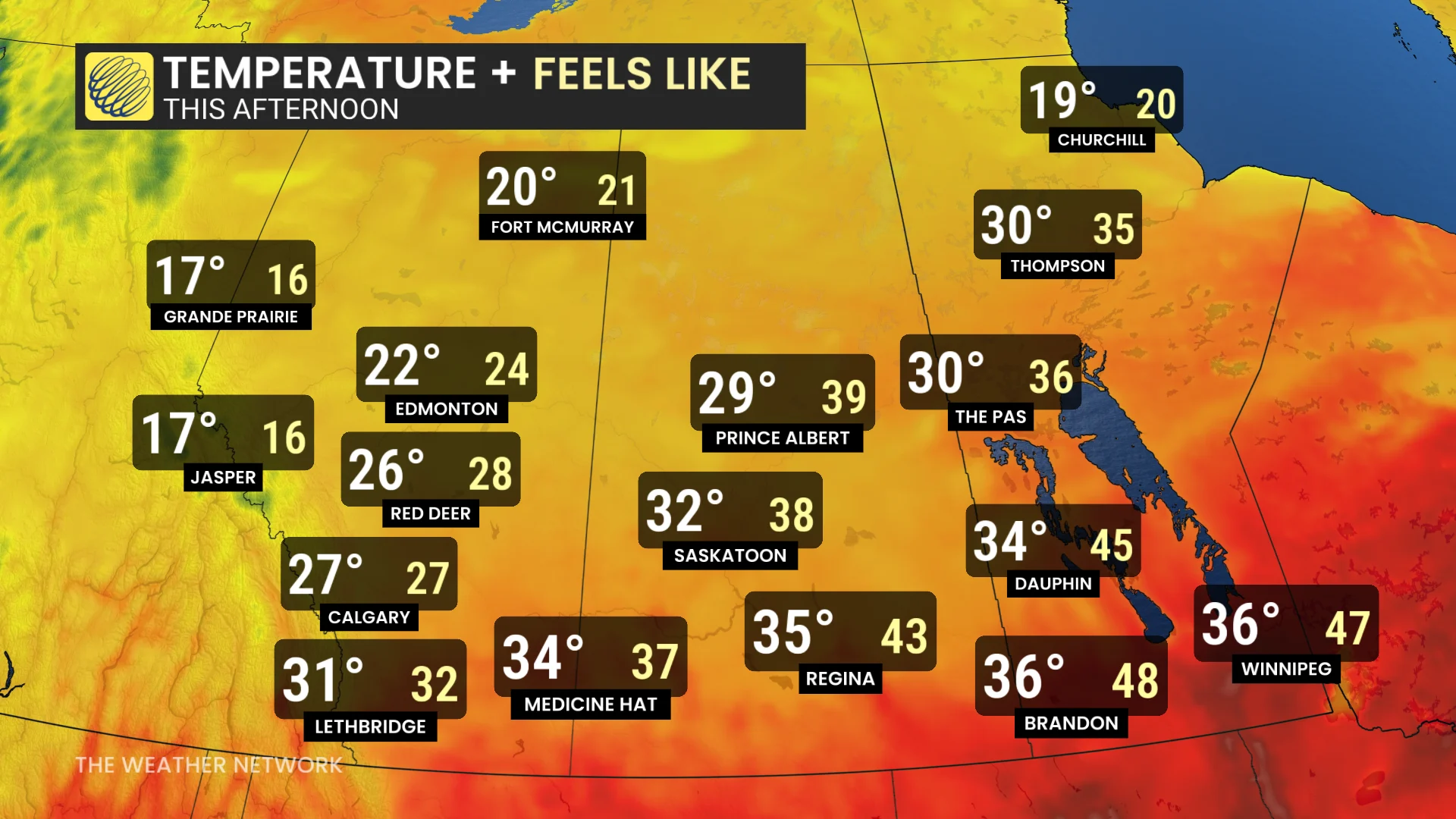
Sunday is expected to be the peak of the heat on the southern Prairies as the U.S. heat dome continues to shift.
Heat warnings are still in effect with some locations under likely to experience all-time temperature records. Heat warnings are in effect from southeastern Alberta to northwestern Ontario.
Readings in southern portions of Saskatchewan and Manitoba will easily climb into the middle to upper 30s. Sunday’s high of 38°C in Winnipeg would make it the city’s fifth-hottest July day on record.
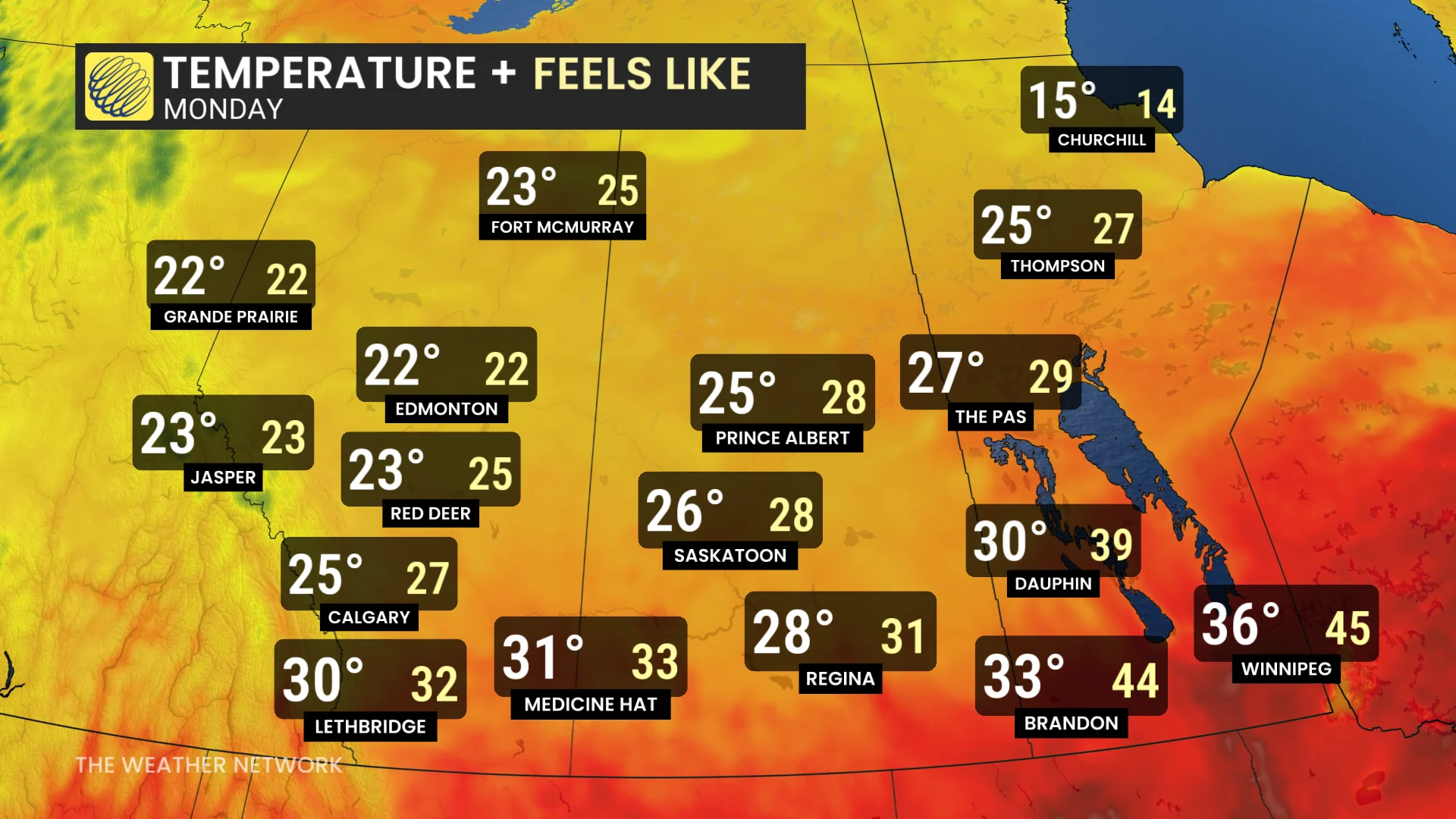
Heat is expected to ease slightly by midweek, but temperatures will remain above seasonal through the week.
Folks across northwestern Ontario will get into the heat and humidity, as well, with highs of 36-37 degrees forecast for Thunder Bay, Fort Frances, and Dryden.
A cold front will slide across Saskatchewan on Monday and allow temperatures to fall, but another day of excessive temperatures is forecast for southern Manitoba.
Very high humidex values in the forecast
This will not be a dry heat, which increases the potential for heat-related illnesses in vulnerable people. Humidity prevents sweat from evaporating efficiently, precluding our ability to cool off without air conditioning.
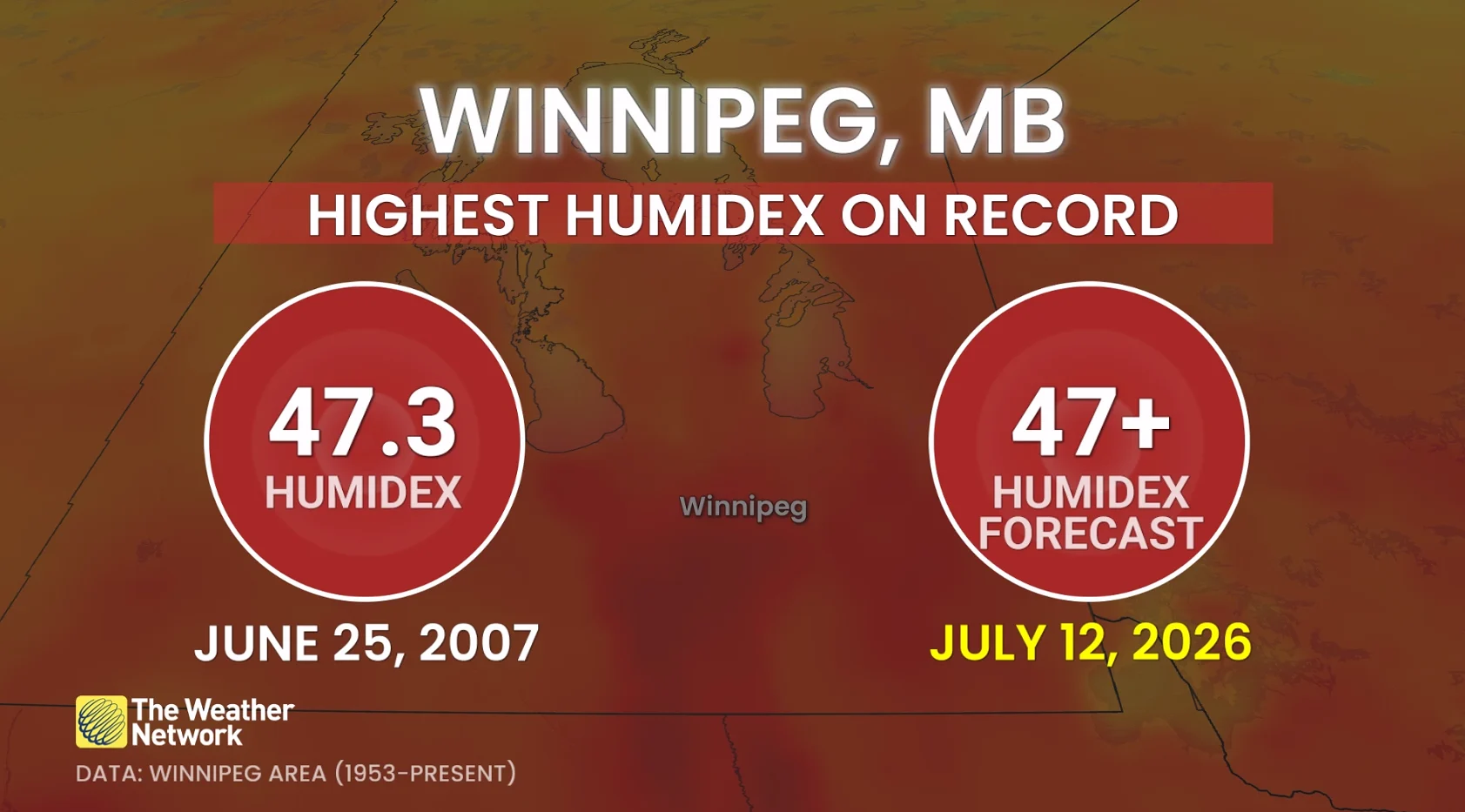
Humidex values in the upper 40s to near 50 would approach all-time records in southern Manitoba.
The highest humidex ever observed in Winnipeg was 47.3 on June 25, 2007. This event could exceed that sweltering mark. Canada’s all-time humidex record was 52.5 set on the same day in Carman, Man.
Forecasters are closely watching the potential for record warm overnight lows, as well. Folks without access to air conditioning rely on cooler nights to find relief from extreme heat. Winnipeg’s warmest overnight low on record was 28.3°C on July 12, 1936.
Searing temperatures are also in the forecast for the north-central U.S., where readings will easily exceed 40°C not far from the border. Billings, Montana, may hit 43.3°C (110°F) on Sunday, which would be the city’s hottest temperature ever observed.
Heat safety is vital
Extreme heat claims more lives around the world than any other type of severe weather.
Everyone is susceptible to heat-related illnesses without taking proper precautions, such as frequent breaks, adequate hydration, and air conditioning.
The compounding stress of hot days followed by muggy nights can be especially hard on vulnerable populations like the elderly, those with chronic health conditions, and folks who live without access to air conditioning. Keep in mind that certain medications can lower your body’s heat tolerance.
WATCH: Here’s what you need to know about heat-related illness