
The hype around 32″ wheels is real. That media frenzy stepped up again when Alessandra Keller (and the rest of her Thomus Maxon team) rode a pre-production 32″ bike from Thomus at the Lenzerheide World Cup a few weeks ago and immediately landed on the podium.
But what does a 32″ bike actually feel like to ride? Are the differences as huge as claimed? Is this something for everyone? Or just a weird thing for XC pros… and Neko Mulally?
After riding an unreleased 32″ bike for a couple weeks, I have thoughts. Sure, Geoff Kabush shared his better informed opinions with us recently, including thoughts on 32″ gravel. But why listen to him when you could read my long, rambling thoughts.
Excitement, frustration, and ambiguity: The big emotions surrounding big wheels
Keller’s World Cup podium came in the XCC (Short Track), that is. In the XCO, she crashed and seemed frustrated. As far as surprise debuts go, it was both successful and auspicious, leaving as many questions as answers. The next two rounds, though, the Swiss team was back on the “little” 29″ bikes.
That’s been a theme with 32″ though. There’s a lot of question and, with the lack of any real bikes, very few answers. There are a few custom bikes floating around, sure, but even most of those are built around MacGyvered or borrowed components and very unproven geometry.
Despite that, there’s a sense that 32″ feels inevitable. While some riders are very keen on the supposed advantages a new wheel size will provide, others are less interested. Many of the less interested are getting annoyed that, after finally resolving the 26″ vs 27.5″ vs 29″ debate, the industry is throwing at least one more new wheel size into the mix. And that the industry seems hell-bent on pushing this new technology forward, despite opposition in some corners (of bike shops and comments sections).
After reading about 32″ (and 36″) bikes from Dirty Sixer, seeing more options at MADE then sitting on one at Sea Otter and another one or two at BC Bike Race, I personally felt ambiguous. It didn’t feel as weird as expected. It didn’t feel as amazing as expected.
Then I had a chance to try one on trails. And my opinion totally changed.
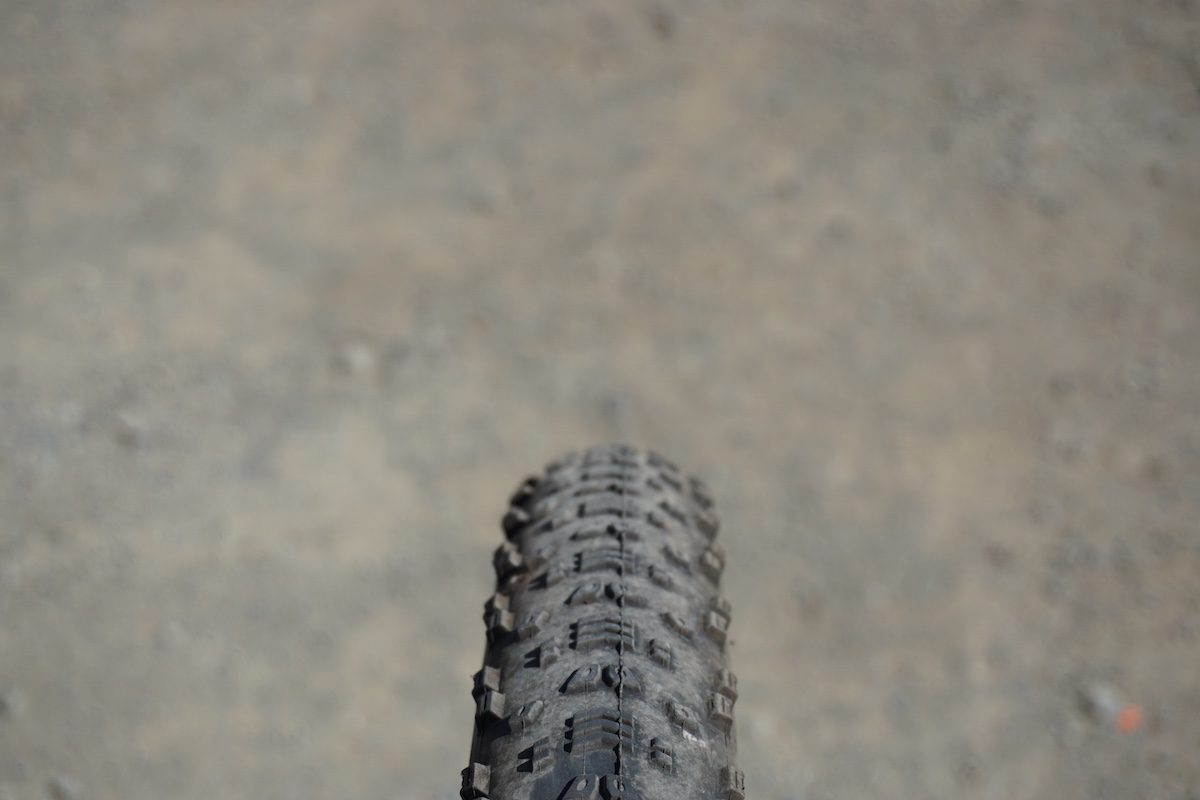 My view from the saddle. And about all you’ll get to see of this bike.
The secret 32″ bike
After getting the chance to ride a 32″ bike on trails not just once, but for a couple of weeks, I have a very different view of 32″ bikes. I still think there will be limitations and definitely some problems to work out. But it is also much easier to understand why brands are so intent on pushing forward with the new wheel size. And not just for race bikes.
The bike? Well, I can’t say much about that at all. It’s dual suspension cross country prototype from a major brand. While not released, obviously, it is something that looked like a very real bike from a major brand, so it was exciting to get to ride around on something that is likely close to what could eventually be released, in terms of geometry and design.
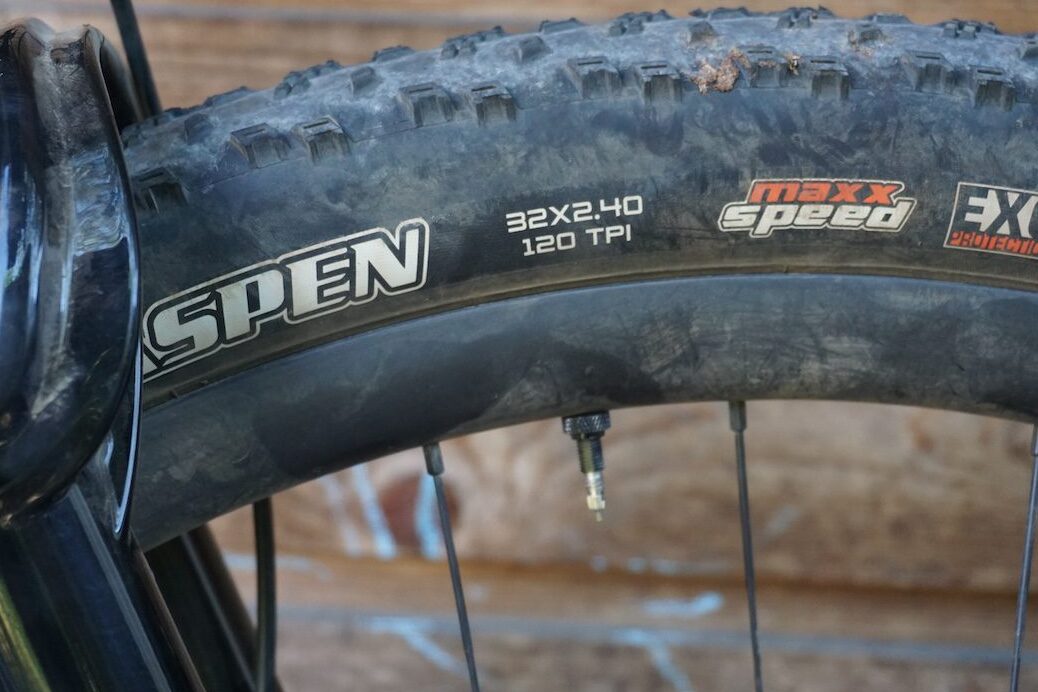
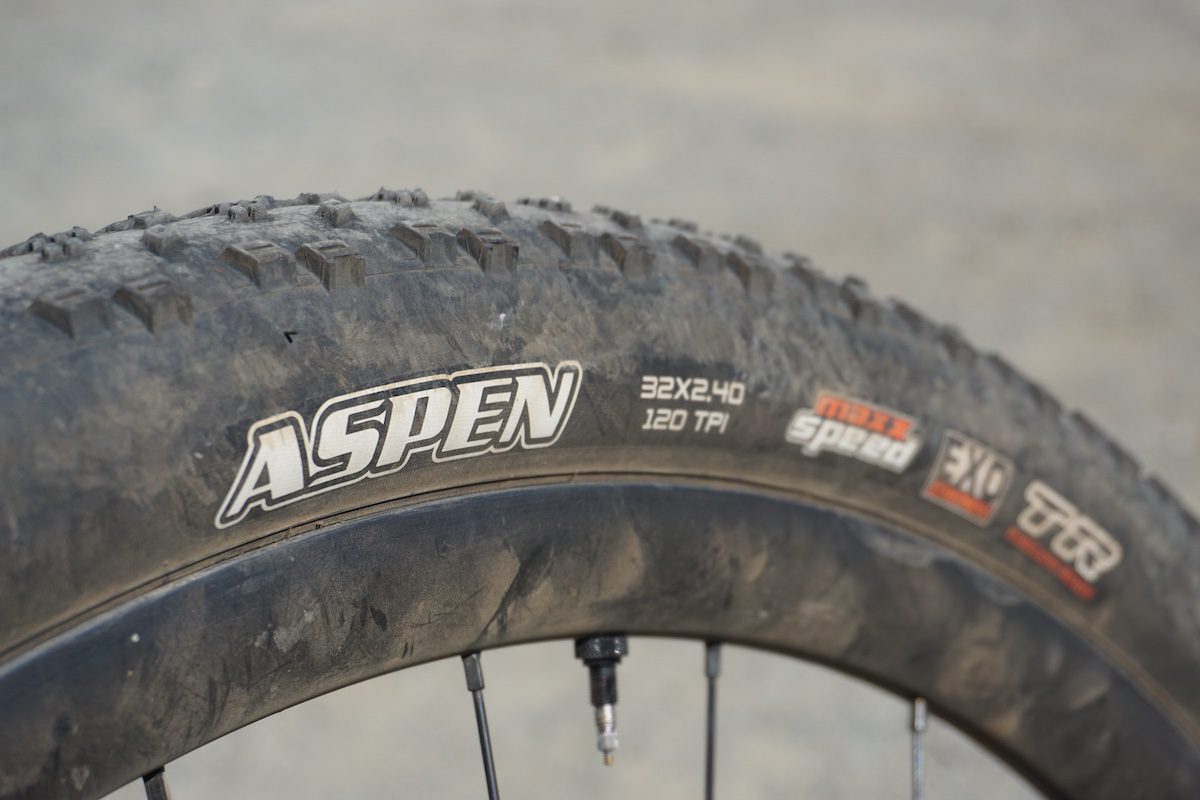
Wheels were unbranded generic carbon fibre hoops from China. Tires were, as most are still, Maxxis Aspens in 2.4″ and 120 TPI.
It’s also a size small for me. That’s not a huge issue, as I’ve tested size Large bikes before and know what that feels like, and how to adjust my set-up to accommodate for that. It did leave me with some serious questions about how sizing and geometry on these new bikes will work as, in some circumstances, it fit quite a bit more like an XL.
Big wheels, real trails: A balanced take on 32″ wheels
After riding the 32″ in a few different zones and on as many different style trails as I could, there were both expected and unexpected advantages. There are also a few questions remaining to be answered and a few places where the big hoops didn’t make as much of a difference as I thought.
A general description of the feeling would be that its like going from descending on a short travel trail bike to a full enduro rig, but at the speed of a cross country bike. You don’t have to pick lines or be precise. You just pick a direction and let the bike sort out the details. The wheels will carry you over nearly anything in your path through a potent combination of grip and roll-over capability.
To break that down a little, the big wheels have crazy traction. That’s something that’s been touted as one of the main advantages, so it’s no surprise. Racers that have tried the big wheels have told us as much. But hearing that was different than rolling up to features on a technical climb that usually force me off the bike and pretty casually rolling up them on whatever line I wanted. Hearing they’ll grip more was different than spinning up the loosest, driest climbs and almost never feeling the back tire slip. And hearing a bigger contact patch will increase grip was different than feeling an Aspen fight for traction instead of sliding out from under me in flat corners.
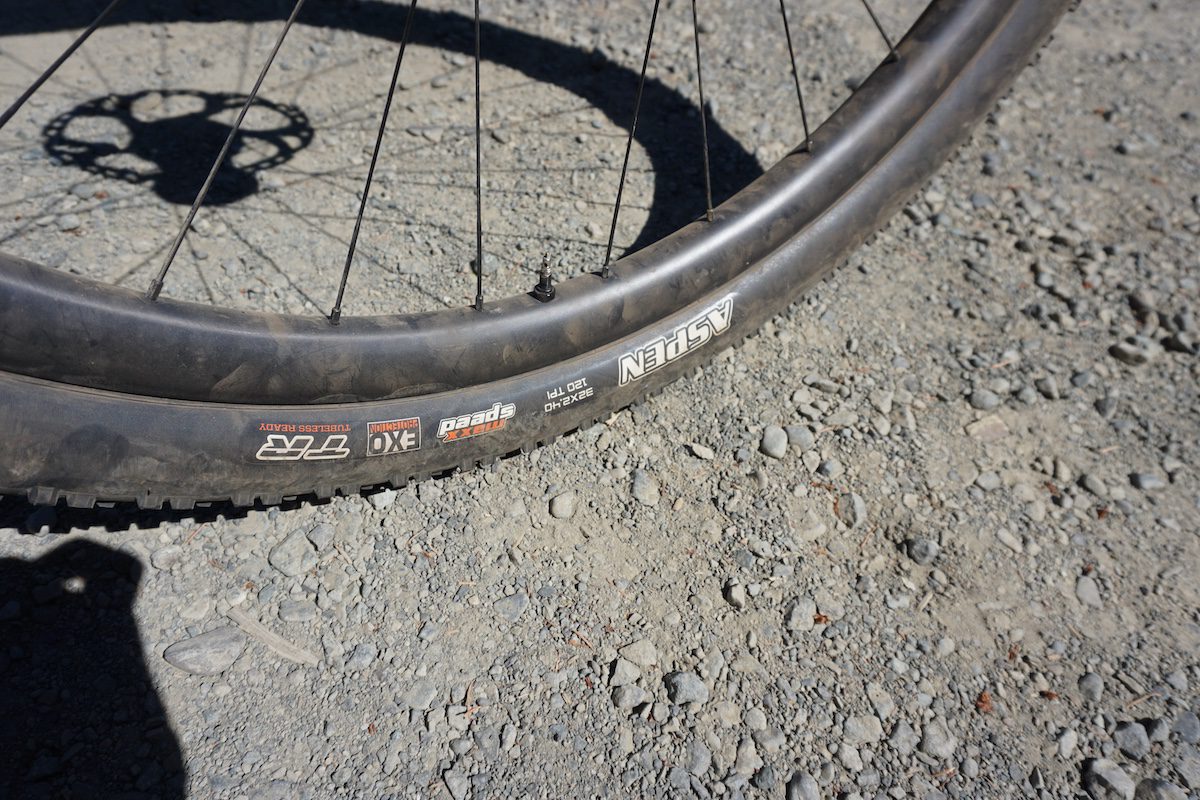 Geoff Kabush is advocating for 32″ on gravel, and the added grip certainly would apply there. But on an XC bike, the more technical the trail the more the big wheels felt like a boost.
The more technical the better
Add in the increase in roll-over capabilities and the 32″ rig is a killer combo for technical climbs. For technical descents. And, surprisingly, even for bumpy and rooty flat trails. On climbs and rooty traverses, it felt like you never had to stand up. Or you could stay seated almost all the time. You could just sit, focus on putting down the watts and not worry about picking lines or trying to keep your weight balanced to maintain traction.
This is the flip-side of a lesson I learned a few years ago when I decided to race a classic 26″ bike at TransRockis Singletrack 6 in Fernie, B.C. and Alberta. The steep climbs and big descents felt better than I expected. The long, singletrack traverse from Fernie to Sparwood that I expected to be my day to shine? I ended up so beat up from bouncing over the endless roots that I could barely enjoy the final, cruisey descent into Sparwood. The 32″ on the other hand, felt like it smoothed out the trail underneath me. Roots disappeared or felt smaller. I could roll faster and corner on bouncy trails faster.
I think this is where the advantages of 32″ shine well beyond the world of cross country racing. On really technical trails, it feels like it makes you a better rider. Even on really technical descents, it felt much more stable than an XC bike usually would. Instead of needing more suspension, you could ride a faster, lighter bike (with, say, Maxxis’ new 32″ Forekaster) and not fight with the trail as much. And that is a really easy feature for shops to sell, especially to riders that wouldn’t consider themselves “core,” and don’t really care if the bike is less fun to jump or whip.
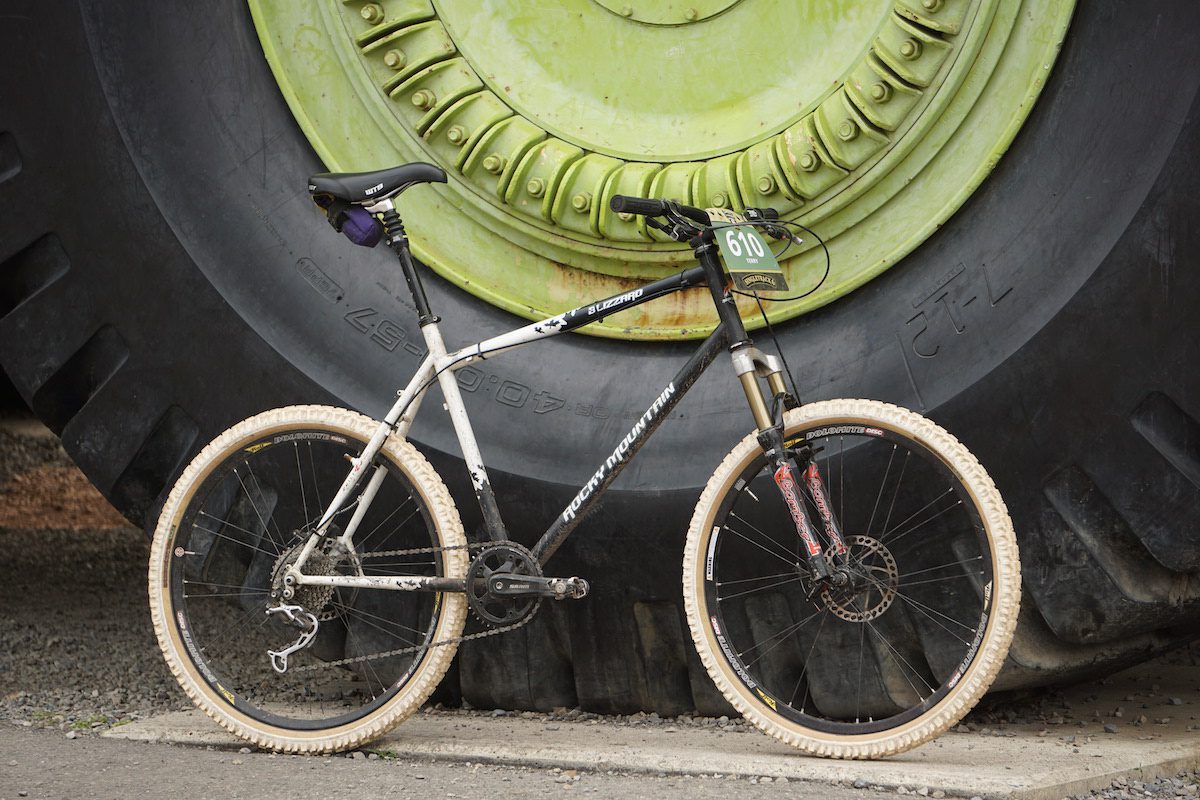 Racing a 26″ bike at SingleTrack 6 wasn’t smart, or fast. But it sure was fun.
The disadvantages or un-advantages
But this also leads the the first disadvantage of the big wheels. On smoother terrain, they don’t make as much of a difference. Climbing Cumberland’s fast and smooth climb trail, my times weren’t any faster on the wagon wheels than they were on my usual 29″ XC bike when, on more technical climbs, I was easily destroying my PRs. Add in the inevitably slower acceleration around switchback corners and the 29″ wheels might still be in the fight. In fact, there was a very direct correlation between how technical a trail was, up, down or across, and how much of an advantage the big wheels felt like.
The other downside is that 32″ definitely requires an adjustment to how the bike handles. At speed on trails, it was unexpectedly familiar in most situations. But cornering, whether on trails or flat ground, felt different. I’m honestly so impressed that the Thomus Maxon riders are able to switch back and forth between the 29″ and 32″ bikes when they had so little time (reportedly just a week) on the new bike and race at a World Cup level. Yes, they are pro athlete and better riders than any of us. But a World Cup course at race pace is also riding at the limit for those riders, and making big adjustments at the limit is not easy.
Cornering required a solid adjustment. I felt like I had to be much more on top of the front wheel or it would get away from me in a corner. The flip side is that it felt easy to do that. Like there were no consequences, no threat of going OTB, from leaning further forward than I usually would. Cornering on fast, flat terrain also felt different. Like I could stay still and just lean the bike slightly under me. Less like steering, more like leaning.
On the handling front, the big wheels obviously prioritize rolling efficiency and forward momentum over, say, fun. Like 27.5″ vs 29″, the big wheels reduce how playful the bike feels in corners or over jumps. There’s just way more wheel to move around and you need (and have room for) way less body language. They’ll be faster through any corner, but maybe not feel as fun. That could be temporary, of course. 29″ bikes are pretty fun now. So who knows if there’s a limit to that sensation on 32″ too?
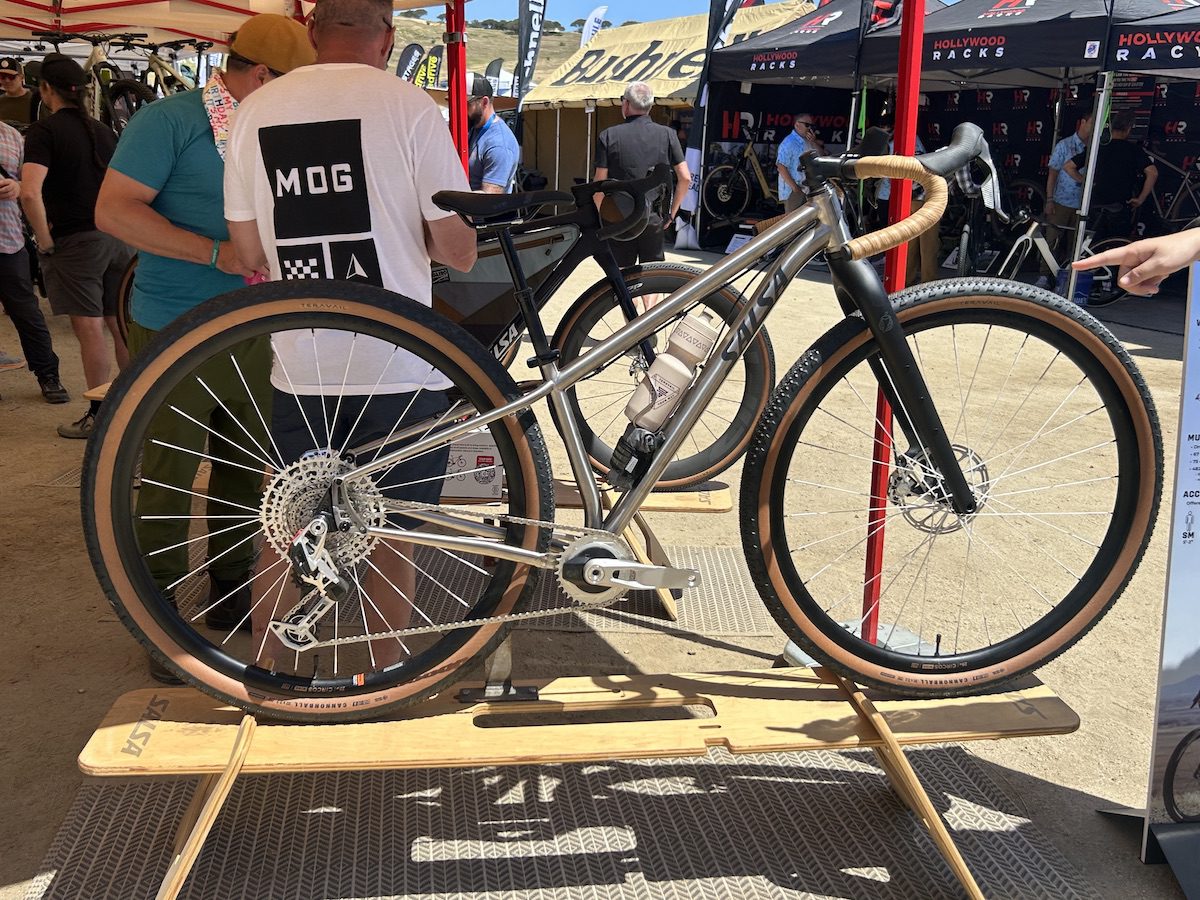 Does 32″ wheels work for small riders? I don’t know which way this Salsa moved that debate with its Sea Otter display bike.
The looming question of sizing
Sizing is, I think, going to be weird. The bike I rode was a size small for me. It felt surprisingly comfortable on climbs, on rolling terrain and even on the slowest, tightest trails I could find.
It also looked like the front wheel was a mile in front of me while seated. While the whole bike is long, the reach was quite short (or, appropriate to that bike size). I’m curious how long a properly sized 32″ would feel on flat, tight trails or climbing.
I also don’t know how brands are going to get around the physical height of the big wheels. The bike I rode had a very slammed, negative angle stem and the bars were still almost as high as an XL 29″ bike with a more reserved cockpit set up. The bigger wheels make things bigger in a very literal sense of taking up more space, not just in more perceptual things like ride feel. That space has to be accommodated in frame size, to avoid toe overlap, and to make room for suspension movement. Though I also think the current trend toward 120mm travel XC race bikes could be scaled back to 100mm or 110mm on 32″ bikes and still be faster.
This was a problem moving to 29″ bikes and even the shortest riders have moved across to the formerly-big wheels. We’ll see what those engineers can come up with for this latest growth.
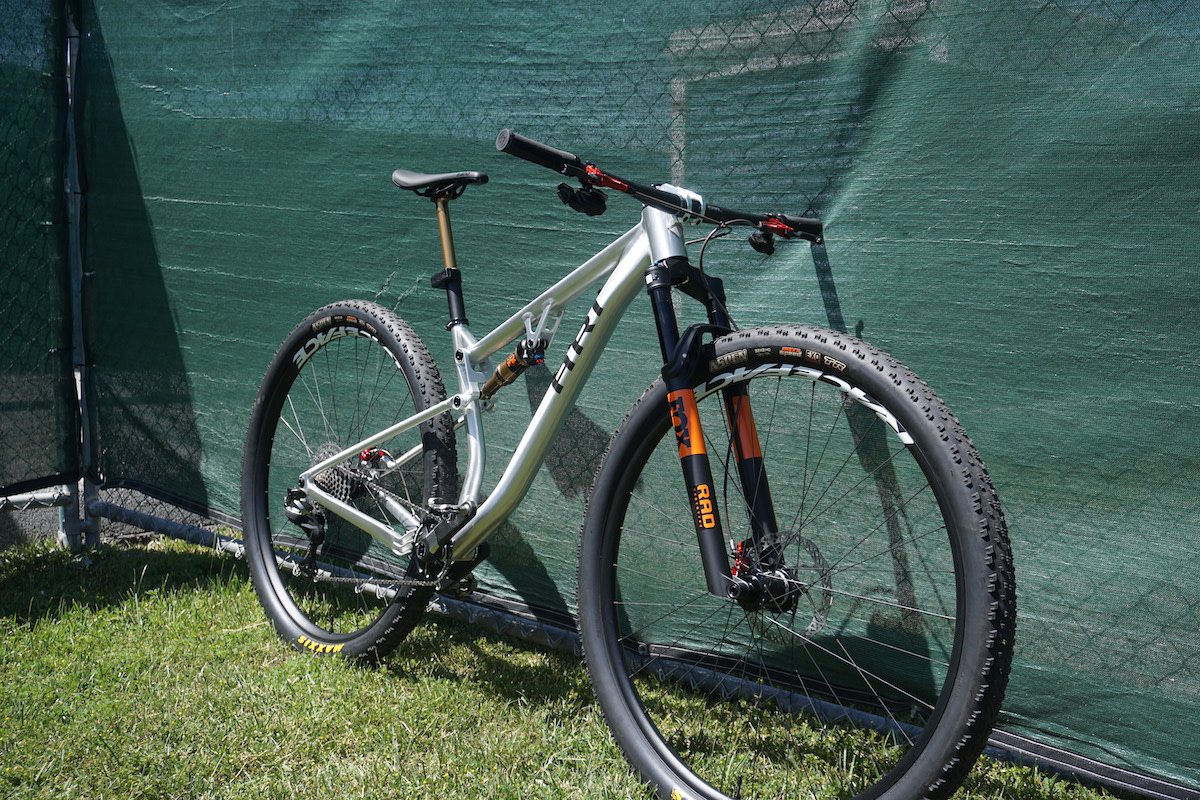 Fox and Ari were displaying this 32″ prototype at Sea Otter. This is not the bike I rode. Which shows that a ton of brands are already far along in developing these bikes.
What’s the bottom line?
Well, there’s two. 32″ wheels will be faster for XC, if you fit them. I think that’s uncontroversial at this point, but I was still surprised how much faster they felt in most situations.
What effect will this have? For cross country World Cup, I think it’s going to revert racing into a game of fitness, not technique. Anything technical, the roll-over and traction make such a big difference. you can stay seated through roots and rocks longer than you can on 29″ wheels. That mean’s less change in rhythm, less change in heart rate, a more consistent effort and, most importantly, that you can almost always be on the gas instead of working your way over obstacles. To make out for the difference and how much easier this makes riding, the UCI and WBD would have to make World Cup cross country courses so incredibly hard that it would be unrecognizable to non-pro racers.
Big wheels could also make riding easier for everyone, if you fit them. Your whips may suffer, sure. But if you’re just looking to get into riding, or be more comfortable on the trails, these could make riding anything technical noticeably easier, much like 29″ did. That’s where this idea expands past XC bikes and into the trail bike category.