
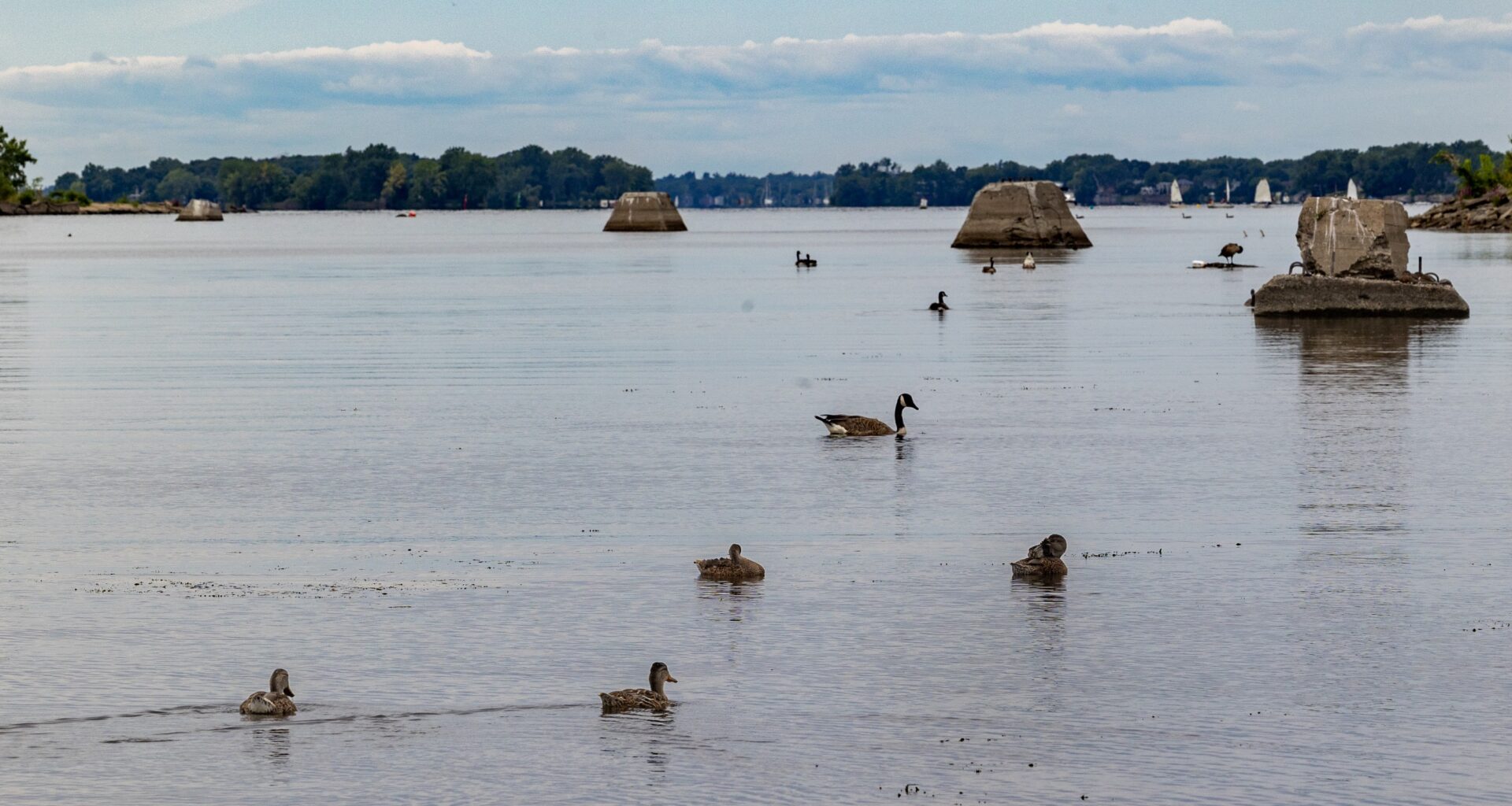
The water quality was rated “excellent” in the Ottawa River last week, just below the Canadian Museum of History in Gatineau, where the National Capital Commission installed docks this summer to allow open-water swimming.
Bathers can take in sweeping views of Parliament Hill as they practise their breaststroke or front crawl in the shimmering river at one of four new waterfront bathing facilities to open in the capital region recently, including two this year.
Ottawa has joined the ranks of cities from Antwerp to Zurich
in introducing this novel, simple and popular concept: outfitting local waterways with some of the conveniences of a public pool.
Paris has Piscine Joséphine Baker on the Seine. Berlin has Badeschiff in the Spree. Copenhagen has the Sluseholmen Harbour Bath, one of numerous pools at the Danish city’s waterfront. Banagher, Ireland, inaugurated a river pool in the Shannon in April.
Closer to home, Quebec City has L’Oasis du Port in Bassin Louise, and Beloeil has Piscine en eaux-vives in the Richelieu River.
Montreal, meanwhile, is missing out.
The city was so close to getting its own floating swimming pool in René-Lévesque Park on the Lachine waterfront, after years of work to obtain the necessary environmental and engineering approvals.
But the new Ensemble Montréal administration halted the project in the spring.
Lachine borough mayor Julie-Pascale Provost has long been cool to the idea, which was to take shape at the site of a private marina that the previous Projet Montréal-led council evicted to take back the lands for public use.
To the chagrin of local swimmers, Provost called the open-water pool too expensive with its $500,000 price tag and too divisive, since ousted boaters were still holding out hope for an eventual return.
But last week, Montreal Mayor Soraya Martinez Ferrada ruled out re-establishing the marina, saying the $55-million cost is prohibitive for a city trying to keep its finances under control.
Yet the future of the open-water pool remains up in the air.
While nixing a $55-million expenditure is fiscally prudent, $500,000 to put in decking and rope lanes to make swimming safer would be a wise investment.
As an island city, Montreal is surrounded by water. Yet there are precious few opportunities to swim in the surrounding rivers during our all-too-short summers.
Montreal and other on-island municipalities may have dozens of outdoor pools where kids take lessons and swim teams compete in summer leagues. But there is only a handful of beaches where the public can get in the water on hot days.
There is swimming at Cap-St-Jacques, Parc Jean-Drapeau and Verdun Beach, which had its grand opening in 2019.
However, other entry points are for looking, rather than diving in.
The city created the Clock Tower “beach” at Quai de l’Horloge. It has sand, lawn chairs, parasols and showers, but there is no swimming because of boat traffic, port activities and the current.
The Plage de l’Est was inaugurated in 2021 on the far eastern tip of the island, but swimming is not permitted — yet — for a long list of reasons that include iffy water quality.
But Fondation Rivières, an organization that promotes expanding public access to waterways in this province with more than half a million lakes and rivers, published a report in 2023 that found 57 sites that would be suitable for swimming in Montreal — including in Lachine.
In fact, the waters off René-Lévesque Park where the open-water pool was slated to go are some of the cleanest in Lac St. Louis.
And the sheltered inlet is an ideal spot away from the strong currents in deeper parts of the St. Lawrence River. Lifeguards on duty and roped-off lanes would make the sporting activity safer and easier for swimmers of all abilities.
Fondation Rivières held one of its Grand Splash events in Lachine on Sunday; the events encourage the public to come bathe at unofficial waterfront locations that have the potential to become permanent swimming areas.
It was a glorious day for a dip. And it was a magnificent occasion to highlight a worthy project that is still within reach.
Montreal has a golden opportunity to catch up to other cities near and far that have already transformed their waterfronts, benefiting locals and visitors alike.
New York City has been working for more than a decade to design, build, secure permits and raise funds for the Plus Pool, which could finally open in the East River in the summer of 2027.
In Montreal, the hard work has already been done. And the $500,000 cost is entirely reasonable, promising big impact for a modest price.
If only the mayors of Montreal and Lachine would take the plunge before the two-year window on the environmental permit expires.
Summer is short. The weather is hot. What are they waiting for?
Editor’s Picks

I started at The Montreal Gazette in 2000 as an intern. Since then I have covered the National Assembly and courts, worked on the assignment desk and written editorials, before debuting as city columnist in 2017.
ahanes@postmedia.com