
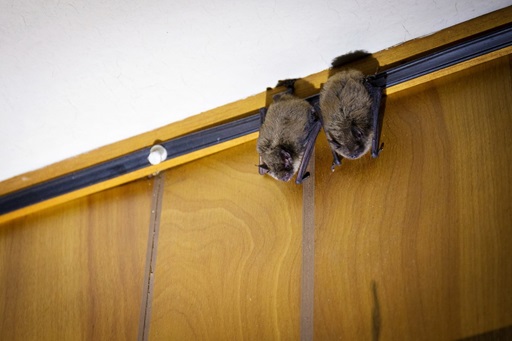
From controlling mosquitoes to helping maintain healthy ecosystems, bats are providing important benefits across Saskatchewan, despite often being misunderstood by the public.
Eight bat species call Saskatchewan home
The province is home to eight species of bats, according to the Saskatchewan Ministry of Environment.
Three species, the hoary bat, silver-haired bat and eastern red bat, are considered long-distance migrants. The hoary bat can travel as far south as northern Mexico to spend the winter.
The other five species remain in Saskatchewan year-round and hibernate through the colder months. Those species include the little brown myotis, big brown bat, northern myotis, western small-footed myotis and long-eared myotis.
Species at Risk Biologist Erin Swerdfeger said all bats found in Saskatchewan eat insects, including crop pests, forest pests and garden pests.
“They’re really important for the ecosystem,” she said. “They eat those flying insects. They reduce costs for pesticide application and keep ecosystems in balance.”
Bats are often found in areas with trees and water because those locations provide shelter and access to insects. While a wet summer may not necessarily bring more bats to an area, Swerdfeger said it can provide them with plenty of food.
Related Stories:
Slow reproduction leaves bats vulnerable
While bats can live much longer than many people expect, they reproduce slowly. Swerdfeger said bats are not like mice, but more like “little flying grizzly bears” because they can live for many years compared to other small mammals.
A bat found in Cypress Hills was estimated to be 29 years old, showing the species can have long lifespans.
Despite that, most bat species only have one pup per year, making it difficult for populations to recover when numbers decline.
“Most of them have only one baby or what’s called a pup per year. So they’re really susceptible to population declines,” Swerdfeger said.
Several bat species in Canada are considered at risk, including two that are federally listed as endangered. Three additional species have also recently been assessed as endangered by the Committee on the Status of Endangered Wildlife in Canada.
All bat species in Saskatchewan are protected under Saskatchewan’s Wildlife Act.
Understanding bats around homes
Although bats sometimes end up inside homes, Swerdfeger said they are not aggressive and are usually not looking to interact with people.
Late summer and early fall can be a time when more bat encounters occur because young bats are learning to fly and can sometimes end up in unusual places. Migratory bats are also moving between their summer and winter locations during that time.
If a single bat gets inside a home, Swerdfeger said residents should avoid touching it with bare hands. Instead, she recommends turning off lights and ceiling fans, closing off other areas of the home and opening a window or door to allow the bat to leave on its own.
If a bat needs to be contained, she said people can use heavy leather gloves and a box to safely capture it without direct contact.
Bats can also use buildings at different times of year. Some species, including little brown bats and big brown bats, may create maternity colonies in warm areas of buildings during the spring and summer.
During the winter, some bats may also use buildings as places to hibernate if they can find suitable conditions.
Swerdfeger said bats that are separated from human living spaces can sometimes safely coexist with people. However, if bats are entering areas where people live, steps should be taken to prevent that contact.
Safe ways to remove bats
Swerdfeger said the best times to remove bats from buildings are May and September.
During those months, wildlife control operators can use one-way exit devices, sometimes called bat cones, that allow bats to leave but prevent them from returning.
The devices are placed over entry points, such as openings around chimneys, eaves or soffits. Once all bats have left, those openings can be permanently sealed.
Swerdfeger said people should work with experienced wildlife control operators because bats can enter through very small openings and the eviction process requires a permit from the Ministry of Environment.
Residents with questions can contact the Ministry of Environment inquiry line at 1-800-567-4224.
Rabies risk remains low
While bats are one of several wildlife species capable of carrying rabies, Swerdfeger said rabies is uncommon in bat populations and most bats pose little risk to people.
“Like most wild animals, they’re not looking to interact with humans,” she said.
Bats use echolocation to navigate and find food, allowing them to detect small differences in their surroundings while searching for insects and water.
If a bat is acting strangely or someone has direct contact with one, Swerdfeger said people should avoid handling the animal and seek advice.
Residents can contact HealthLine 811 or Saskatchewan’s Rabies Response Line at 1-844-772-2437 to discuss whether preventative treatment is needed.
Swerdfeger said bats are an important part of Saskatchewan’s ecosystem and residents can support them by protecting habitat and planting native vegetation that attracts insects.
“They are part of the ecosystem and they should be respected like any wildlife,” she said.