
If you’ve ever wondered why some cycling destinations seem to attract riders from around the world while others struggle, a new report may have the answer.
The inaugural Cycle Tourism Index 2026, developed by Italian consultancy Bikenomist in partnership with route-planning platform komoot, is a first attempt to measure which European regions are most successful at attracting international cycle tourists. Rather than relying on visitor surveys or economic estimates, the report analyzes millions of real rides completed by international komoot users across 14 European countries during 2025, creating a data-driven snapshot of where cyclists actually choose to ride.
The results reveal some surprises—and challenge several long-held assumptions about what makes a great cycling destination.
Croatia Emerges as Europe’s Cycling Tourism Powerhouse
The biggest headline is Croatia’s remarkable dominance.
Instead of a single standout destination, Croatia places six regions inside Europe’s overall Top 10, suggesting the country has developed one of the continent’s strongest and most cohesive cycling tourism networks.
Leading the entire ranking is Istria, followed by Spain’s Balearic Islands, while Croatia’s Primorje-Gorski Kotarclaims third place. Other Croatian regions—including Zadar, Šibenik-Knin, Dubrovnik-Neretva, Lika-Senj and Split-Dalmatia—also rank among Europe’s elite cycling destinations.
Rather than relying on a single famous trail, Croatia appears to have created an interconnected collection of coastal riding destinations that reinforce one another, making the country easy for international cyclists to recognize and plan trips around.
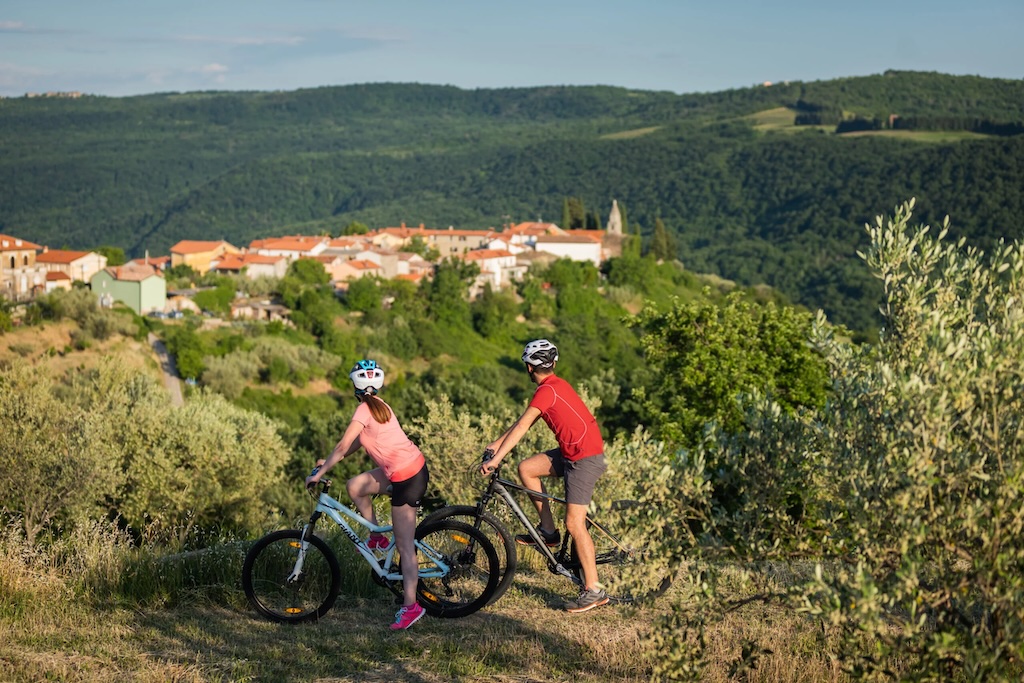
Istrai is one of the top cycling destinations in Croatia and Europe (photo: Visit Koper)
It’s Not Just About Bike Lanes
Perhaps the report’s most interesting conclusion is what doesn’t determine cycling tourism success.
Many destinations assume that building more cycling infrastructure alone will automatically attract visitors. Others believe simply promoting a destination more aggressively is enough. The report argues neither is true.
Instead, successful cycling tourism emerges where several factors overlap:
Spectacular landscapesPleasant climateAttractive tourism experiencesQuality cycling routesStrong destination identityWell-developed visitor services
In other words, great cycling holidays aren’t created by bike paths and established routes alone—they’re created by combining excellent riding with places people already dream about visiting.
Mediterranean Regions Continue to Dominate
Looking across the rankings, a clear geographic pattern emerges.
The Mediterranean and Alpine regions consistently outperform much of northern Europe.
Besides Croatia’s Adriatic coast, Spain’s Balearic Islands and Canary Islands rank among Europe’s strongest performers, while Italy’s Trentino-Alto Adige remains one of the continent’s premier mountain cycling destinations.
These regions combine reliable weather, dramatic scenery, varied terrain and well-established tourism infrastructure—ingredients that make them appealing to everyone from recreational e-bike riders to serious road cyclists.
The Best Destination Depends on the Season
Rather than producing a single annual ranking, the report also created separate indexes for winter, spring, summer and autumn.
That seasonal approach highlights an important reality of cycle tourism: Europe’s best riding destinations change dramatically throughout the year.
During winter, warmer climates dominate, with Spain’s Canary Islands, the Balearics and Croatia’s Istria attracting riders escaping colder weather.
Spring shifts the spotlight back toward the Mediterranean, while summer expands opportunities into Alpine regions and higher elevations where cooler temperatures create ideal riding conditions.
Autumn once again favours southern Europe, extending the cycling season well beyond the traditional summer holiday period.
For cyclists planning overseas trips, timing may be just as important as destination.
Why the Rankings Matter
Cycle tourism has quietly become one of Europe’s fastest-growing travel sectors.
Cyclists typically stay longer than conventional tourists, spend money with locally owned accommodations, restaurants and bike shops, and spread tourism into smaller communities that often receive little benefit from traditional sightseeing itineraries.
The report argues that until now, destinations have lacked a reliable benchmark for understanding their competitive position.
Instead of relying on intuition or isolated success stories, tourism organizations can now compare themselves against similar regions, identify seasonal strengths and better understand where investment may have the greatest impact.
Lessons for North America
Although the index focuses exclusively on Europe, its findings have implications well beyond the continent.
Many North American destinations—including those in Canada and the United States—have invested heavily in rail trails, protected cycling infrastructure and long-distance routes. Yet the report suggests infrastructure alone isn’t enough.
The destinations attracting international cycling travellers are those that successfully combine memorable landscapes, welcoming cycling culture, tourism services and a recognizable regional identity.
In other words, cyclists don’t simply travel to ride great roads—they travel for complete experiences.
As cycling holidays continue to grow worldwide, that may prove to be the report’s most valuable insight.