
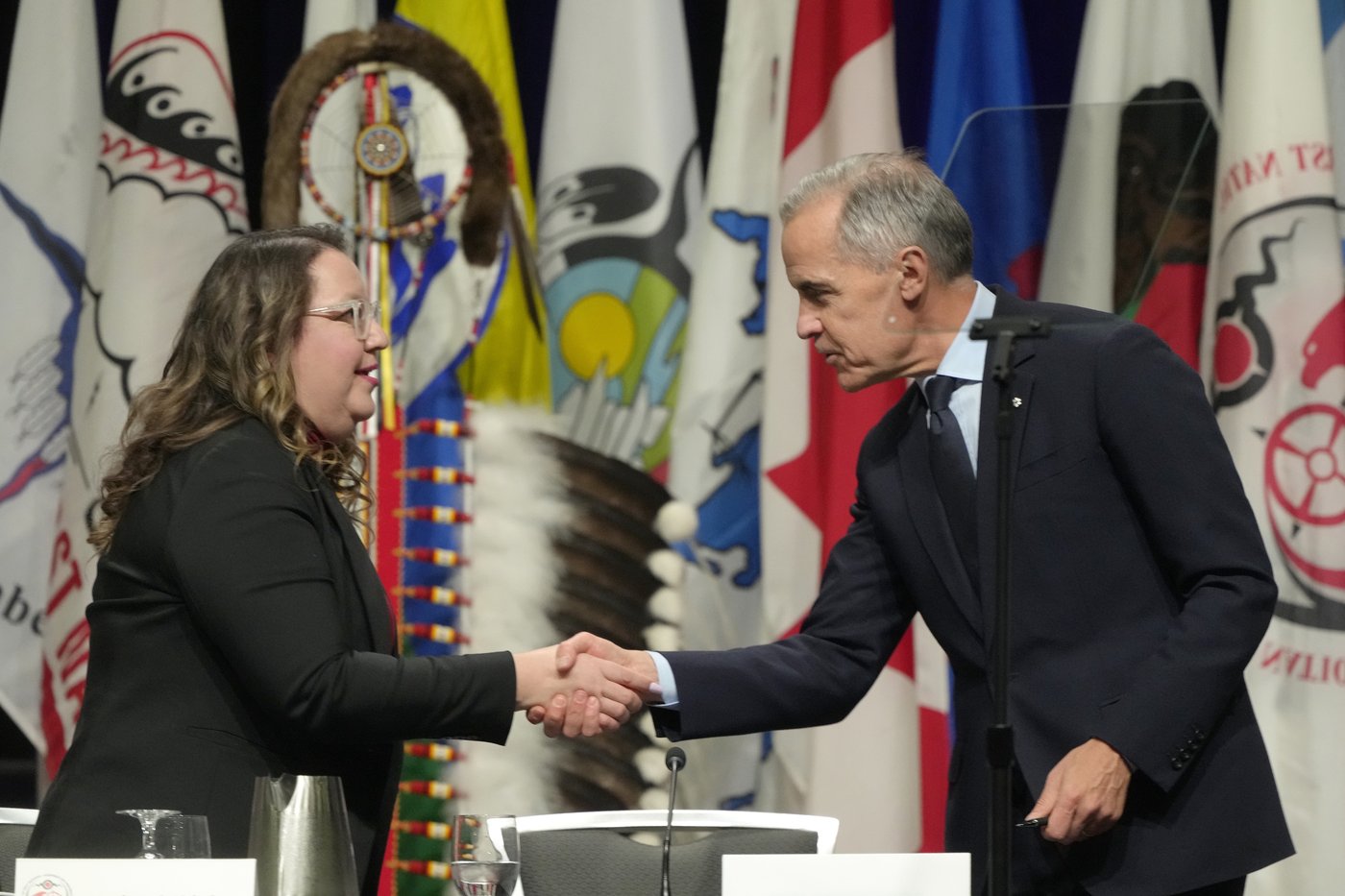
“First Nations are leading the way in all walks of life and in all regions of this country,” she said Monday.

“We have to make a stronger Canada from all of us by working together more closely.”
The Assembly of First Nations is a national advocacy body that takes its direction from some 630 First Nations chiefs through special and annual general assemblies. It is not a rights-holding institution but it represents rights-holding chiefs.
Indigenous Services Minister Mandy Gull-Masty, Crown-Indigenous Relations Minister Rebecca Alty, Natural Resources Minister Tim Hodgson, Artificial Intelligence Minister Evan Solomon and Public Safety Minister Gary Anandasangaree are also expected to attend this week’s annual meeting.
Gull-Masty reintroduced legislation this summer that seeks to ensure First Nations have reliable access to clean drinking water in their communities.
While the legislation is largely in line with a bill that failed to pass under the government of Prime Minister Justin Trudeau, it drops language in the former bill that would have immediately recognized First Nations have a right to clean drinking water — and instead says the government will work toward the “progressive realization” of that right.
A resolution proposed by Chief Roderick Gould Jr. of Abegweit First Nation calls on chiefs to demand that the right to clean water be included in the new bill.
A first ministers meeting Carney promised the chiefs is now set for the fall.
Woodhouse Nepinak and her predecessors have long called for First Nations representation at those meetings. Those calls got louder last year when the federal and provincial governments were discussing among themselves ways to fast-track major infrastructure projects.
Woodhouse Nepinak has described First Nations’ exclusion from first ministers meetings as “very disrespectful.”
“First Nations are for economic growth that will drive Canada’s collective prosperity for the next century, but not at the expense of our rights or of the Crown’s legal obligations to our people,” Woodhouse Nepinak said Monday.
She said the meeting with Carney and the premiers will be a “big test” of Canada’s ability to reconcile economic growth with First Nations rights.
“Are the conversations going to be easy? Absolutely not,” she said. “We’re not going to solve Canada’s issues in one day.”
The chiefs will debate a resolution calling on Pope Leo to rescind papal bulls — official papal decrees — they say were used to provide religious cover for the enslavement and conquest of Indigenous Peoples around the world.
In 2023, the Vatican formally repudiated the controversial Doctrine of Discovery, which was used as the basis for European claims to territories in the Americas. Chief Dan Manuel of the Upper Nicola Indian Band said he wants the Vatican to go further by tearing up other papal decrees that served as the “blueprint” for colonization.
He said those decrees are responsible for ongoing violations of international human rights law and is calling for the establishment of a worldwide memorial to archive and honour the effects those decrees had on Indigenous people.
The Assembly of First Nations is set to hold an election for national chief next year, as Woodhouse Nepinak’s three-year term is set to expire.
She said Monday she intends to seek re-election.
No other candidate has publicly declared their intention to run.
This report by The Canadian Press was first published July 14, 2026.
Alessia Passafiume, The Canadian Press