
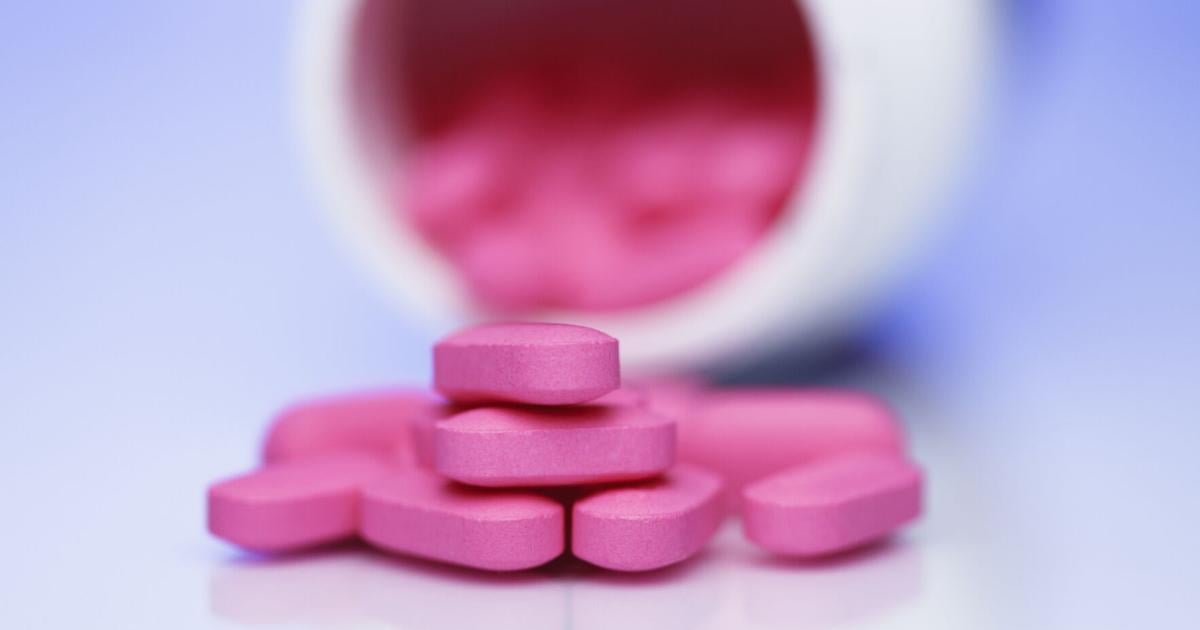
A dangerous social media fad has resulted in the recent admittance of at least two Lancaster County teenagers into the intensive care unit at Penn Medicine Lancaster General Health, with potentially life-threatening conditions.
The social media challenge encourages people to ingest up to 12 tablets at one time of diphenhydramine, the over-the-counter medication used to treat allergy and cold symptoms – commonly known by the brand name Benadryl – to induce hallucinations. The challenge also includes videoing and posting the reaction on social media.
The usual adult dose of diphenhydramine is two capsules; swallowing a high dose can lead to overdose and death.
“I can confirm that we’ve seen two children who have come in with what we call anticholinergic poisoning, which is the effect of taking too much diphenhydramine or Benadryl, and both these children have confirmed that they were participating in the … challenge,” said Dr. Pia Fenimore, pediatrician for LG Health.
Both teenagers were transferred from LG Health to pediatric intensive care units at other hospitals, so Fenimore said she does not know how they are faring. The teenagers’ names were not released.
Spokespeople from Penn State Health and UPMC Lititz were not aware of any cases in Lancaster County related to the challenge. WellSpan Ephrata did not respond to a request for comment as of press time.
The cholinergic system is a branch of the nervous system that regulates memory, learning, attention and more. Taking too much diphenhydramine negatively impacts the nervous and cardiovascular systems, causing cardiac arrest, coma and seizures, Fenimore said.
If you find a person who has taken a large amount of Benadryl or any medication, call 911, followed by poison control. Symptoms include confusion, sleepiness and hallucinations. That person will then often experience fever, arrhythmias – irregular heartbeats – and then seizures, Fenimore said.
The challenge originally appeared on social media in 2020, but it continues to surface, according to the American Academy of Pediatrics. From 2024 to 2025, calls to poison centers having to do with diphenhydramine for 13- to 19-year-olds increased by almost 32% − from 10,068 cases in 2024 to 13,284 cases in 2025 − according to a health advisory issued by America’s Poison Centers. In the first half of 2026, poison centers reported 7,292 diphenhydramine-only calls, which was nearly double compared to the same period in 2025.
“What we’re trying to do is get parents to really talk to their kids about specifically the Benadryl challenge but also talk to their children about the misuse of over-the-counter medications, and let them know that those have serious dangers,” Fenimore said.
Parents should also talk to their children about what they’re watching on social media, Fenimore said. She also recommended that if parents allow their children to use social media, that they too peruse social media apps so they know what is out there.
“And remember, summertime they’re (children are) a little more bored,” she said, leading to possibly engaging in a dangerous behavior.
Even if children recover from an overdose, the consequences could affect them for life.
“Seizures can cause brain damage. They can affect vision. They can affect hearing,” she said. “Cardiac arrest – if you come back from it, you can have long-term complications, and our nervous system is not designed to take those type of hits and then recover quickly.”


Success! An email has been sent to with a link to confirm list signup.
Error! There was an error processing your request.