
The NHL offseason has been extremely chaotic, and it’s far from over. But after the biggest frenzy of the year, through draft week and the early goings of free agency, most rosters are taking shape.
And some of those teams and unresolved situations are raising red flags and sounding the concern-o-meter.
Let’s look at some concerning trends developing around the NHL.
NHL offer sheets are just business
Sean Gentille and Sean McIndoe
The Blue Jackets’ direction
Concern-o-meter: 6/10
The concern ticked all the way up to a 10 in Columbus as the Zach Werenski situation spiraled. The temperature has obviously lowered now that he’s off the trade market — but not enough to stay off the radar entirely.
Werenski expressed that he wants to win in Columbus, but a contract extension in 2028 isn’t (and can’t be) written in stone just yet. The team likely has to show real progress until then, so the pressure is on to keep building around Werenski.
The problem is that the Blue Jackets front office was a little busy with the Werenski saga at the busiest point of the offseason. There was a frenzy of player movement that Columbus was largely uninvolved in, and understandably so. It was likely pretty tough to widen the scope when everything was swirling around the potential of a franchise-altering trade.
Through all the chaos and noise, management did make a couple of deals, like acquiring Valeri Nichushkin from Colorado and signing Ryan Lomberg to help replace some free agent exits. And those types of depth moves were likely always going to be an offseason priority, since a lot of Columbus’ strategy revolves around internal growth from players like Adam Fantilli, Kirill Marchenko, Kent Johnson and Denton Mateychuk.
But after stumbling down the stretch and out of the playoff picture entirely, the Blue Jackets may want a little more certainty around their up-and-coming core. That’s the best way to make the most of the next couple of seasons with Werenski and show him that this team is on the right path. So it’s up to management to get creative, with fewer trade targets and free agents available at this point in the summer.
The Stars aren’t any better
Concern-o-meter: 6.5/10
The Stars still look like contenders. But this team is coming off its worst playoff losses yet, after exiting in Round 1 to the Wild. Sure, the playoff format exacerbated that; it’s unfair that the second-best team in the West had to face off against the No. 3 team. But at the end of the day, they don’t ask how Dallas was eliminated; it’s how many rounds this team went and how many trophies it ended the season with. After reaching the Western Conference final in three straight years, the Stars were ousted in Round 1. And the team hasn’t done enough to improve its chances of moving further next season.
Management tried with a Werenski trade offer that would have added one of the best defensemen in the world to its blue line. That would have opened up a little cap space for a Jason Robertson extension. When the move was vetoed by Werenski, it left some collateral damage in Dallas, like Thomas Harley, who was included in the return.
If that wasn’t a tough enough blow, there is still no extension in place for Robertson. There is officially a deadline on that now, with his arbitration hearing scheduled for July 25. But that outcome could actually make matters worse for Dallas; say he’s awarded a one-year extension, that walks him straight to unrestricted free agency next July. If the Stars can’t find middle ground with him financially now, can they in a year, when the cap (and market prices) rise? Will the team be willing to commit more to him when he’s a year older?
The best outcome for Dallas is a multiyear extension for Robertson, even if it’s a few million above Mikko Rantanen’s $12 million cap hit. But the way things are heading, the Stars could find themselves in a bind in the next few weeks: At risk of losing their best winger for nothing next year, with a team that is a year older and under even more pressure to go the distance.
The Blackhawks’ rebuild
Concern-o-meter: 7/10
To successfully rebuild, in the broadest sense, a team needs 1) a strong vision, 2) even better execution, and 3) a lot of luck.
The Blackhawks’ vision has been far from perfect over the last few years, but the execution may be even more flawed. The team collected high-end talent through the draft, but the development process has been filled with twists and turns. Maybe that inspired the team to move away from a top selection this year — the No. 4 pick — to swing for someone more established.
Except they aren’t well established in the role the Blackhawks are asking him to play. And if the cost of acquisition wasn’t enough, now the team is on the hook for six years and $75 million, in the hopes it can all work out.
Bowen Byram is a very talented defenseman. But he hasn’t proven that he is a true No. 1. He hasn’t proven that he is $12.5 million-caliber, either. Maybe he runs with the opportunity and proves everyone wrong. But it doesn’t change that this team doesn’t look ready to be a contender in Byram’s prime, either — especially without any upgrades upfront to change that outlook.
A rebuilding team like Chicago should be betting on internal growth from high-end players like Anton Frondell and Frank Nazar, plus Roman Kantserov. But at this point, it wouldn’t hurt to balance young talent, going through the waves of development, with more reliable veterans to help shoulder the burdens of this stage of the rebuild. So with a somewhat shaky vision, the pressure is on for the execution to be top-notch moving forward — even more so now to help counter-balance some really poor luck, with Bedard injured for the next four months.
Seattle’s path forward
Concern-o-meter: 8.5/10
The big question was how the Kraken were going to find top-tier talent. To management’s credit, Seattle did make offers for some; Artemi Panarin at the deadline, then Jason Robertson this summer.
But there are two problems. Seattle isn’t a Robertson or Panarin away from contending; this team needs a lot more help to punch up its roster and reset the depth chart up front and on the back end. The second is that neither player wanted to extend there because this team isn’t a destination.
Seattle may never have palm trees or the benefits of the sun belt. But what holds the Kraken back above all else is that this isn’t a winning environment.
It’s not to say the Kraken didn’t improve or get a few steps closer to that this offseason. Bobby McMann, a good utility fit, was extended. Mackie Samoskevich has a lot of untapped upside and was traded for (instead of an offer sheet) to give management more certainty on the value of the draft picks lost. But those moves aren’t enough to send the Kraken to the contender’s circle — they’re just growing the population of middle-sixers.
Asking for the best-case scenarios out of McMann and Samoskevich, plus internal growth from players like Matty Beniers, who has star potential, will help. But even with great seasons from all three, this team still needs to find some game-breakers to lead the way. So while the vision was seemingly there with some attempted big swings, general managers don’t get participation trophies. The path forward still looks pretty underwhelming in Seattle.
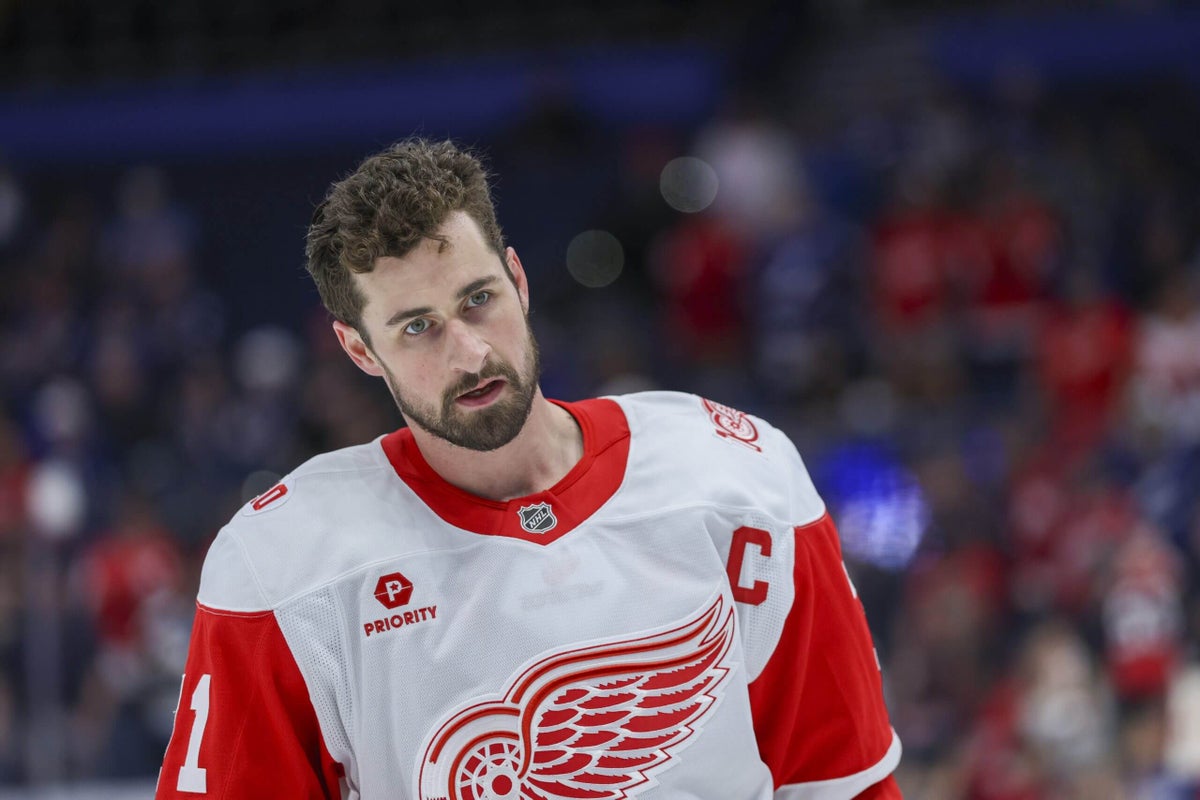
The Larkin stalemate in Detroit
Concern-o-meter: 8/10
On the one hand, there is no reason to rush into a Dylan Larkin trade. While he has control with a no-trade clause that will hamstring a return, it doesn’t benefit Detroit to move him for pennies on the dollar, either. This isn’t the same as the Panthers landing Brad Marchand or Claude Giroux for next to nothing a few months before their contracts expired. Larkin still has another five years on his deal.
On the other hand, the longer this situation drags out, the tougher it will be to reset for this next era. It lingers over everything the Red Wings do this summer — from the draft to the trade frenzy to free agency, and beyond. Detroit can’t really start building up its supporting cast without knowing what types of needle movers Larkin can bring back. Sure, the Viktor Arvidsson signing was savvy, but this team hasn’t done much else so far this summer, leaving everything else feeling unsettled and uncertain.
So as long as the Larkin situation is unresolved, the Red Wings are stuck in limbo. It all depends on what this team can get back for one of its most valuable players. What challenges the situation even more is that Detroit views Larkin as a first-line center, while most contenders are likely looking at him as more of a 2C in their respective lineups.
The Jets are in a similar standstill with Connor Hellebuyck. The difference here is that there’s obviously a little more pressure on a team that’s been outside of the playoff picture for so long, with other division teams passing it by.
The Ducks’ cap outlook
Concern-o-meter: 9/10
It’s easy to put blame on the Flyers for making such an outlandish offer for Leo Carlsson, or fault the player for signing a deal that put Anaheim in such a bind. But this situation falls on the shoulders of Ducks’ management (and ownership) for letting it even get to this point.
As rare as offer sheets are, the Ducks seemingly were clearly prepared for that possibility. Trading away Olen Zellweger indicated as much. So did general manager Pat Verbeek’s threat to match any offer.
It’s bigger than just the risk of an offer sheet in Carlsson’s case, though. Management should have viewed this as a core contract and taken a proactive approach to 1) sign him before market prices rise, and 2) have a better handle on the long-term outlook before signing fringe contracts in free agency.
The A.J. Greer contract, for example, isn’t a back-breaker at $4.25 million a year. But tying that much to a bottom-six player looks glaring when the team now has to make cuts before extending Cutter Gauthier.
Overpaying Pavel Mintyukov adds to that cap bind, and that also seemed avoidable. Had the Ducks gotten ahead in that situation, he likely wouldn’t have been able to gain as much leverage from the Zellweger trade, John Carlson’s exit, and then the offer sheet situation.
The Ducks’ front office has a reputation for being difficult to work with, especially on the RFA front; just look at the Mason McTavish situation last year (and the ripple effects that hurt the team). The fact that RFAs weren’t prioritized this summer shows the team hasn’t learned enough. It’s created a tough cap situation so early in the team’s playoff window and concern ahead, considering how many more key RFAs are incoming.
Instead of riding the hype from the Ducks’ playoff return, this self-inflicted cap squeeze is sparking questions on whether this is the front office to navigate its way out of it.
Data via Natural Stat Trick, Evolving-Hockey, HockeyViz, HockeyStatCards, All Three Zones, Dom Luszczyszyn, CapWages, and HockeyStats. This story relies on shot-based metrics; here is a primer on these numbers