

Listen to this article
Estimated 5 minutes
The audio version of this article is generated by AI-based technology. Mispronunciations can occur. We are working with our partners to continually review and improve the results.
Iran fired missiles at Jordan and Bahrain on Tuesday after the United States launched a five-hour attack on Iranian targets, stepping up a battle for control of the Strait of Hormuz that has pushed up oil prices to four-week highs.
U.S. forces carried out waves of attacks for the third night in a row after Tehran said it had closed the strait, which prompted U.S. President Donald Trump on Monday to reinstate a blockade of Iranian shipping and propose charging a 20 per cent fee to guard the waterway.
Just over 24 hours later, Trump appeared to be backing away from plans for a toll, posting on social media that unspecified trade and investment deals with “various Gulf states” would instead be pursued.
Trump reasserted that the U.S. will implement a blockade “on ships coming to and from Iranian ports.” The U.S. previously enacted a blockade in April, which lasted for about two months, when the U.S. and Iran appeared to reach an agreement to pause the fighting and continue negotiating.
The U.S. navy-led Joint Maritime Information Center had earlier said the blockade of Iran will apply to all vessels regardless of flag, covering the entire Iranian coastline including ports and oil terminals. It said the measure would not impede neutral transit through the strait to or from non-Iranian destinations, and that humanitarian shipments would be permitted subject to inspection.
Iran’s top joint military command said the U.S. had no role in determining the future of the waterway. Iranian Foreign Minister Abbas Araqchi wrote on X that Tehran was the guardian of the strait and would remain so “forever.”
The UN shipping agency had pushed back against Trump’s fee proposal, saying it opposes any fees for straits used in international navigation and stressing that there is no legal basis for introducing mandatory tolls on strait transits.
Jordan’s armed forces said on Tuesday they intercepted and shot down four missiles that entered Jordanian airspace from Iranian territory, according to state news agency.
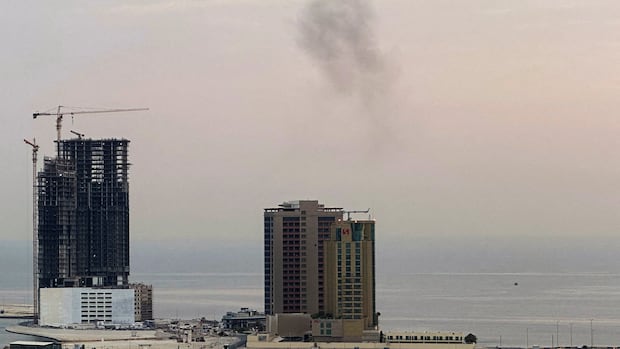
Bahrain also came under renewed attack early Tuesday morning as Iran retaliated over the latest round of U.S. airstrikes. Bahrain, home to the U.S. navy’s 5th Fleet, sounded its missile alert sirens three times, urging people to seek shelter.
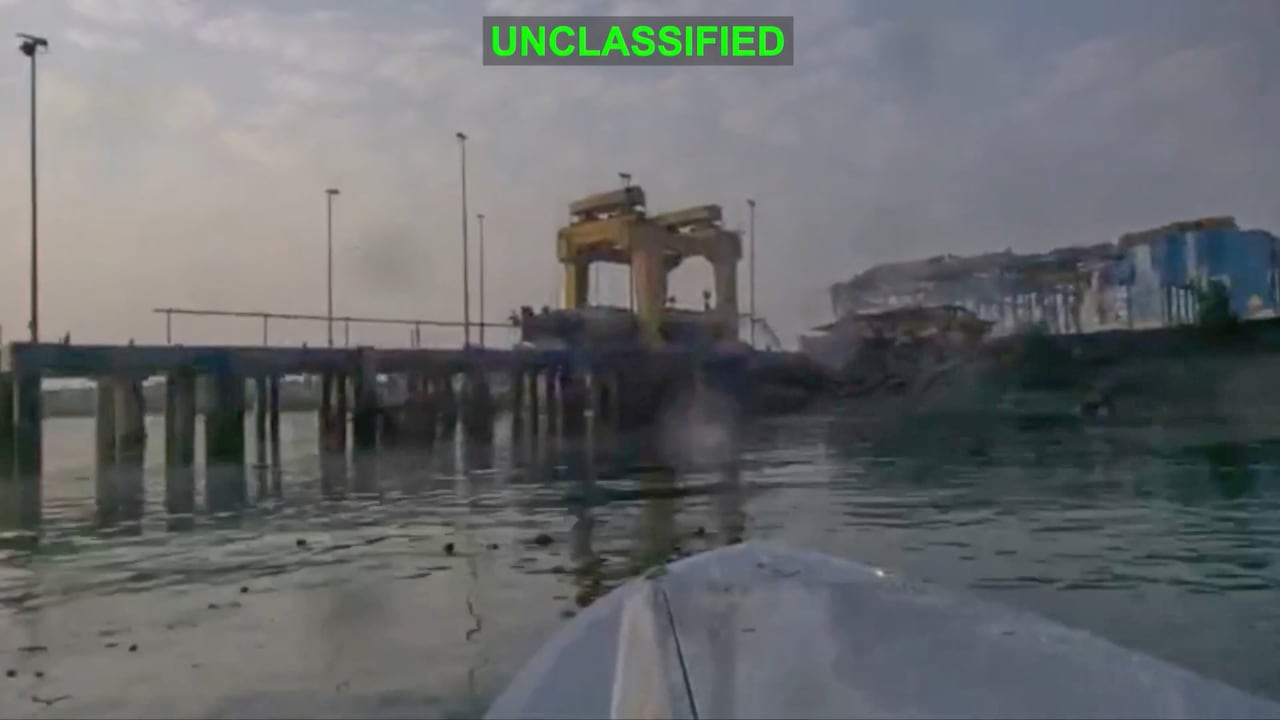 This image from video released by U.S. Central Command on Monday, shows a view from a one-way attack surface drone, fired by U.S. military, closing in on Bandar Abbas Naval Base, Iran. (U.S. Central Command/The Associated Press)
The U.S. military’s Central Command said it struck areas around Abu Musa, Bandar Abbas, Bushehr, Chahbahar, Jask and Konarak, targeting Iranian “coastal defence systems, missile and drone sites and maritime capabilities.” Iran acknowledged strikes around those areas, but provided no immediate casualty or damage assessments.
“These strikes will continue imposing a heavy cost on Iranian forces and degrade their ability to attack innocent civilians and commercial shipping in the Strait of Hormuz,” the U.S. military said.
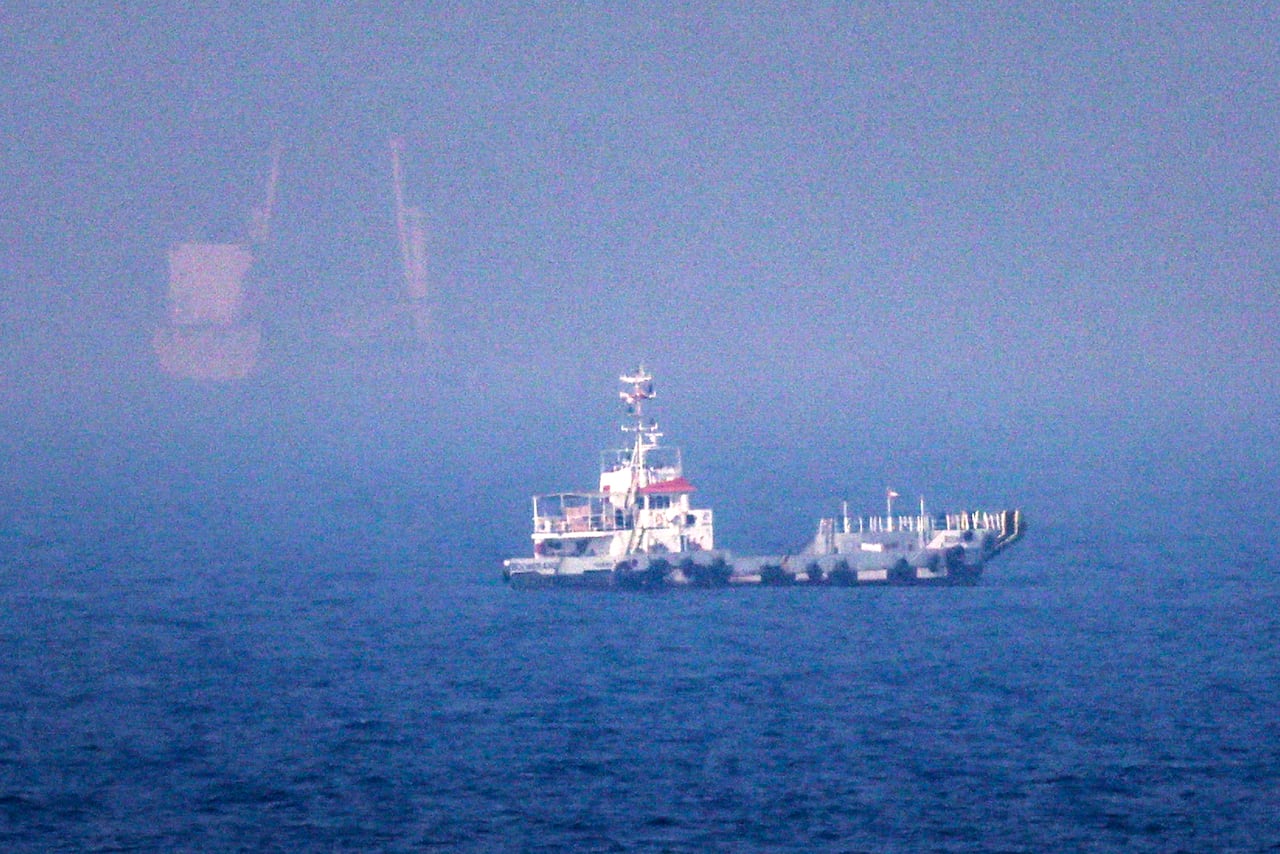 This picture shows ships sailing near the Strait of Hormuz off the eastern coast of the United Arab Emirates at Khor Fakkan on Monday. (AFP/Getty Images)
Meanwhile, the United Arab Emirates’s Ministry of Defence said early Tuesday that Iran attacked two tankers in the Strait of Hormuz, killing one mariner from India and wounding eight others — six from India and two from Ukraine. The ministry said Iran launched two cruise missiles at the tankers Mombasa and Al Bahiyah. The attacks set both tankers ablaze, though the fires were extinguished.
India’s Foreign Ministry said it had lodged a strong protest with Iran after summoning its deputy ambassador over the killing.
Iran’s paramilitary Revolutionary Guard claimed the attack on the tankers, saying the vessels “ignored repeated warnings.” Its statement accused the U.S. of “inciting vessels to use an illegal route” and warned that cooperation with the “aggressor enemy” would result in damage, delays in reopening the waterway and a global energy crisis.
The United Kingdom Maritime Trade Operations agency said a tanker had been hit by an unknown projectile while travelling 40 nautical miles northeast of Oman’s Qalhat.
Reuters could not immediately verify whether that report referred to the same incident as the one reported by the UAE Ministry of Defence.
‘A moving target’
Before the conflict, around a fifth of the world’s oil and gas traffic passed through Hormuz daily, delivering more than 15 million barrels of fuel to global markets worth at least $1.2 billion US. If the U.S. were to impose a 20 per cent fee, it could generate around $240 million US a day.
With the latest developments, the price of benchmark Brent crude oil rose to a one-month high of over $87 US in trading early Tuesday, still well below the nearly $120 US reached at the height of the war but threatening to make costs everywhere higher. The price was just over $72 US before the war started on Feb. 28, and dipped below $76 US last month when it appeared a ceasefire would hold for at least 30 days.
Quebec-based Desgagnes’s two freighter ships are the only known Canadian commercial vessels that were stuck in the Gulf when the U.S. and Israel launched attacks on Iran in late February.
Desgagnes vice-president Pascal Larose said that U.S. navy officials in Bahrain have provided him with a route to steer clear of mines and pledged a measure of protection come departure day, but the “danger zone” will take 12 hours to sail through.
“It’s a moving target,” Larose said in a phone interview, stating that the exit hinges on American military authorities. He said most of the original crew members went home to the Philippines and Ukraine several weeks ago, with fresh crews now anxious to leave the area.
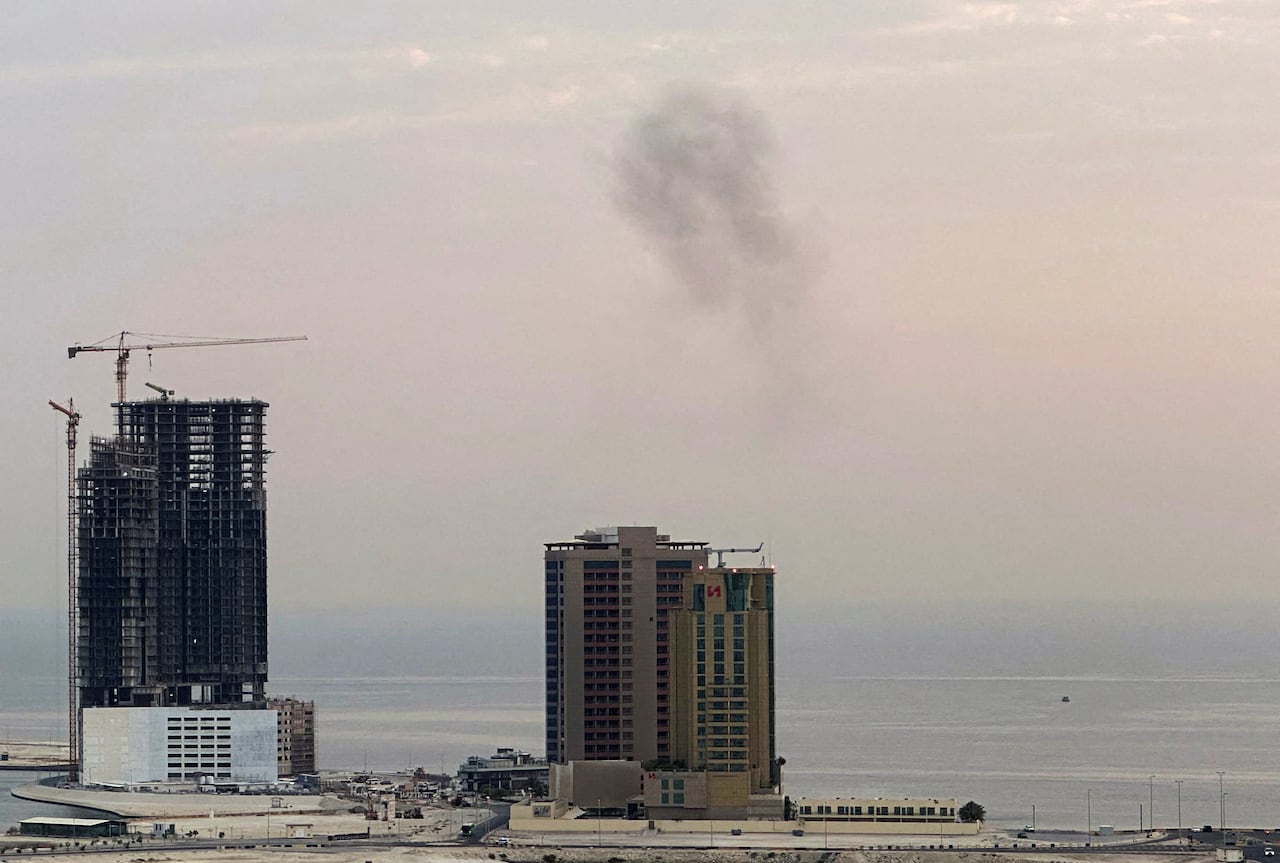 Smoke rises after a drone was intercepted during early morning hours in Manama, Bahrain, on Tuesday. (Reuters)