

Listen to this article
Estimated 2 minutes
The audio version of this article is generated by AI-based technology. Mispronunciations can occur. We are working with our partners to continually review and improve the results.
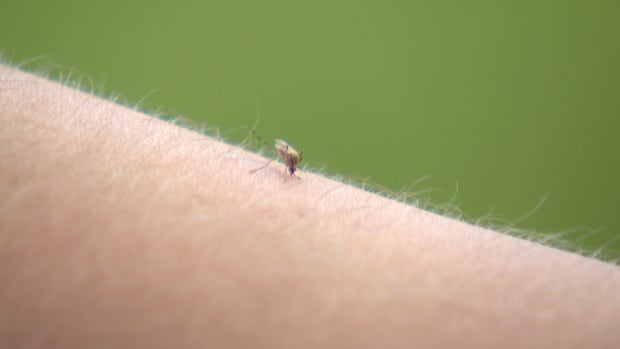
Have mosquitoes been biting you more than usual lately?
Officials with the City of Regina say a sustained period of rain and heat has created a “perfect storm” for rapid population growth of summer’s most notorious blood-sucking pest.
Ashley Thompson, the city’s manager of parks and technical services, said the city’s trapping program caught 780 mosquitoes over the course of 11 weeks — and then caught nearly 2,000 in the last two days.
“The weather has created the perfect storm,” Thompson said at a news conference on Tuesday.
“A lot more rain than we’re used to in June, and then the heat came and it just accelerated the larval development.”
The city’s mosquito control program involves treating standing water with larvicide that specifically targets and kills the juvenile insects.
But for the adult population, there is very little the city can do, Thompson said.
 Ashley Thompson, the City of Regina’s manager of parks technical services, speaks with media about the explosive growth of mosquito numbers in the city. (Kirk Fraser/CBC)
Killing masses of adult mosquitos involves toxic chemicals deployed by special and expensive machines.
“We are seeing standing water drying up, which is good news,” Thompson said. “So we will see a spike for a week or two but then it’ll go back down again.”
WATCH | Wet Sask. summer leads to mosquitoes and possibly wheat midges:
Wet Sask. summer leads to mosquitoes, and possibly wheat midges
Rainy weather in Saskatoon has pushed mosquito counts to almost 10 times higher than this time last year. The wet conditions may be also stirring up the wheat midge, a tiny insect that can hollow out the crop from inside with no visible damage outside.
In the meantime, Thompson said the city is urging people to use mosquito repellent and wear light-coloured clothing.
Sean Prager, an associate professor of plant sciences at the University of Saskatchewan, told CBC News last month that products containing DEET remain the gold standard.
However, oil of lemon eucalyptus and a compound called IR3535 are also effective, he said.
Permethrin-treated clothing and gear works, too, but nearly everything else is “nonsense,” Prager said.