
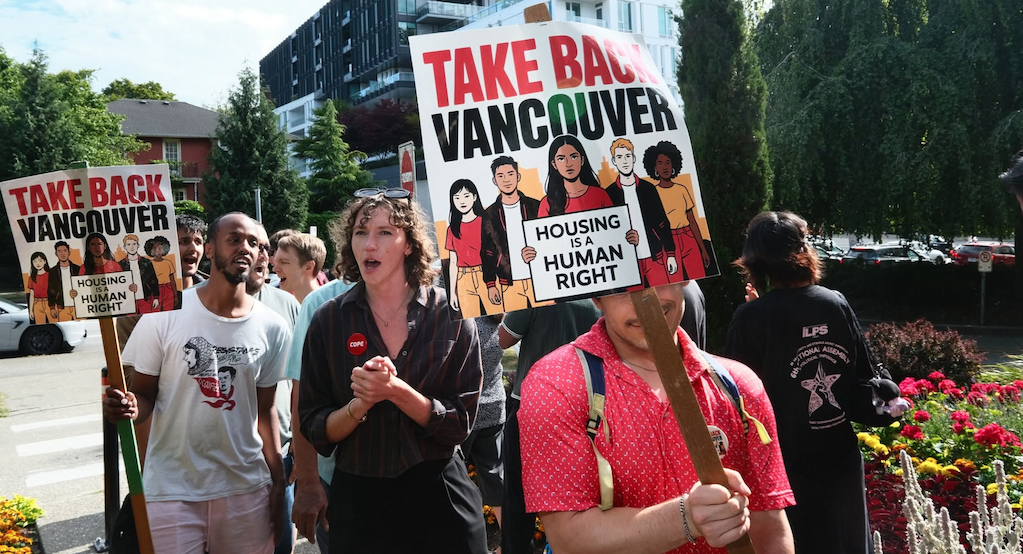
A union representing hospitality workers across British Columbia is challenging Vancouver city council’s decision to provide incentives to hotel developers, amid the city’s ongoing housing affordability crisis.
Unite Here Local 40 filed a petition with the Supreme Court of British Columbia earlier this month seeking judicial review of incentives being offered by Vancouver city council to hotel developers, at a time when the city does not have a demonstrable shortage of hotel rooms.
The union issued a report last month demonstrating that hotels are outpacing affordable housing, even though hotel occupancy in Vancouver during the FIFA World Cup was down compared to the same time last year.
At a meeting on June 2, Vancouver council decided to create a downtown exclusion area for hotel projects based on its interpretation of Bill 16, a provincial toolkit introduced this past winter that is intended to encourage cities to build more affordable housing. According to the union, the city’s interpretation is a misuse of this bill.
Bill 16 includes a provision to offer density bonuses — a tool that municipalities can use to allow developers to build to a higher density in exchange for providing affordable housing units or amenities.
Last month, Vancouver council held a technical briefing to comply with Bill 16, and included ways to provide density bonuses to hotel developers in the city — a provision not included in the bill.
Michelle Travis, research director at Unite Here Local 40, said the union wants to send the decision back to council for consideration because handouts to developers are being put before the needs of workers in Vancouver who need affordable housing.
“We have been concerned about what the city’s priorities have been with regard to this sort of narrative around a hotel room shortage crisis,” Travis told PressProgress.
“From what we hear from our members who work downtown and other hotel workers that we talk to, the driving concern for them is affordability and being able to afford to live in the city that they work in.”
Instead of working to address housing affordability issues however, Travis said the city is instead prioritizing developers, even though the numbers don’t show a clear need for more hotel rooms.
“Our members work in hotels owned by real estate developers who are making the city more and more unaffordable,” said Travis.
“A new hotel development policy that was adopted last year was to target 10,000 rooms by 2050, but at the rate they’re going, they’re likely to hit that objective like by the end of the year in terms of numbers of rooms approved.That’s extraordinary considering the affordable housing targets and where the city’s at on that.”
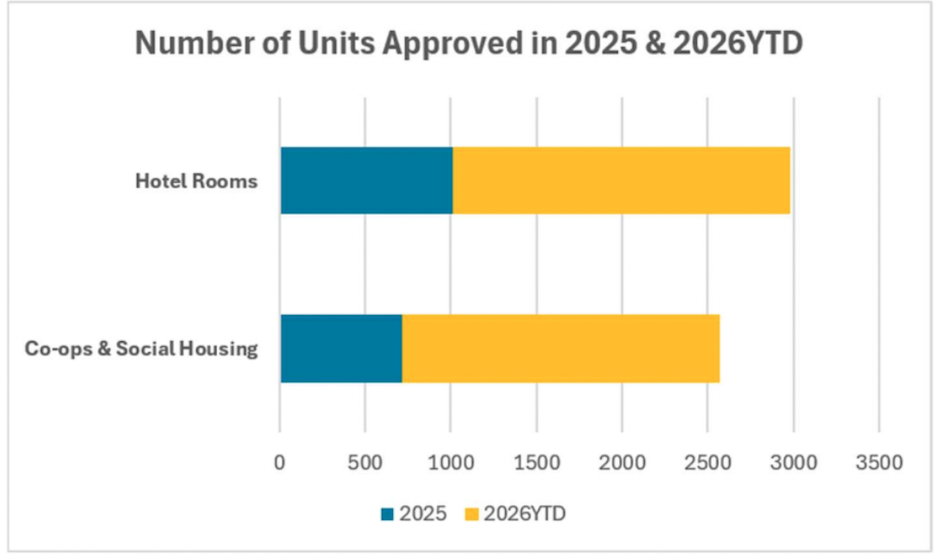
Source: Unite Here Local 40 report on hotel shortage
When the union asked the city why hotel developments were even included in its technical briefing on Bill 16 last month, Travis said the city gave the explanation that they were “required” to, based on new density provisions for hotel developments.
However, Bill 16 does not mention hotels at all.
When asked about this discrepancy, a representative from the city of Vancouver told PressProgress that they were unable to comment because the issue was still before the courts.
A representative from Mayor Ken Sim’s office told PressProgress that “Council’s priority remains making Vancouver more affordable by growing our economy, creating good jobs and increasing the supply of housing and hotel rooms that support tourism, conventions and local businesses.”
The Mayor’s office did not respond to questions regarding Unite Here Local 40’s petition and their interpretation of the provincial bill.
“We feel like the workers have been an afterthought in all this. This has been the worst summer they’ve had since the pandemic,” Travis said. “It is very difficult to be able to make ends meet if you’re not getting the hours that you need to be able to to support yourself and your family.”
“It’s a disconnect, I think, between what the city’s focused on and what working people really need to be able to get by.”
Dr. Penny Gurstein, a Professor Emeritus at UBC’s School of Community and Regional Planning who focuses on housing agreed with the union’s assessment, added that the current city council is not prioritizing the needs of working class Vancouverites.
“We have a surplus of units like condos and other units that are not really affordable and not suitable for people who want to live and work in Vancouver,” Gurstein told PressProgress.
“It seems odd that they would prioritize hotel development over providing affordable housing.”
Gurstein highlighted that the density bonuses being offered to hotel developers are actually intended to be provided for the development of affordable housing.
“This council seems to be very interested in furthering a sort of tourism agenda that seems to be not really addressing the key issues in Vancouver,” Gurstein added.
“That seems to be very odd to be introducing density bonusing, something that is very clearly only intended to be encouraging affordable housing. This will benefit developers of hotels who are already benefiting from the revenue they get in terms of renting out these commercial spaces. So, it seems like a very very odd approach and not particularly thought out.”
Last year, Gurstein signed an open letter alongside urban planners, architects and academics, urging BC Premier David Eby to seek “enduring housing solutions.”
The letter states that the government should “not bail out speculative development models” and “instead use this moment to invest in non-market housing.”
“US and Canada are the lowest in terms of our percentage of non-profit housing compared to market housing,” Gurstein said.
“We have to think about how do you actually make housing affordable in perpetuity. We have to think about using public land for affordable housing. I just don’t think we can leave it to the private sector to do this.”
Our journalism is powered by readers like you.
We’re an award-winning non-profit news organization that covers topics like social and economic inequality, big business and labour, and right-wing extremism.
Help us build so we can bring to light stories that don’t get the attention they deserve from Canada’s big corporate media outlets.