
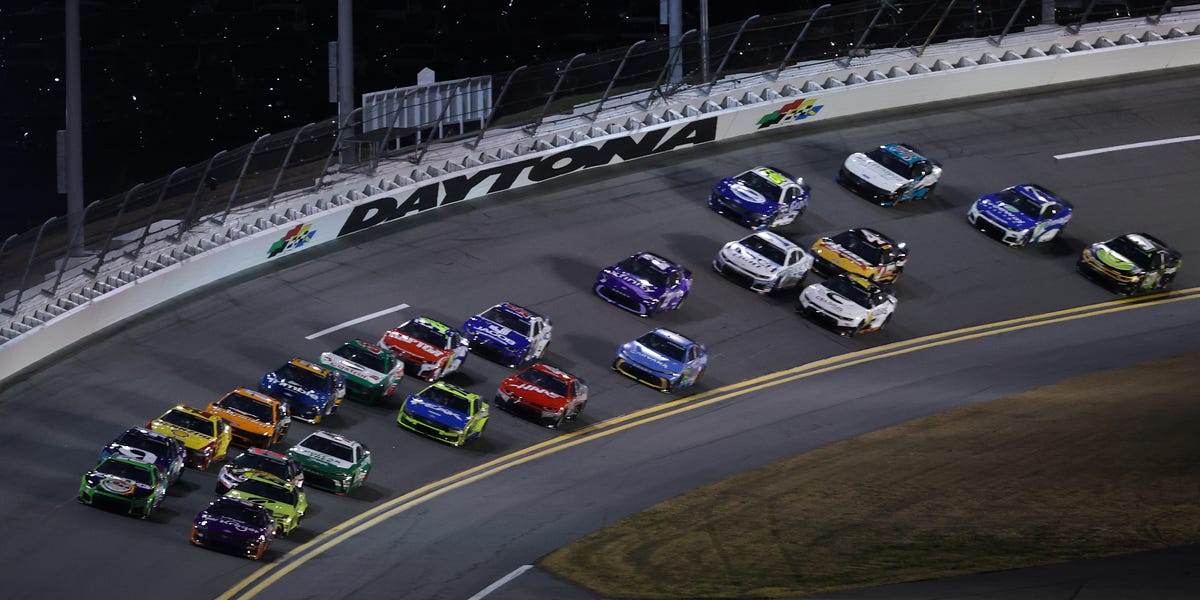
The Coyote V-8 in the current Ford Mustang GT, the standard-bearing model of the automaker’s current pony car, produces around 480 horsepower in bone-stock form. Next month, Mustang-branded cars racing in the NASCAR Cup Series will run at Daytona with a target output of just 465 hp. But while the relatively low output is an incredibly strange look for the series, the logic behind the change is intriguing.
The reduction in power, created by further restricting the standard engines the series uses, is meant to balance out a massive reduction in spoiler size, dropping from seven to four inches. Combined, the changes should mean similar racing speeds with a significant change in the amount of both downforce and drag produced by cars.
In theory, that means getting away from the effortless multi-lane pack racing and extensive fuel saving that have defined races at Daytona and Talladega since NASCAR introduced the Next Gen car in 2022. By taking away both aero grip from additional downforce and impact on cars further behind created by additional drag, cars will be closer to grip-limited in the manner that they have been at the reconfigured Atlanta track the series ran this past weekend. It should mean more aggressive racing, more movement within the pack, and less time spent saving fuel over long green flag stints.
All of that should make pack racing more interesting, although it is unlikely to completely copy the IRL-style racing seen on the narrow 1.5-mile high-banked track at Atlanta. It should also still keep cars bunched relatively close together, meaning that it is unlikely to reduce either the frequency or size of field-sweeping “big one” wrecks that have been prevalent at both NASCAR superspeedways for decades.
At the moment, this experimental package is being tested only for the Summer Cup Series race at Daytona on August 29th. If the experiment is a success, the rule set could be adopted for further plate racing events, like the playoff round at Talladega scheduled for later in the year. It may be an odd visual to see an entire NASCAR field that could potentially have less power than a relatively pedestrian Mustang pace car, but anything that improves racing quality is probably worth trying once.
Fred Smith’s love of cars comes from his fascination with auto racing. Unfortunately, that passion led him to daily drive a high-mileage, first-year Porsche Panamera. He is still thinking about the last lap of the 2011 Indianapolis 500.