

Listen to this article
Estimated 2 minutes
The audio version of this article is generated by AI-based technology. Mispronunciations can occur. We are working with our partners to continually review and improve the results.
Environment Canada has placed Toronto under an orange-level air quality warning due to smoke from wildfires burning in northwestern Ontario.
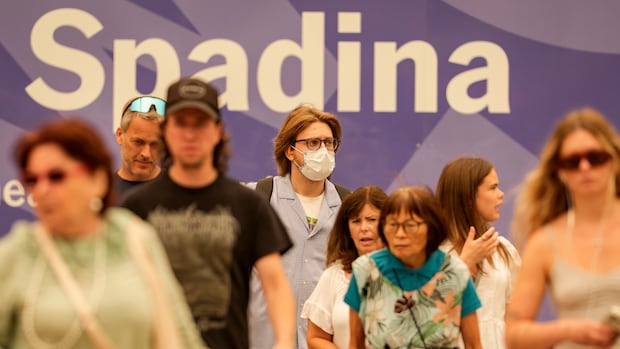
That means a dirty sky, with an orange tinge, is hanging over the city, blotting out distant landmarks. Some residents have taken to wearing masks to keep out the fine particles in the smoke.
The federal weather agency says in the warning that conditions may improve Friday morning.
 A person in Toronto wears a mask as the city remains under an air quality warning due to forest fire smoke from northwestern Ontario. (Evan Mitsui/CBC)
The Ontario government says there were 148 active wildland fires in the province’s northwest region as of Tuesday evening. Of these fires, 69 are not under control, seven are being held, five are under control 67 are being observed. The province says 26 new wildland fires were discovered in the region.
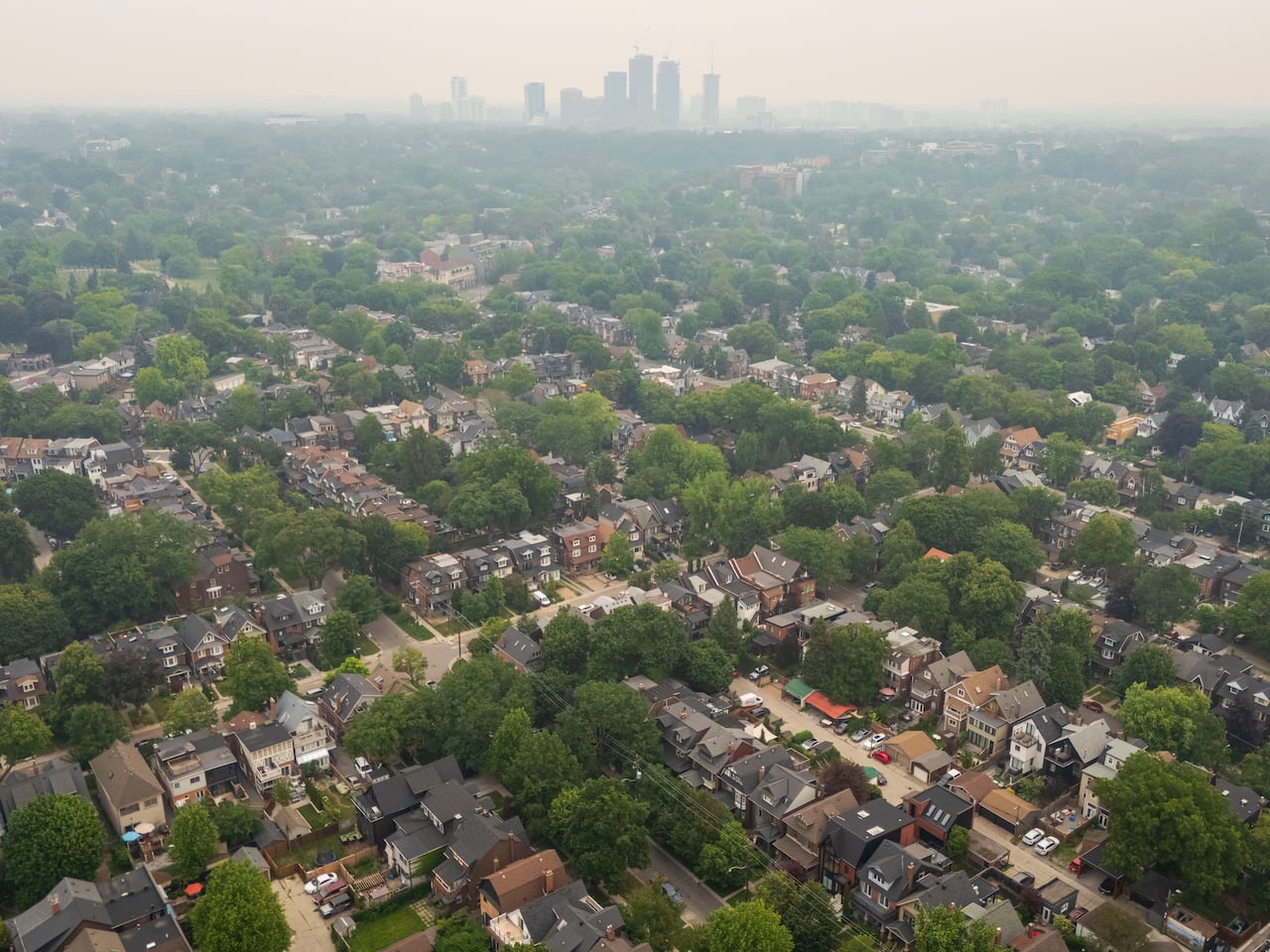 Haze from forest fires burning in northwestern Ontario obscures the sunrise over Toronto on July 15, 2026. (Evan Mitsui/CBC)
Environment Canada says residents may experience eye, nose and throat irritation, headaches, chest pains or severe cough. Seniors, pregnant people, young children, people with an existing health condition and people who work outdoors are more likely to be affected by smoke.
“Limit time outdoors. Reschedule or cancel outdoor sports, activities and events,” Environment Canada says in the warning.
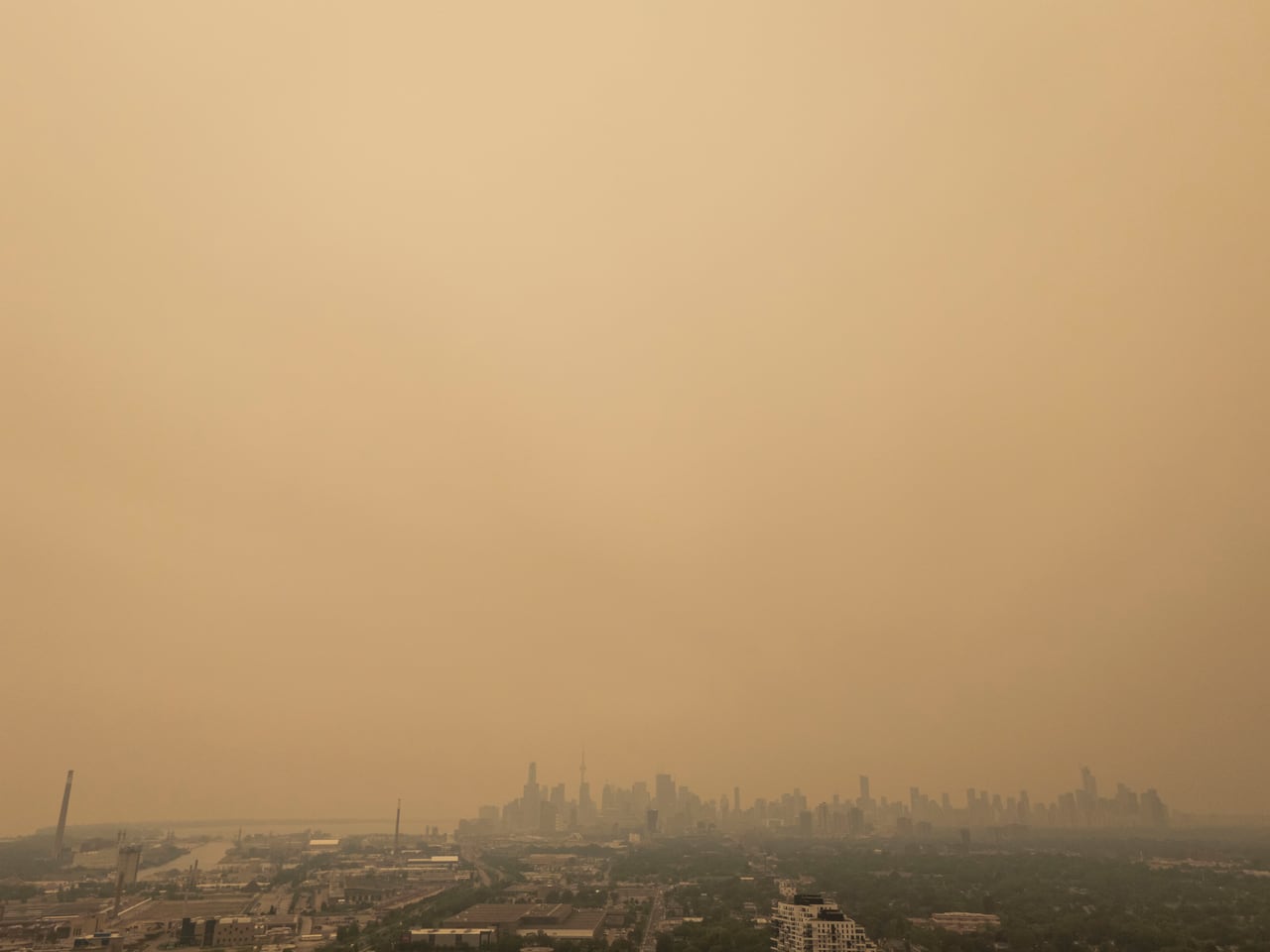 The Toronto skyline is barely visible amid the orange tinged sky. (Evan Mitsui/CBC)
Toronto Public Health has activated its wildfire smoke response strategy due to the smoky air in the city.
That means the public health unit is promoting the use of cleaner air spaces for residents who face barriers accessing cleaner air and air filtration at home, according to Toronto Mayor Olivia Chow.
Six locations are available: Metro Hall, Toronto City Hall, and the North York, Scarborough, York and East York Civic Centres.
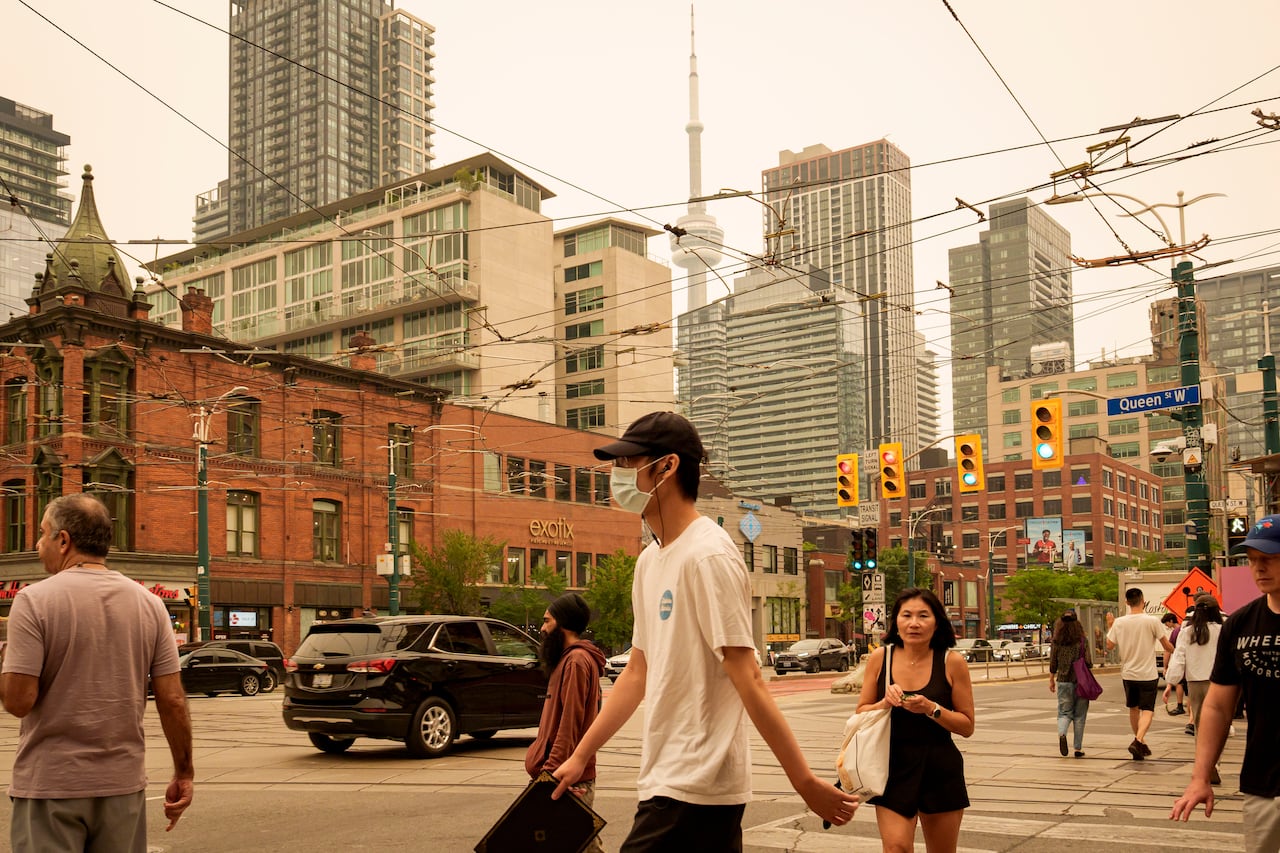 Environment Canada is urging residents to limit time outside as the air quality warning remains in place. Residents are shown here in a downtown intersection. (Evan Mitsui/CBC)
The air quality warning was issued Tuesday night, before a heat event in the city ended. Environment Canada lifted a yellow-level heat warning for the city shortly before 4 p.m. Wednesday.
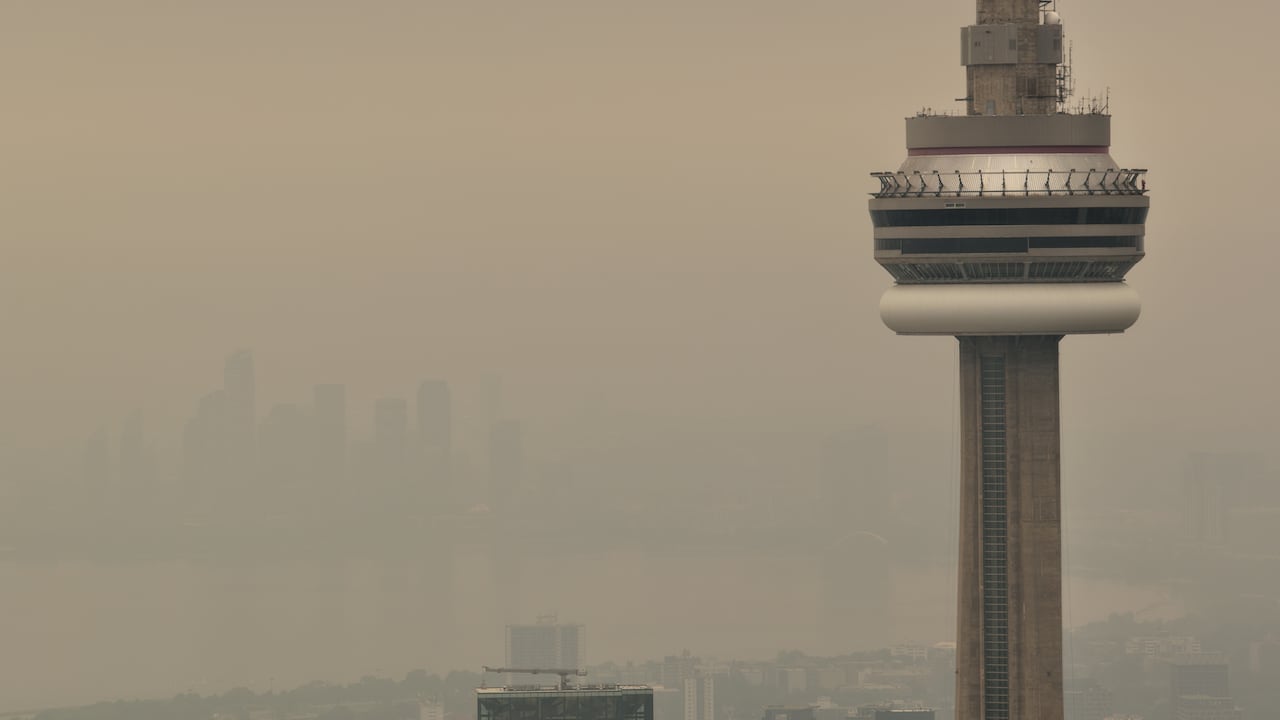 A drone image of the CN Tower, against the dirty sky, is shown here. (Patrick Morrell/CBC)
Toronto ranked first in a list of the world’s most polluted major cities as of Wednesday morning, according to a global ranking by IQAir, a Swiss air quality technology company. It has since dropped to second place behind Kinshasa in the Democratic Republic of Congo.
Environment Canada meteorologist Brian Owsiak said the smoke will likely “flush” out with the shift in wind direction coming later in the week or during the weekend.
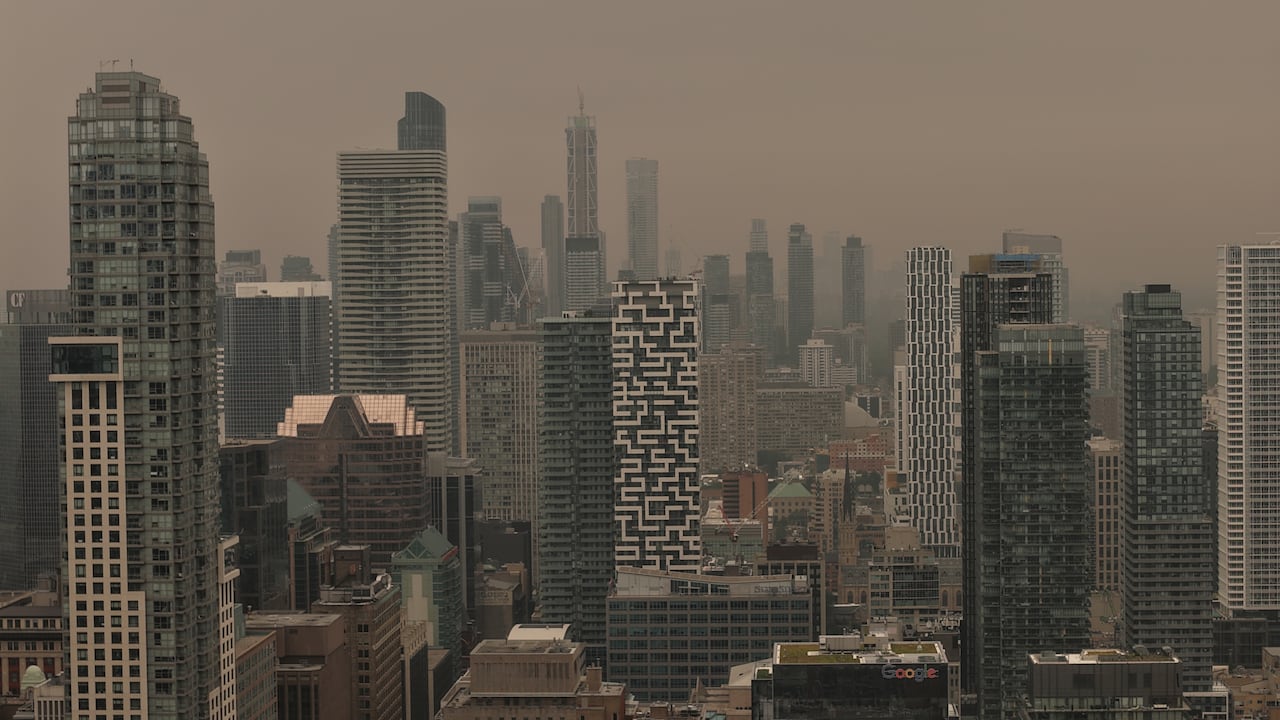 A drone image of the Toronto skyline with a smoky backdrop is shown here. (Patrick Morrell/CBC)