
CONTAINMENT FEARS:
The epidemic could be two to four times larger than the official case count because 80% of new infections are outside known contacts
AP and BLOOMBERG, BUNIA, DR Congo
Confirmed cases of Ebola in the Democratic Republic of the Congo (DR Congo) have reached 2,011, including 754 deaths, government data released on Tuesday night showed in what authorities say is the fastest-growing outbreak on record even as some health workers have gone on strike over payment issues.
A total of 753 people remain in isolation or in hospitals, while 366 have so far recovered, data from the Congolese Ministry of Health showed.
The death toll has climbed from 377 on June 28, while the outbreak has spread into two new provinces beyond its original epicenter in Ituri.
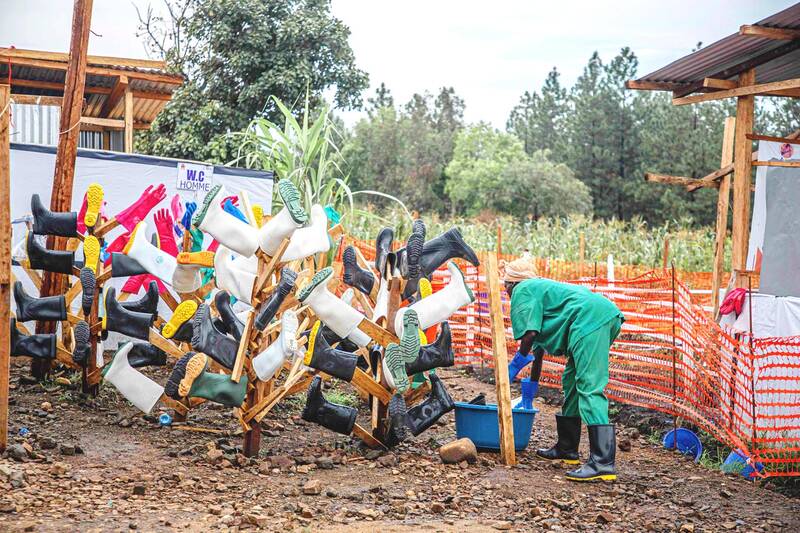
Photo: AFP
The epidemic has already exceeded half the number of cases recorded during the DR Congo’s previous Ebola outbreak, which began in 2018 and lasted almost two years, Doctors Without Borders said yesterday.
Contact tracing remains a challenge, with coverage of those exposed still at 67 percent.
The Central African nation has been battling the Ebola outbreak caused by the rare Bundibugyo virus since May 15.
Two months since the onset, the outbreak continues to spread faster than health officials can track despite an expanding response.
The true scale of the epidemic could be “at least two to four times” larger than the official case count because 80 percent of new infections are occurring outside health officials’ contact lists, WHO Health Emergencies Programme Executive Director Chikwe Ihekweazu told reporters in Geneva, Switzerland, on Tuesday.
“You have to imagine that this is a fire,” Ihekweazu said. “We’ve seen the fastest growth in a single month since the outbreak started and of all the Ebola outbreaks that we have managed.”
A key challenge is that health authorities have yet to identify the outbreak’s patient zero, while displacements from armed conflict as well as mining-related movements have made it difficult to trace thousands who have come in contact with infected individuals.
Treatment capacity in Bunia was close to 800 beds, with capacity increasing every week, and lab capacity has grown from 1 to 14 labs, an effort Ihekweazu lauded.
However, he said that despite “our best efforts … we have not caught up in the race.”
A funding gap, attacks on health centers, an ongoing conflict in eastern DR Congo and mistrust among local communities have hampered the response.
Health workers at the Bunia General Hospital went on strike yesterday, the latest group to have walked off their job at the epicenter over payment issues.
Health professionals and other frontline workers barricaded the entrance of the hospital, lamenting they haven’t received any compensation despite working under difficult conditions.
Dozens of healthcare workers at an Ebola virus treatment center in northeast DR Congo on Monday went on strike over unpaid salaries and bonuses, but on Tuesday agreed to resume work under the condition that the government pays them within 72 hours.