

Listen to this article
Estimated 3 minutes
The audio version of this article is generated by AI-based technology. Mispronunciations can occur. We are working with our partners to continually review and improve the results.
A group of citizens is raising concern about a possible mining project in the Lanaudière region and the lasting impact it could have on the natural environment.
Exploratory work is underway in the Matawanie region, northeast of Montreal, where a coalition made up of lake associations and elected officials are worried.
“It makes me cry inside. Of course, I’m an old man and, you know, I brought my grandkids here and they cried,” said Benoit Laporte, a member of the Coalition Matawinie Nos Lacs Sans Mines.
Laporte was emotional during a recent tour of the area, standing on the remnants of burnt leaves from blasting required to drill boreholes.
“You know [my grandkids] couldn’t believe all these maples … 200-year-old maples nobody took care of.”
 Benoit Laporte is an executive committee member of Coalition Matawinie Nos Lacs Sans Mines (Andie Bennett/CBC)
Laporte, a member of the anti-mining coalition’s executive committee, said mining activity is incompatible with the area’s economy, which revolves around tourism and outdoor recreation.
“We are about 300 metres from Parc du Mont-Tremblant. I mean this doesn’t belong here,” Laporte said. “It doesn’t belong where 17,000 people live.”
Water contamination concerns
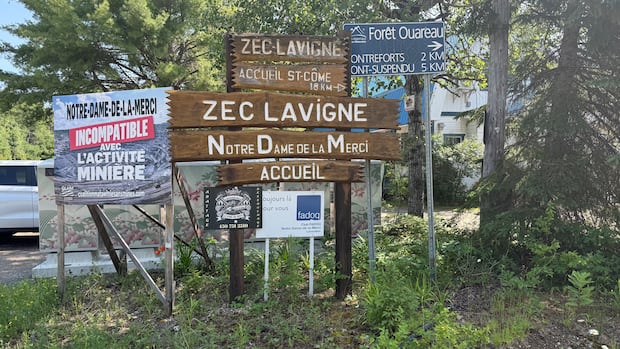
Ni-Co Energy Inc. is the Canadian mineral exploration company currently operating in the ZEC Lavigne, located in the Matawinie regional county municipality.
The company is looking for critical minerals, particularly nickel, copper and cobalt. The work comes as the Canadian government has identified responsible critical mineral development as a priority.
The mining firm has already drilled 22 boreholes with 25 more expected in August and September.
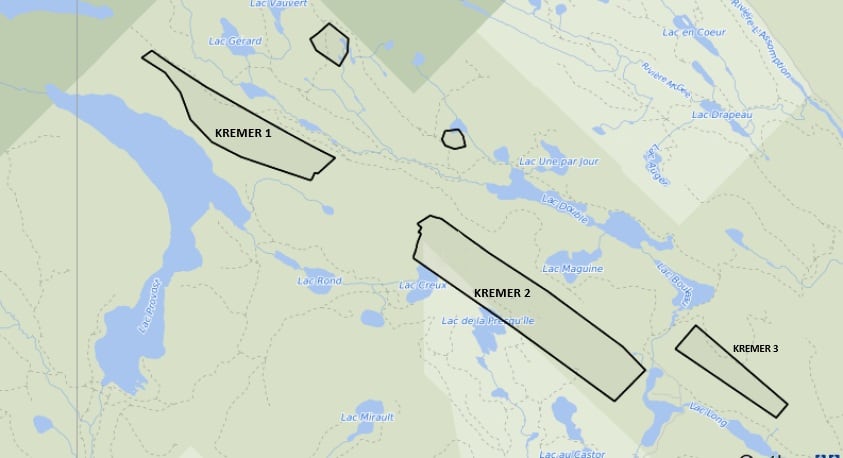 A map showing the exploratory drill sites for NiCo Energie in the ZEC Lavigne — public land used for hunting, fishing and wilderness recreation. (Coalition Matawinie Nos Lacs Sans mines)
But Laporte says the groundwork will have a lasting impact for the region.
One of the group’s primary concerns is contamination of the many waterways that – among other things – supply drinking water to the communities surrounding the drill sites.
“This drill is actually very important just owing to the fact that it’s going straight to the water source,” said Pierre Laurin, another member of the coalition. “And there’s no protection: this drill goes straight into it and that water flows and feeds all the different areas.”
The coalition is funding water analysis of a dozen lakes to know the current pH levels and to be able to monitor any possible changes.
“If it changes, we will know, but it’s going to be too late,” he said.
CBC News toured the area and the smell of sulfur permeated the air. Some drill holes had yet to be backfilled and were dripping groundwater.
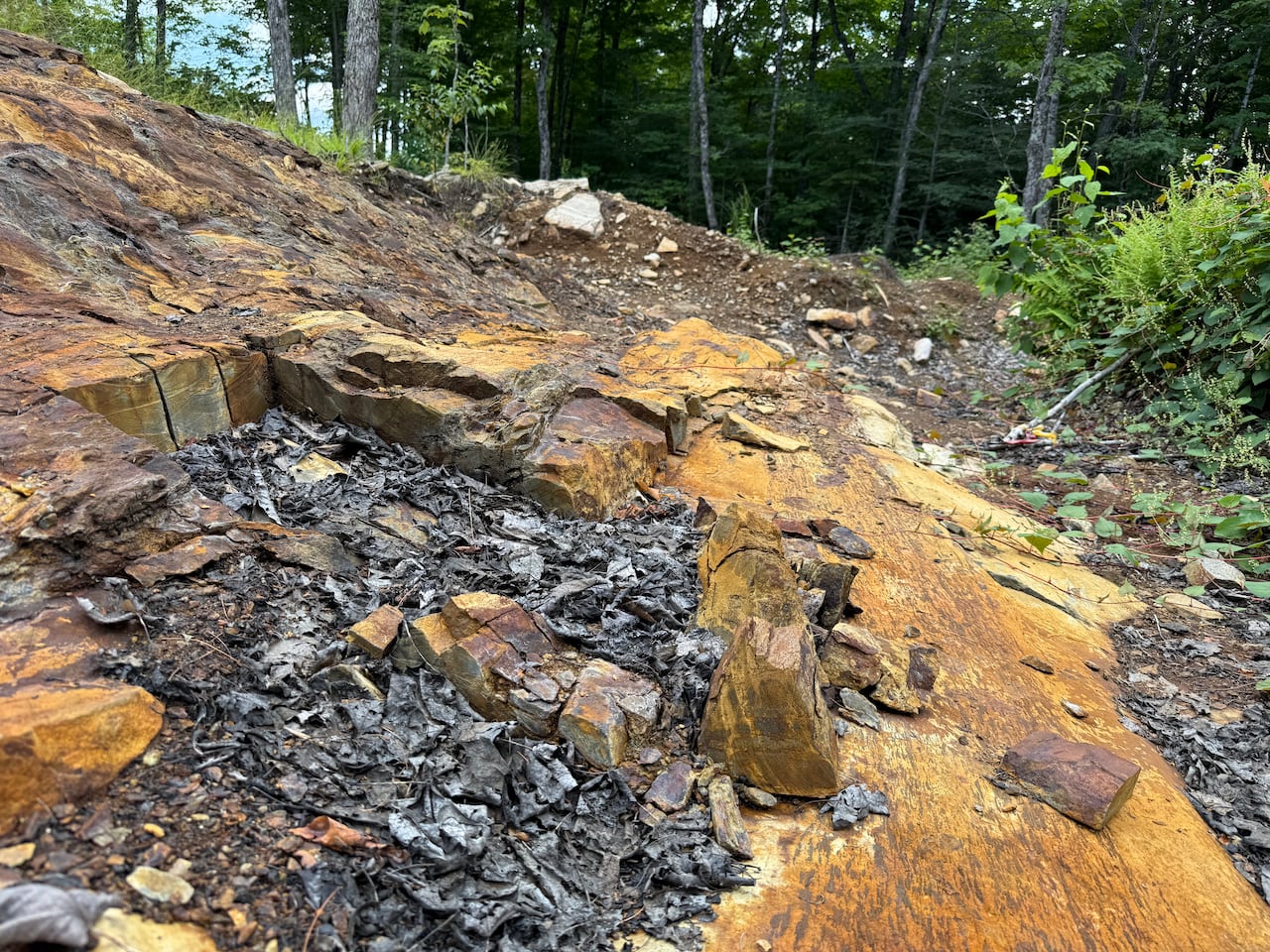 Burnt leaves litter the ground at the blast sites where diamond drill holes were made. (Andie Bennett/CBC)Company following rules, remains in exploration mode
In a written response to CBC, Ni-Co Energy says it has the permit required by Quebec’s Ministry of Natural Resources and Forests for the drill holes and that it is following all the procedures in accordance with the requirements for impact-causing exploration work.
The company also reiterated that it remains in exploration mode and no plans for either an open-air or underground mine have been presented.
For residents in the area like Laporte, the damage from exploratory drilling has already taken a toll on the mountain.
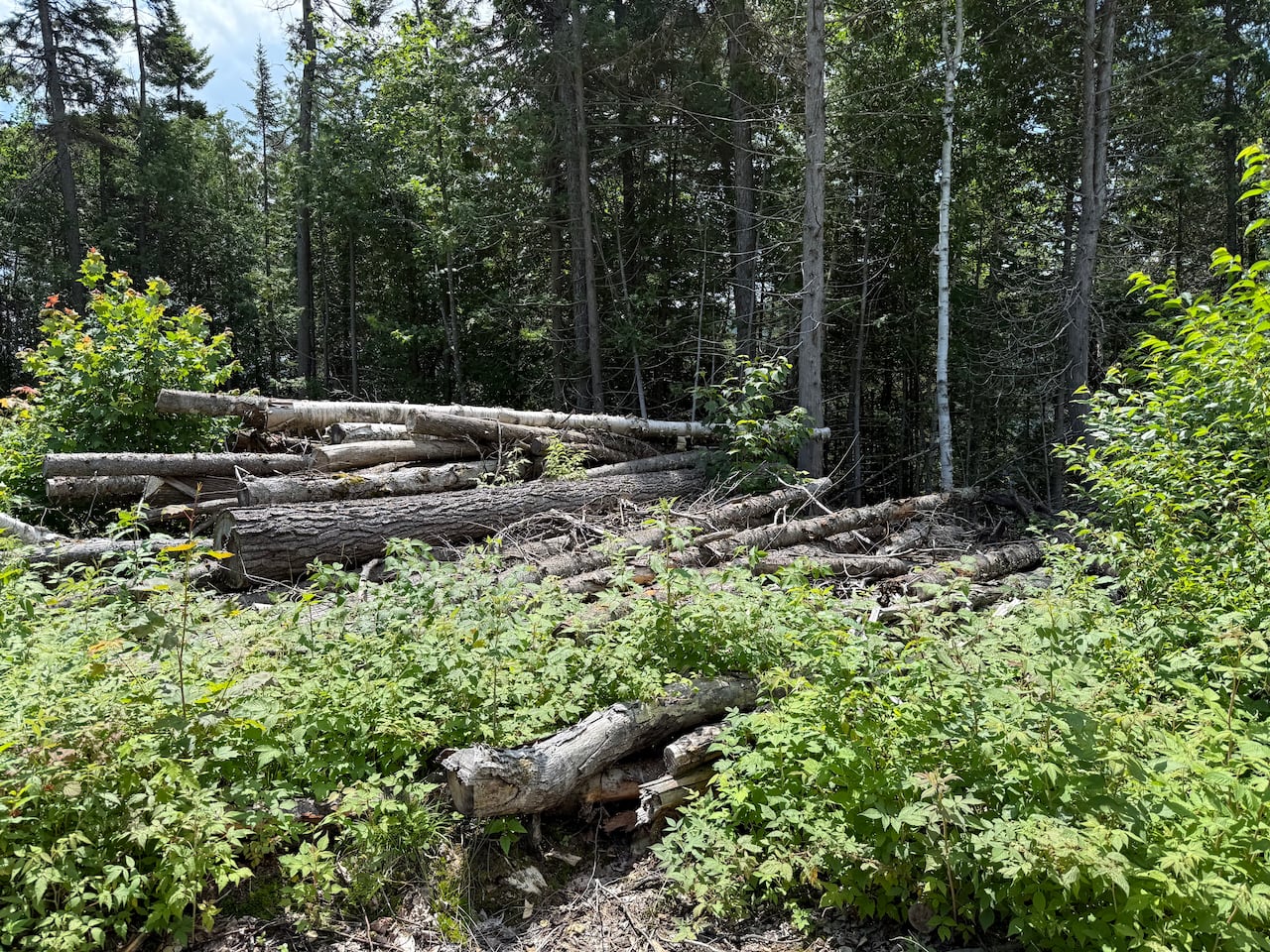 Felled trees surround the area where 22 holes were drilled for mineral exploration. (Andie Bennett/CBC)
Piles of felled trees litter the one kilometre section that was cleared for drilling.
“Why do they have to destroy all this?” Laporte said. “They know there’s not enough concentration [for a mine.]”
“You know if the mine got approved… I mean, this land will not be the same.”