
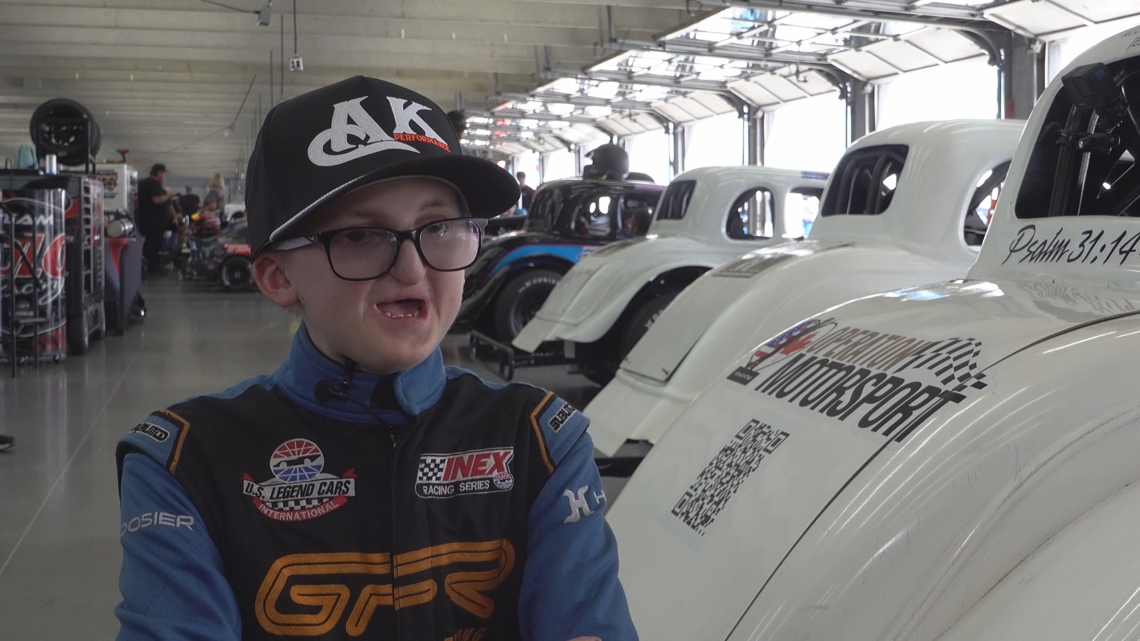
14-year-old Matthew Garland was born with ectodermal dysplasia. He moved to Huntersville to live out his racing dreams.
CONCORD, N.C. — At the track, every driver starts on the same grid. When the green flag drops during the Summer Shootout at Charlotte Motor Speedway, it doesn’t matter where you came from or what cards you have been dealt.
“It makes me feel happy. It’s fun, it’s challenging, and it keeps you wanting to come back every week and do better ” said Matthew Garland.

This story continues below.
More in Motor
Public memorial service to honor Kyle Busch at Charlotte Motor Speedway
Public memorial announced for NASCAR icon Kyle Busch
What started for Matthew Garland as a pandemic hobby, turned into something much bigger. After finding success in indoor and outdoor karting in his home state of California, he and his family decided to move across the country to be in the heart of racing in Huntersville.
Long before he ever started racing, Matthew was learning how to overcome adversity. Matthew was born with a race disorder called ectodermal dysplasia.
“It’s a rare genetic condition affecting about one in every 100,000. It affects my skin, teeth and hair. In the car we have to regulate my heat to make sure I don’t get overheated,” said Matthew.
“There were tough times. When you see your child going through surgeries, it’s difficult,” said his mom, Leslie. “And when he got to the age where kids were more likely to point out differences, that was difficult too. But he’s so resilient. Through every surgery, he’s always found the bright side.”
Matthew and his family saw less and less of those differences since moving to the east coast and watching Matthew become accepted and welcomed with open arms in the NASCAR and racing communities: a place where he is known first as a racer.
“You always want your child to be in a community where they feel supported and where their dreams and goals are understood, and this is one of those places,” said Leslie Garland. “You’ll see here on pit road when someone gets into a into a wreck, it doesn’t matter if it’s your crew or somebody else, everybody’s surrounding the car trying to be helpful and that. That’s the kind of community you want to be a part of.”
“We really don’t stop for a lot,” said Matthew. “We’re here every day being normal people. We’re not different in any way just because of some condition that we can’t really control.”