
The right to harvest is more important
Recent letters argue that the 1850 Douglas Treaties are invalid and that Aboriginal title — the right to exclusive use and occupation of land — still exists to all of Greater Victoria.
This is despite the Supreme Court of Canada having ruled in 1965 in White and Bob that an identical document respecting Nanaimo was a valid treaty.
The headline to one letter asserted that “Giving up all that land would make no sense,” particularly “to 150 newcomers who at that time occupied only a few dozen acres around what is now downtown Victoria.”
The fact that there were only 150 newcomers may have made it seem unlikely that selling rights to the land would result in any short-term changes, particularly since Gov. James Douglas had assured them “that they would not be disturbed in the possession of their Village sites and enclosed fields … and that they were at liberty to hunt over the unoccupied lands, and to carry on their fisheries with the same freedom as when they were the sole occupants of the country.”
As well, after the last time Europeans had visited Vancouver Island, they had disappeared again for half a century. How could anyone be expected to have foreseen the changes and growth their reappearance would bring?
We take land ownership so much for granted that we can fail to understand people to whom a relationship to land and the right to harvest its resources were important rather than the ownership of land itself.
Dr. Michael Doherty
Victoria
Take responsibility for your own health
To the folks commenting on two-tier health care: It is already here.
I have several patients who get private surgery done in a timely fashion all over the world. They pay out of pocket, and the medical expense is a tax deduction with the Canada Revenue Agency.
So, indirectly we are all paying now for two-tier health care. It would be to all our advantage if our health system were structured more efficiently so those rich folks need not go elsewhere for surgery and then use big tax write-offs. To gain efficiencies, we must all look at the value for dollar expended on health care.
As a long-term health-care provider, I can see waste in our system every day.
Twenty per cent of all acute care medical beds in Canada are occupied by patients who do not need to be in hospital. They are simply there because nobody has constructed a more efficient way to accommodate them.
Who should pay for this? Is the government responsible for paying for nursing home care? If so, is the government in a fiscal situation to do this?
Because acute care hospital beds are used inefficiently, in-patients get stacked up in the emergency rooms of hospitals, and there is no place for true emergency room patients to be seen.
In many ways, our health system is a comedy of errors. Everybody thinks someone else should be responsible for paying for what we want or think we need. We want free prescription drugs and free dental care. Myriads of people want to be placed on some long-term disability, and they drop off myriads of forms for their doctors to complete.
We should face the reality that we all have responsibility to take care of ourselves, and pay a modest amount for the care we receive.
Robert H. Brown, M.D.
North Saanich
Municipalities should collect money from fines
A 13-year-old West Shore child was fined for an e-bike or scooter violation, and his device was impounded for seven days.
I wonder if the municipality will actually collect the fine, or are these fines treated like parking violations?
In Victoria, there are possibly millions in outstanding, uncollected parking tickets, and the brilliant people occupying city hall have zero clue how to collect.
Many people just don’t pay and continue their habits with impunity.
Meanwhile, there are more parking “ambassadors” than ever roaming the streets writing tickets.
In Alberta, an unpaid parking ticket or traffic violation fine will result in the inability to renew registration of one’s vehicle until payment is made.
In Victoria, folks just must love paying taxes for services not rendered. We keep voting for the same type of people every four years.
Stephen Kishkan
Victoria
With the right pipeline, Alberta could have a sub
I enjoyed Raeside’s July 9 cartoon suggesting that Alberta would expect a submarine as well as B.C. and Nova Scotia.
The issue is easily solved by naming each boat for a province or territory. But could Premier Danielle Smith make her pipeline wide enough to allow HMCS Alberta to dock in Alberta?
Alanne Gibson
Victoria
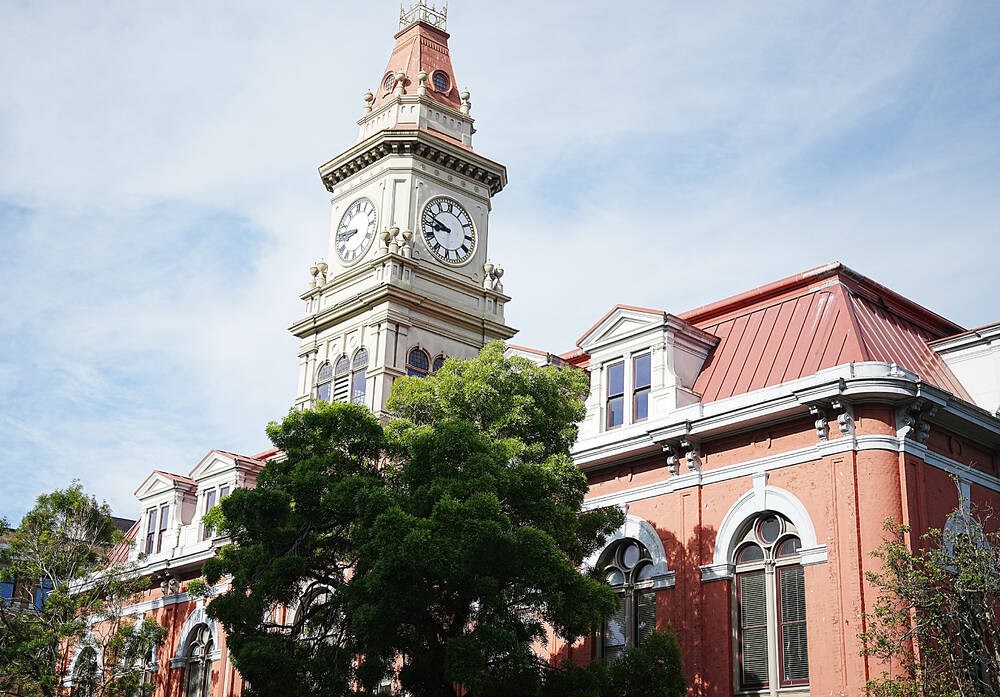
Take it from a tour guide: Victoria is beautiful
I have been a walking tour guide in Victoria for years and have had the privilege of showing people from all over the world our beautiful city.
The guests are always impressed by the beauty and the history of our city.
When I talk to local people who hold the view that downtown Victoria is dying and a filthy place, I challenge them by asking “When was the last time you went downtown?”They usually answer that they haven’t been downtown for years.
I challenge those people to visit downtown, walk along the Songhees, walk to Fisherman’s Wharf and take a historical walking tour. You can find lots of tours online. Make it your summer project to explore your beautiful city.
Phil Foster
Victoria
Alberta’s old sub fleet was bigger than Canada’s
Please, someone remind Alberta that they used to have more submarines than Canada, but they let them go.
David William Brown
Saanich
Get the straight goods on Hecate Strait
Hecate Strait does not have narrow channels. It is 45 to 145 kilometres wide, lying between Haida Gwaii and the mainland.
Its other attributes were correctly described. Any pipeline to Canada’s west coast must go through several mountain ranges. The Coast Mountains, forming the most westerly one, are bounded on the west side by fjords (inlets) from north to south.
Some fjords nearly penetrate the mountain range. The western terminals for three such pipelines are Kitimat and Vancouver at the ends of fjords, and Prince Rupert, on the ocean.
Delta, the terminal of the proposed pipeline, is on the ocean (and just a few kilometres from the U.S. border). Ships leaving from Delta heading west have a less restrictive passage to navigate compared to ships from Prince Rupert, Kitimat, and Vancouver.
As an important aside, I grew up (1949-1964) living near the old Barnet Highway in North Burnaby. The rocks on the shoreline where we went swimming in Burrard Inlet were completely coated with black tar, presumably due to tanker traffic associated with loading and unloading at the three oil refineries nearby.
Trevor Lewis
North Saanich
Exxon deserves blame for Bligh Reef disaster
A recent letter presented the drunken skipper fable that Capt. Joseph Hazelwood was responsible for the Exxon Valdez disaster.
This scapegoating was exactly what Exxon pursued in trying to downplay their own culpability. Two officers should have been on the bridge, but after the pilot was discharged, the third officer declined to wake the second mate because of the long hours he had worked. Overworking of crews was company policy.
Exxon made the decision not to repair the ship’s collision avoidance radar. Exxon had also promised, but never installed, iceberg monitoring equipment.
In addition, the U.S. Coast Guard in Valdez had cut back staff and had not informed ships that they were no longer monitoring their egress past Bligh Reef.
A double hull would have limited the spill to about 60 per cent of its volume. That 60 per cent would still have contaminated more than 2,000 kms of coastline.
Corexit may not be a carcinogen. Oil is.
The effects of cleaning up the spill took a terrible toll on those that participated. The death toll of seabirds and marine mammals has been well-documented, but the deaths and health issues of the cleanup crews have been kept under wraps for decades.
It is hubris to situate tanker terminals and traffic routes near the mouths of the Fraser and Skeena rivers.
Not all promises made by governments and corporations are kept. The profit motive is always the bigger concern.
The 2008 documentary, Black Wave: The Legacy of the Exxon Valdez is an excellent primer on the topic.
Gene Logan, Gumboot Guy (Ret.)
Vancouver
SEND US YOUR LETTERS
• Email letters to: [email protected]
• Mail: Letters to the editor, Times Colonist, 201-655 Tyee Rd., Victoria, B.C. V9A 6X5
• Submissions should be no more than 250 words; subject to editing for length and clarity. Provide your contact information; it will not be published. Avoid sending your letter as an email attachment.