

Listen to this article
Estimated 4 minutes
The audio version of this article is generated by AI-based technology. Mispronunciations can occur. We are working with our partners to continually review and improve the results.
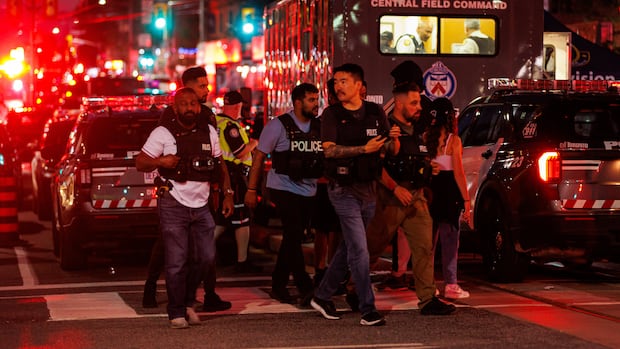
Nearly a week after Toronto’s Salsa on St. Clair festival was rocked by deadly gun violence, calls continue to mount for more to be done on safety in the city, however police data suggests shootings are at their lowest point in five years.
In the days since the shooting, festival organizers have threatened to pull the plug unless police and the city come up with concrete commitments to enhance public safety. Toronto police Chief Myron Demkiw has meanwhile called for federal legislative reform, so that any shooting in a public space, fatal or not, gets treated as first-degree murder.
Josh Matlow, the local city councillor for the area, submitted a safety motion to the city’s economic and development committee this week. And mayoral candidate and Coun. Brad Bradford chose to slam the mayor and police, calling their response out of touch in a video posted to X, formerly Twitter.
According to Toronto police data, there were 38 shootings in 2026 from January 1 to July 12 this year. That’s the fewest shootings the city has had in the same time period in the last five years, preliminary Toronto police data analyzed by CBC News suggests.
Shooting deaths for the same time period are higher than last year, however they remain on the lower end in comparison to the last five years.
Jooyoung Lee, an associate professor of sociology at the University of Toronto who researches the impacts of gun violence, said the data doesn’t diminish fears or the suffering people face after a shooting, but does point to a “bigger picture” of crime in the city declining.
“If you take an even longer, historical view back to the 80s and 90s, you’ll see that shootings are overall declining pretty steadily,” he told CBC Radio’s Metro Morning Wednesday.
Shootings typically peak from July to September: police
Asked about shooting deaths being higher so far this year than in the same timeframe last year, Nadine Ramadan, spokesperson for Toronto police, said while that’s accurate, shooting deaths are “relatively infrequent events.”
“As shooting deaths are relatively infrequent events, each incident represents a substantial proportion of the total. As three of these deaths occurred over this past weekend alone, those incidents have had a significant impact on this metric,” Ramadan said in an emailed response Thursday.
In addition to two shootings at Salsa on St. Clair last week, there was also a fatal shooting in North York on Friday.
Ramadan also said firearm violence typically peaks between July and September, so seasonal trends should be taken into account.
Shootings are still the leading cause of homicides in the city. According to the homicide dashboard on Toronto police’s website, there have been 20 homicides so far this year, of which 14 were shooting deaths.
WATCH | Residents recount what happened moment after festival shooting: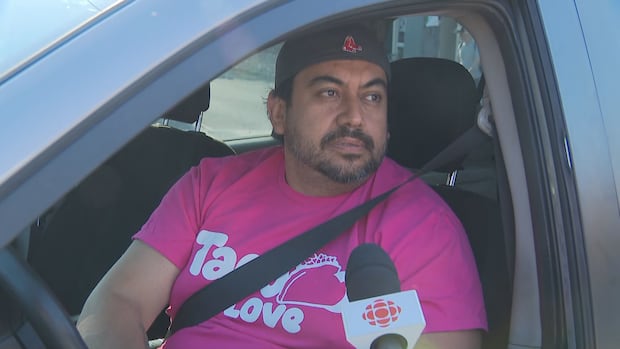
Residents react after Toronto festival shooting leaves 2 dead, multiple injured
Two residents in the area near Toronto’s Salsa on St. Clair festival recount the moment shots rang out on Saturday night. Two people were killed and multiple injured after a shooting.
But even though shootings are down, Lee says trauma from a deadly shooting like Salsa on St. Clair can tarnish the ways people feel in and see public spaces, and that can become a talking point for politicians.
“In the aftermath of these tragedies there’s almost always a familiar call for law and order, to get tough on crime, and there are political actors who almost always jump on that narrative,” he said.
“Sometimes the data tells a story that could feel unpopular, but it’s truthful.”
A “proactive” approach to gun violence, such as investment in communities, after school programs and health care access in vulnerable communities could help address the “root causes” of shootings, Lee said.