
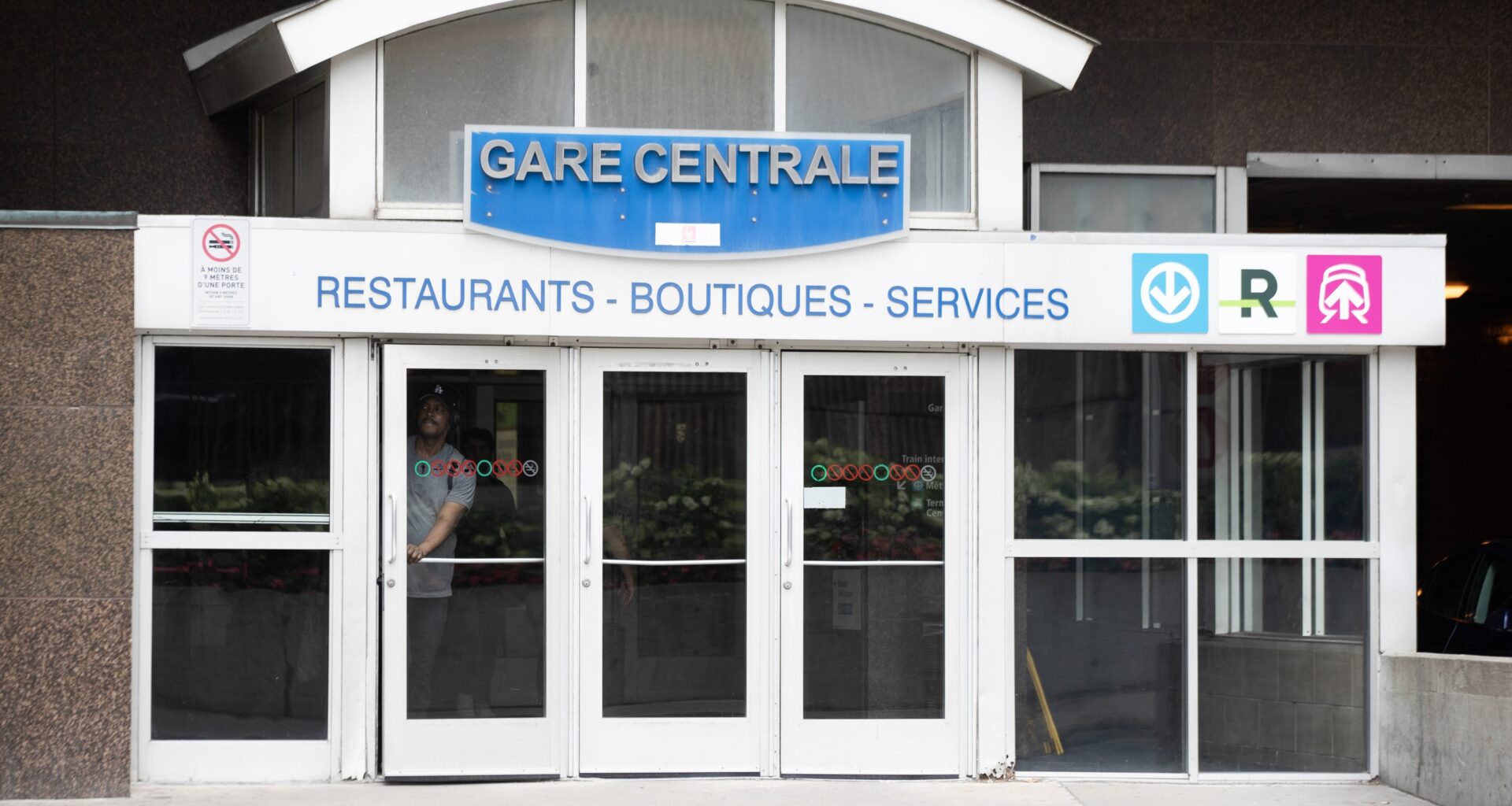
The tunnel linking Central Station to the Bonaventure métro station is an easy three- to five-minute walk on foot, but for those in wheelchairs or people pushing strollers, it is one obstacle after another.
Wheelchair user Paul-Claude Bérubé timed his journey recently by racing his wife, Gaétan Beaulieu, who because of a knee surgery gets around using a cane.
She took the tunnels of downtown Montreal, while he had to resort to a circuitous route that brought him outside and forced him to cross the intersection of de la Gauchetière and Mansfield Sts. to get to the accessible entrance inside 1000 de la Gauchetière. Beaulieu’s trip took her on several escalators, including one only wide enough for one person, and she had to use rotating doors to get to the métro station — obstacles that wheelchair users find impossible and which are also difficult for most people pushing strollers. Parents often have to take their children out of their strollers at these points in the journey.
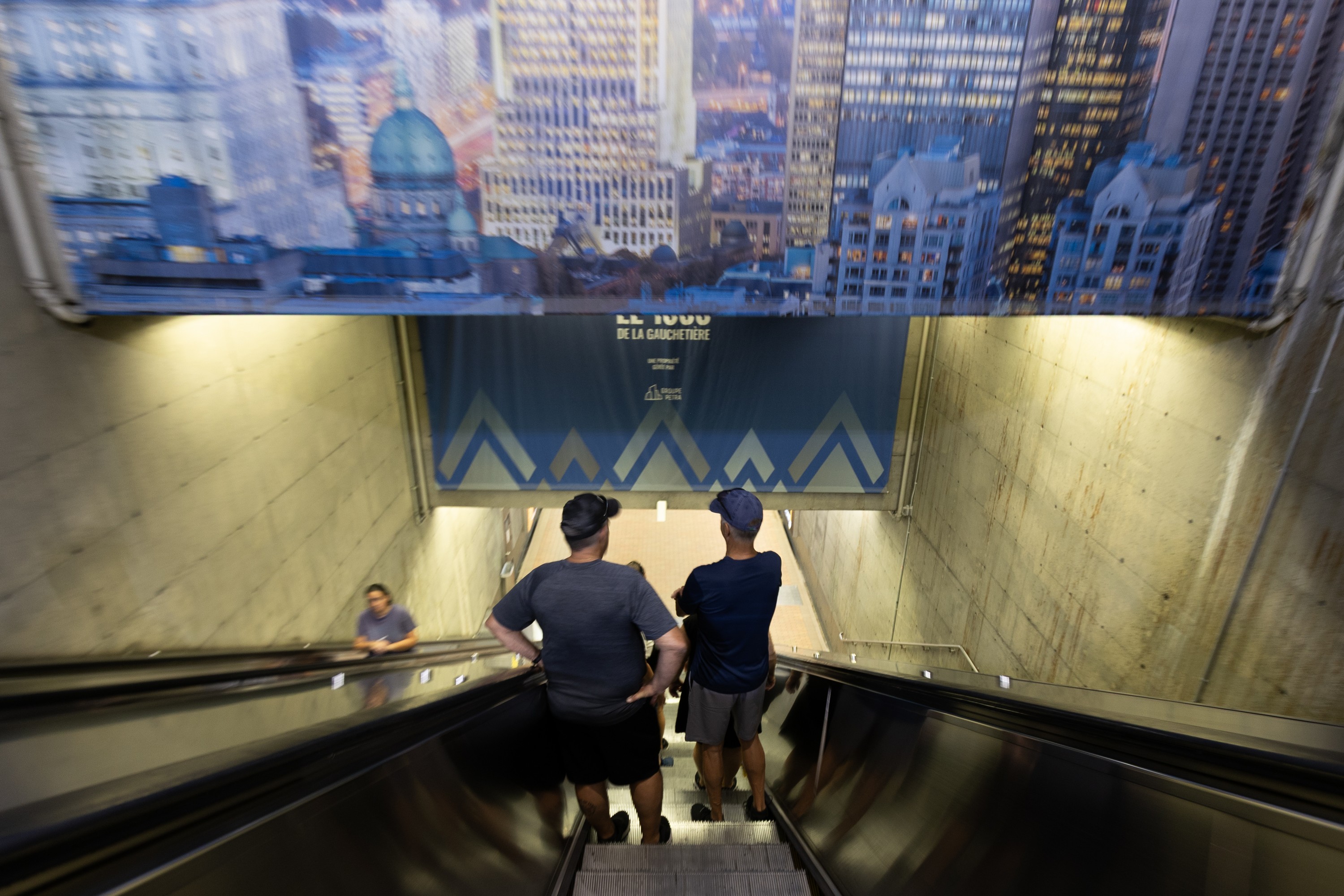 The tunnel between Central Station and Bonaventure métro is only wide enough for one person, too narrow for wheelchair users and people pushing strollers. Tim Snow / Montreal Gazette
“When my wife goes from Central Station to Bonaventure, using her cane, it takes her three minutes,” said Bérubé, the director general of Confédération des organismes de personnes handicapées du Québec (COPHAN). “I have to take an elevator, cross the street once (Mansfield St.), cross it again (de la Gauchetière St.), and then take three elevators. It takes me 12 minutes, and that’s in the summer. In the winter, when there is snow outside, you can forget even trying to make the trip.”
Even the doors to get in and out of Central Station aren’t motorized or equipped with a button that allow people to automatically open them.
Groups like COPHAN have been lobbying for more than a decade to improve the connection between the two stations. When the REM began operations out of Central Station in 2023, it seemed that there was a push to improve the situation. However, nearly three years later, the situation remains the same.
Editor’s Picks
Speaking for the ARTM, the region’s public transit governing body, Maxime Duchesne said there has been some progress in recent years.
Duchesne noted that the underground situation in the area is “particularly complex.” Putting in place solutions requires the contribution of the REM, the STM and the various building owners in the area.
“At this stage, one option appears to be feasible,” Duchesne said. “We are currently undertaking additional checks to confirm the feasibility of the project with respect to security measures. Discussions continue with the partners involved so we can complete the analysis and then proceed with outlining a plan and project estimate. Our goal is to confirm the project in the coming months.”
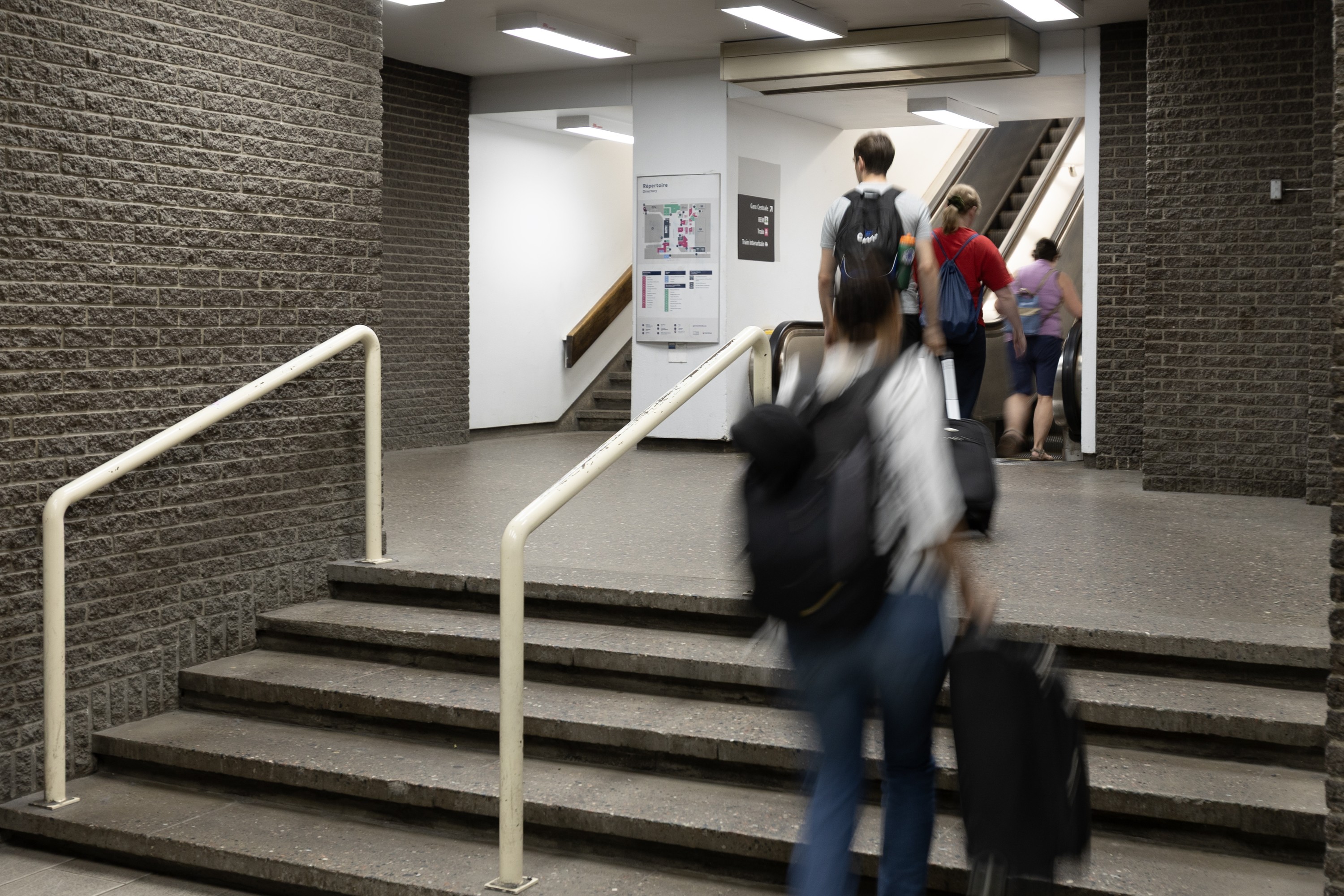 The tunnel between Central Station and the Bonaventure métro is largely inaccessible to people who are in wheelchairs or are pushing strollers because of the many stairs, narrow escalators and heavy doors. Tim Snow / Montreal Gazette
Bérubé is not impressed. He figures the project has barely moved since the ARTM announced three years ago that it was forming a committee made up of the stakeholders to come up with a plan. A spokesperson at the time had said that “many scenarios” had already been studied but had “proven to be impossible because of the complexity of the buildings, the heritage issues involved and issues like telecommunication systems and evacuation passageways that can’t be moved.”
Bérubé said he’s not holding his breath the project will be completed by the end of the decade.
“If everything goes well, the earliest we can get a plan for people to bid on it will be the middle of next year,” he said. “They will probably have a bidding process that will last until the end of the year, and then construction will probably start in March 2028, and that will take three years at minimum, so we’re looking at the year 2031.”
While it may be a difficult problem, the situation is far from new. The link between the two buildings was built in the 1990s, and elevators linking the métro station to 1000 de la Gauchetière were built in 2019 — a project that took nearly a decade to complete. Linking both buildings at that time would have been a logical plan even then because Central Station is a long-standing hub for intercity and suburban train lines.
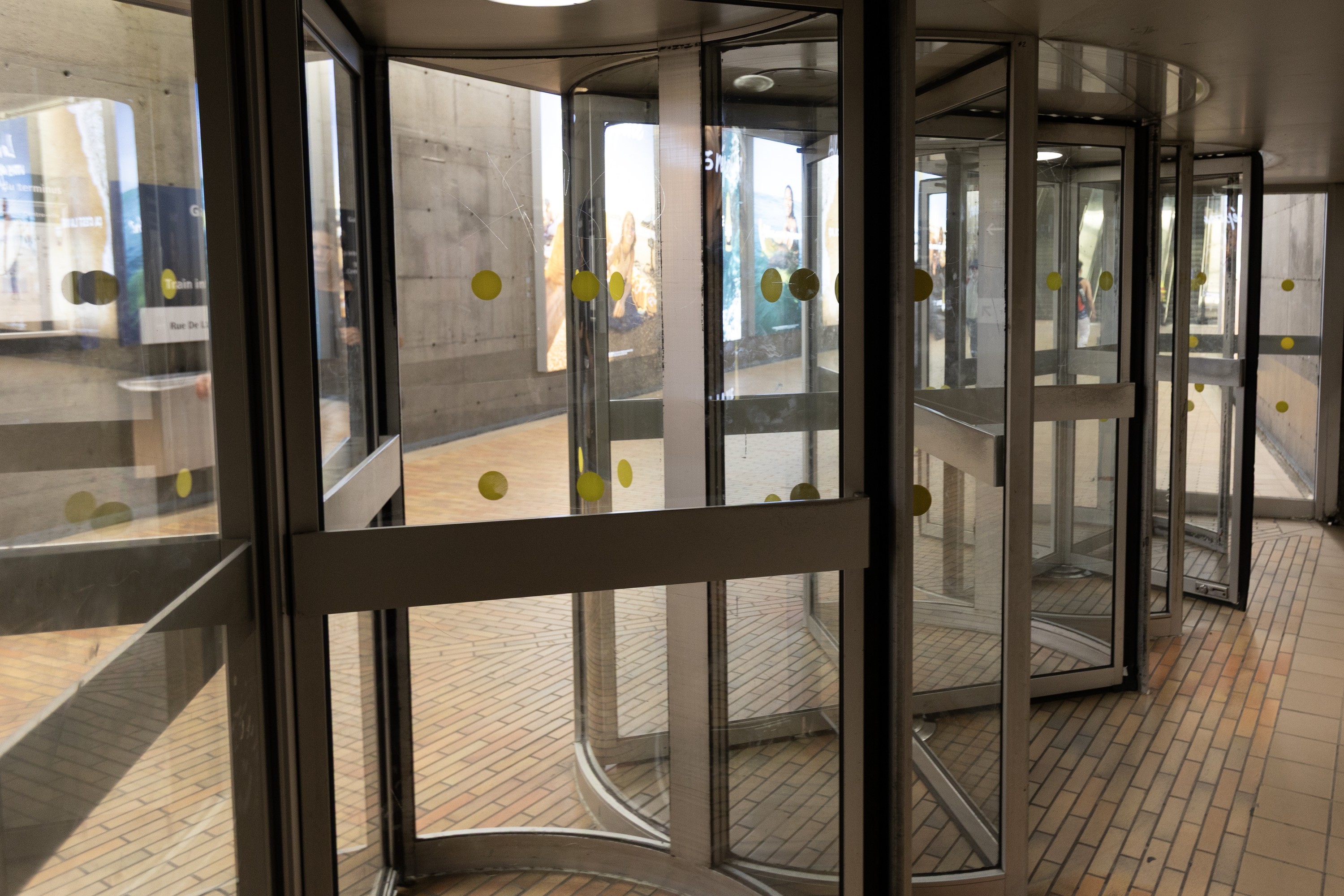 Revolving doors are also obstacles for people who are in wheelchairs or are pushing strollers. Tim Snow / Montreal Gazette
Bérubé said the situation is frustrating because while able-bodied people get a relatively direct and comfortable walk between the buildings, those using wheelchairs have to navigate a maze of obstacles, with little signage indicating where to go.
“When you get to 1000 de la Gauchetière, there is no indication of where to go to get to the métro, or if there is, it is difficult to see,” Bérubé said. “Then to take an elevator that takes you to a bus garage and then find the elevator to get to the métro. This was well indicated. Then you have to take a third elevator to get to the platform.”
He added that having to depend on a series of elevators is also problematic, because if one breaks down, it means the passageway is inaccessible to everyone in wheelchairs.

You’ll often see Jason Magder donning a hard hat and florescent vest at a local construction site. As The Gazette’s transportation reporter for more than a decade, he has seen the new Champlain Bridge built, the old one demolished and followed the ups and downs of the city’s transit system. He has been covering news in Montreal for 25 years.
jmagder@postmedia.com