

Listen to this article
Estimated 5 minutes
The audio version of this article is generated by AI-based technology. Mispronunciations can occur. We are working with our partners to continually review and improve the results.
A plan to re-develop a piece of public real estate into a community hub — complete with a pool, gym, concert hall and movie theatre — is in limbo, partially because of confusion over who controls the property.
The Bickford Centre is located on Bloor Street across from Christie Pits park, and is a sprawling one-hectare complex. It is currently caught up in negotiations over who actually controls it — the city, which owns the land, or the Toronto District School Board (TDSB), which has occupied and managed the building for more than 60 years.
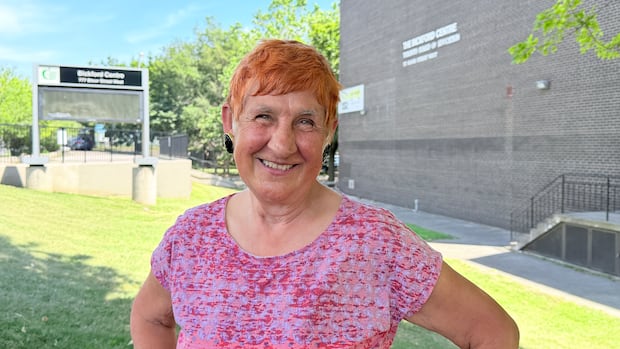
The redevelopment plan was proposed by local resident Darlene Varaleau and several neighbours about two years ago. “I do nothing but work on this day and night, figuring out how to move this forward,” says Varaleau.
The school closed in the late 1980s, according to the Architectural Conservancy of Ontario, and ever since the board has used it for a variety of purposes. The TDSB currently runs adult education and English as a Second Language classes out of the complex, as well as renting out the facilities to at least one sports league, according to Coun. Dianne Saxe.
Cost will be another hurdle: councillor
Saxe said her understanding is that the land is owned by the city, but the building is owned by the board. The Architectural Conservancy of Ontario also lists the TDSB as the Bickford Centre’s owner. But although CBC Toronto asked staff at the TDSB and the city to settle the ownership question, neither has responded.
Saxe said even once control of the site and building is established, another roadblock remains: the cost.
“It belongs to the school board and the school board is not willing to give it to the city for free,” Saxe said. “It would be very expensive for the city to front.”
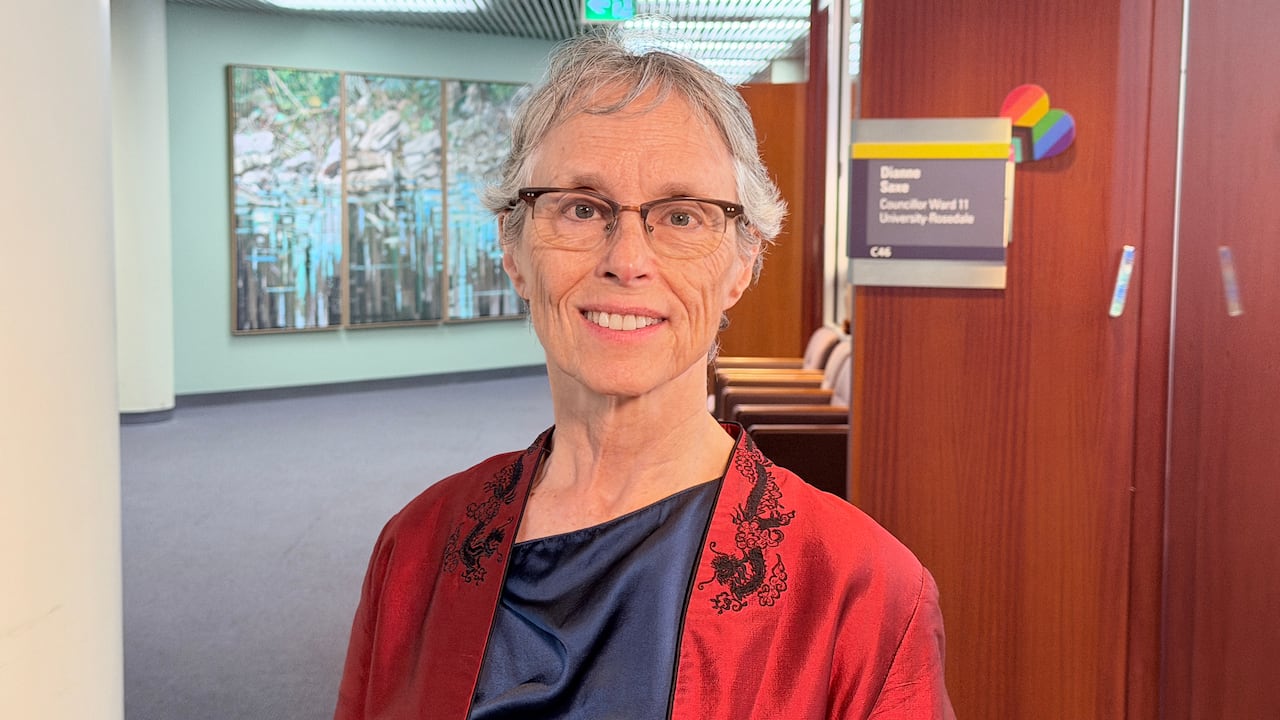 Coun. Dianne Saxe says the idea of a community hub at the Bickford Centre could be a good idea, but nothing will happen until negotiations between the city and the TDSB are completed, which she expects will take at least a year. (Sue Goodspeed/CBC)
Cost aside, everyone involved agrees that control of the centre needs to be established before any plans for a community hub are drawn up.
At the moment, Varaleau says, neither the board nor the city has done anything to move the project forward. “No one’s done an assessment because no one’s intending to do anything,” she says. “This has been invisible.”
CBC Toronto reached out to the TDSB, which replied with a brief statement: “The TDSB continues to use Bickford Centre for a variety of purposes that benefit the community,” said spokesperson Ryan Bird in the email.
Property history reason for confusion
In almost all circumstances city-wide, the school board owns the land on which its school buildings sit. But the Bickford Centre is unique.
It was built as Bickford Park High School in 1965 on city-owned land. However, it appears there was never a formal lease drawn up between the school board at the time and the city. That led to the current confusion about who can do what on the site, says Saxe.
“The city hands are tied in that we cannot unilaterally tell the school board what to do with the building,” she said. “There needs to be some coordination.”
Saxe told CBC Toronto initial talks between city and TDSB staff are ongoing but she doesn’t expect formal negotiations, which could end with a lease between the city and the board, to happen for at least a year.
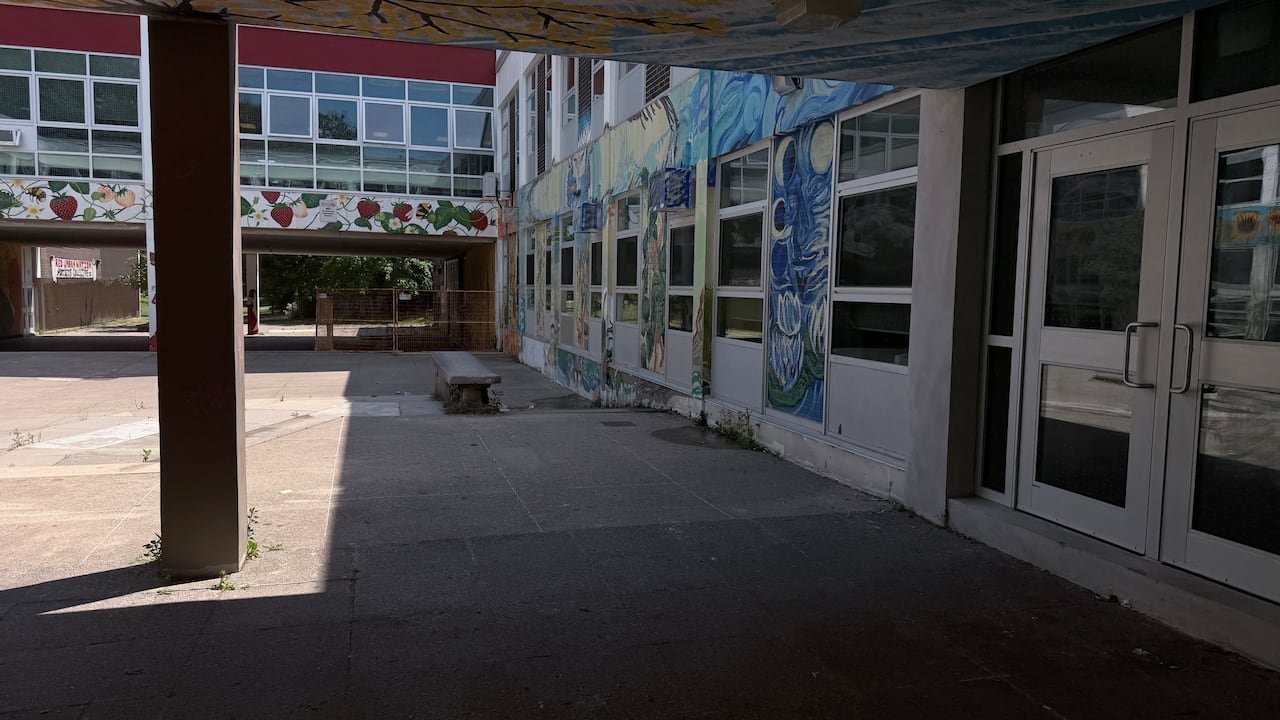 The exterior courtyard at the Bickford is quiet and overgrown these days. The TDSB is using interior spaces for classes and other community events. (Sue Goodspeed/CBC)Urban planner’s dream
The sprawling complex is an urban planner’s dream. It includes two large, connected buildings with bustling Bloor Street at its front and tranquil Bickford Park at the rear. The largely vacant buildings contain gymnasiums, a theatre and a derelict indoor swimming pool.
Otherwise, the two-building complex does not appear to be regularly maintained, according to Varaleau.
The property currently features a weed-filled courtyard, dusty windows, and a rotting basketball net and backboard.
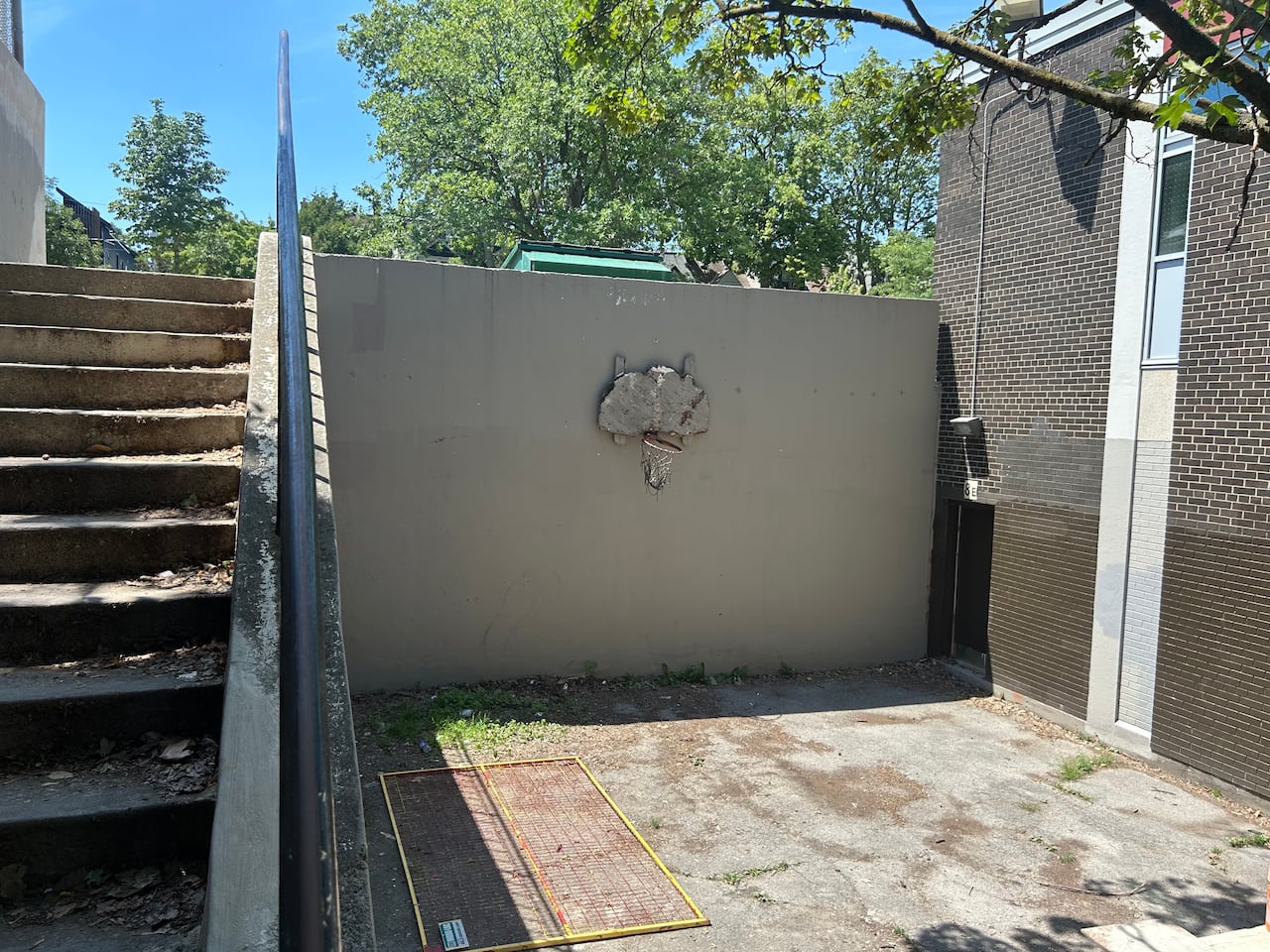 A rotting backboard and basketball net are mounted on an exterior wall at the centre. (Michael Smee/CBC)
While it may be costly to upgrade, Saxe says at the very least she would like to see the complex’s indoor swimming pool revived. She said her ward, University-Rosedale, has no public pool that’s open year-round.
To re-open the pool, Saxe said she’s investigated the possibility of using Section 37 funds — money paid to the city by developers in exchange for building rights — but was told by staff the project was too expensive.
Even so, she agrees that the idea of creating a community hub at the Bickford Centre is attractive, but probably not doable in the near future.
“I’m not closing the door,” Saxe said. “All I know is [the negotiations with the TDSB] are going to be very hard. The school board doesn’t have money, we don’t have money, the building is in bad shape.”
“That’s not a highly promising situation.”