

Listen to this article
Estimated 4 minutes
The audio version of this article is generated by AI-based technology. Mispronunciations can occur. We are working with our partners to continually review and improve the results.
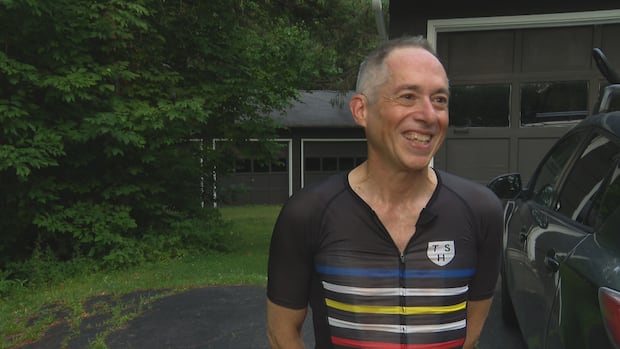
A New Brunswick man is getting ready to embark on a European ultra-distance race where bikers plan their own route.
Luis Cardoso of Fredericton will be starting the Transcontinental Race on Sunday.
The race begins in Trondheim, Norway, with checkpoints in Flåm, Norway, the Tatrus Mountains in Slovakia, Sarajevo in Bosnia and Herzegovina and Leskovik, Albania. The finish line is in Kalamata, Greece. With some restrictions, how each cyclist navigates that route is up to them.
Cardoso said his route as it stands is around 5,000 kilometres but he’s managed to shave several hundred kilometres off of that route by making changes.
“[I’ve] really been working on it for months really — the route part of it,” he said.
“When I started, I was going down through Norway, Sweden, to Denmark, down Germany, and then I decided that was quite long, so I went straight into Poland from Sweden and cut about 300 kilometers.”
Cardoso used an app called Ride with GPS to plot his route. But there’s a lot of thought that goes into the route he wants to take. For example, he has to make sure he doesn’t take any banned roads or tunnels in a particular country and he has to decide if he wants to stick to pavement or gravel.
WATCH | ‘All you got to do is eat, sleep, and ride.’: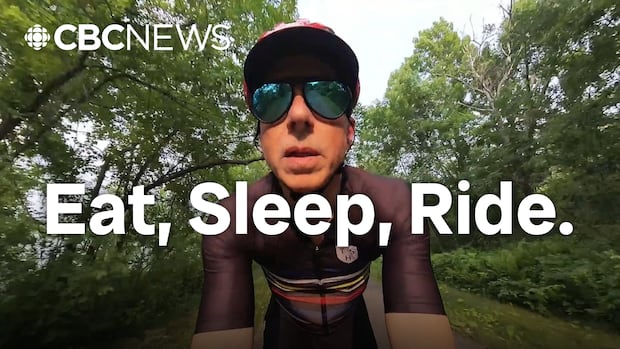
5,000 kilometers. 15 days. No support team
Meet Fredericton ultra-cyclist Luis Cardoso. He’s taking on the legendary Transcontinental Race—a grueling, self-supported trek from the fjords of Trondheim, Norway, all the way to Kalamata, Greece. No crew. Just a rider and his bike.
Cardoso also has to look at the elevation and decide if the distance saved is outweighed by the amount of climbing.
“Some of them would be, you know, like 3,000 … metres of climbing in about 100 kilometres, which is enormous, so back to the drawing board on those.”
The race does require riders to go through certain sections to ensure there is at least some climbing and some gravel.
All of the racers wear trackers, Cardoso said, and volunteers will monitor each rider to ensure they don’t infringe on banned places. If they do, they’ll receive time penalties, he said.
Cardoso also said volunteers are making sure riders aren’t trying to game the system. He said you can only buy things that are commercially available to all riders, can’t book hotels more than 24 hours before you’re going to stay there, and can’t tap friends or relatives along the way for help.
“When I applied for the race, it’s a fairly long application form,” he said. “There [are] a lot of questions about how you’d behave in certain scenarios that they would present to ensure … you’re the kind of person who’s not going to try to take shortcuts and who understands the spirit of the race.”
Cardoso said he’s expecting to finish in 14 to 16 days, averaging around 300 kilometres a day.
He has been riding a bike his whole life, mountain biking originally before getting into road cycling in 2012. In 2020, he started doing multi-day rides.
Cardoso said he thrives on multi-day bike adventures, having done ultra-endurance races in Nova Scotia in the past.
You never know what you’re going to run into, Cardoso said, adding that it’s often more of a mental challenge than a physical one.
He said these challenges can include packing, weather and animals.
“There’s all kinds of stuff I’m going to be encountering for the first time, no doubt.”