
 4 min read
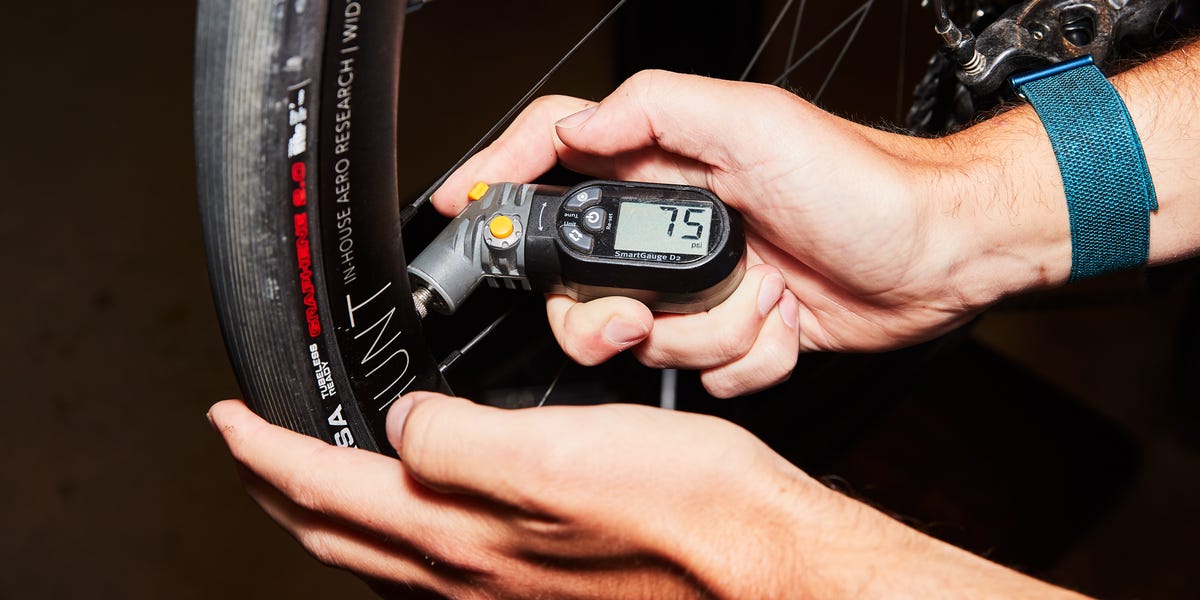
One of the first components of your bike that you likely check before heading out for your daily road ride? Your tires. You grab your pressure gauge, determine your reading, and then look at the pressure number listed on your tire’s sidewall to dictate what psi you should inflate your tires to.
But if you’re strictly going off of that sidewall number, you may find yourself falling into one of the most common road cycling traps: Overinflating your tires.
As explained in our How to Master Your Riding Technique program, running on overinflated tires stands out as one of the biggest problems road cyclists face, and it could be sabotaging your riding speed, efficiency, and comfort.
However, you can dial in your ideal pressure with the help of some go-to steps. How to Master Your Riding Technique explores the fundamentals of proper road, commuter, mountain, and gravel cycling, and features tips on improving your skills and fine-tuning your bike setup—including your tire pressure across those disciplines.
“I am one of those people who rode with their tire pressure way too high,” host Jenna Foley explains in the road skills chapter of How to Master Your Riding Technique. “When I lowered it, not only did I have better traction, but I felt more comfortable.”
Your strongest and fastest road cycling begins with the right amount of air, and with expert guidance, you can discover what factors, tools, and considerations go into solving your tire pressure puzzle.
Why Your Road Tire Pressure May Be Too High
The maximum psi listed on your road tire sidewall can serve as a starting point for determining your pressure—but don’t treat the number as a straightforward guideline. Our experts advise that the maximum pressure noted on tires is typically too high and doesn’t take into account additional factors that can influence your optimal tire pressure, including your weight, tire width, and ride terrain. A general rule of thumb: More isn’t always better.
“[Road cyclists] may see a number on the sidewall, and they think that’s the minimum. ‘Hey, I have to put 100 pounds of pressure in my tires,’” Deputy Editor Tara Seplavy says in How to Master Your Riding Technique: Road Skills. “You’re probably putting too many psi in your tires.” (Watch below!)
 This Content is for Members Only
Want unlimited digital access?
You may be riding on overinflated road tires if you notice discomfort going over bumps in the road, additional impact when hitting a crack, or even skidding when taking a turn on the pavement. Overinflated tires will pass on the impacts of every bump to you on the bike, rather than absorb the shocks of potholes, cracks, or uneven surfaces on your road route. Plus, the higher the tire pressure, the smaller the contact patch, which can make navigating tight curves without slipping trickier.
Think of your tires like an air spring. With a lower pressure, your tires soak up all the cracks and divots in the road. At a higher pressure, your tires bounce off the pavement with every contact with a bump, pebble, or divot, making for a rather harsh, unpredictable ride.
Benefits of Running a Proper Pressure on Your Road Tires
How can you tell when you’re running on the proper tire pressure for you and your road bike? First, take notice of your comfort while navigating the roads. Smooth riding and quick rolling over pavement often serve as signals of dialed-in tire pressure. Inflating your tires to an ideal pressure can also prevent flats and provide greater traction when cycling through wet road conditions or along rougher routes.
Until you take a closer look at your tires, you may not even realize what pressure feels most comfortable for you. You could be logging your road miles on overinflated tires, and not even know it until you make adjustments. That’s why taking the steps to dial in your tire pressure plays a crucial role in enhancing your smoothness, efficiency, and overall road cycling experience.
How to Find Your Ideal Road Tire Pressure
Before you hop in the saddle, take time to adjust your tire pressure based on your road route terrain, weather conditions, tire width, and body weight. Find your starting psi by using the maximum inflation number or the pressure range listed on your road tire sidewall as a guide, and then use your gauge to determine your current pressure reading. From there, make adjustments accordingly by inflating your tire to your desired number.
Utilizing pressure charts or expert-tested online calculators that take into account your weight, tire width, road conditions, and extra gear provides the best tailored tire pressure recommendations. You simply input some basic information, and the calculator gives you a tire pressure based on your setup. Two of the best calculator options you can use that our experts rely on are Zipp and Silca.
However, don’t hesitate to experiment with different tire pressures before you head out for your rides. Each day presents different road conditions, and each cyclist has different comfort preferences. Putting a variety of pressures to the test can help you zero in on the psi number that makes your miles feel more efficient and enjoyable.
But tire pressure matters beyond just your paved routes. For the days that you deviate from the roads and hit the gravel and mountain trails, you still want to lock in your ideal pressure, just with some different considerations in mind. Mountain and gravel bikes typically feature wider tires for traversing dirt, rocks, and unpredictable terrain, and they usually require less air pressure than narrower road tires. As detailed in How to Master Your Riding Technique, tire pressure that feels low on the road is often still too high for gravel and mountain riding, and you want to choose a pressure that allows your tires to grip the path rather than bounce off of it.
And no matter what cycling discipline you turn to most, make checking your pressure a regular habit—whether that’s daily or weekly. Over time, air seeps out of your tires, and quick, easy top-offs ensure you consistently run on the right pressure for you.

Ashley is Editor of Content Hype at Hearst’s Enthusiast & Wellness Group. She is a former collegiate runner at UNC Asheville where she studied mass communication. Ashley loves all things running; she has raced two marathons, plus has covered some of the sport’s top events in her career, including the Paris Olympics, U.S. Olympic Trials and multiple World Marathon Majors.