

Listen to this article
Estimated 4 minutes
The audio version of this article is generated by AI-based technology. Mispronunciations can occur. We are working with our partners to continually review and improve the results.
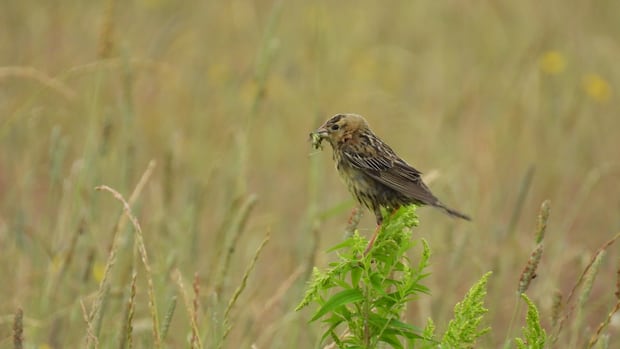
Some farmers across Prince Edward Island are being paid to leave their hay uncut a little longer each summer, not for better crops but to protect a small, threatened grassland bird.
The delayed hay harvest program is part of P.E.I.’s Alternative Land Use Services (ALUS) program, which pays farmers to take marginal land out of production and put in place practices that provide environmental benefits.
Under the incentive, farmers were asked to wait until after July 15 this year before cutting hay on enrolled fields.
Erica MacDonald, agriculture climate action specialist with the P.E.I. Department of Agriculture, said the timing is meant to protect bobolinks — small migratory birds that nest in hay fields and are protected under the federal Species at Risk Act.
“That is the point in time that the young will have fledged, and so they will be able to escape from any hay harvesting equipment,” MacDonald said. “It just gives them a leg up on things.”
Farmers who join the program receive $25 per acre, “which really is not a whole lot of money at the end of the day,” MacDonald acknowledged.
“A lot of farmers who participate in ALUS are doing it because things like species at risk are important to them, and they enjoy the recognition that comes from the program.”
Supporting biodiversity is another reason farmers choose to enrol.
“Biodiversity is one of agriculture’s most valuable assets. It helps farmers to maintain productive soil, manage pests, support pollination, and to build resilient farms,” she said.
‘A token of appreciation’
Despite the modest payment, MacDonald said participation in the incentive program has been stable.
On average, about 1,200 acres of land is incentivized each year through the ALUS program, she said.
She added that the $25-per-acre rate for delayed hay has not changed since 2018, even as farming costs have climbed. Across the wider ALUS program, incentive rates have only been increased once since it began in P.E.I. in 2008, MacDonald said.
“It is definitely not covering the costs or the bottom line that’s affected by this,” she said of the delayed hay payment.
“It’s definitely more so as a token of appreciation, let’s say, and to provide the farmer or the landholder some recognition for delaying that crop.”
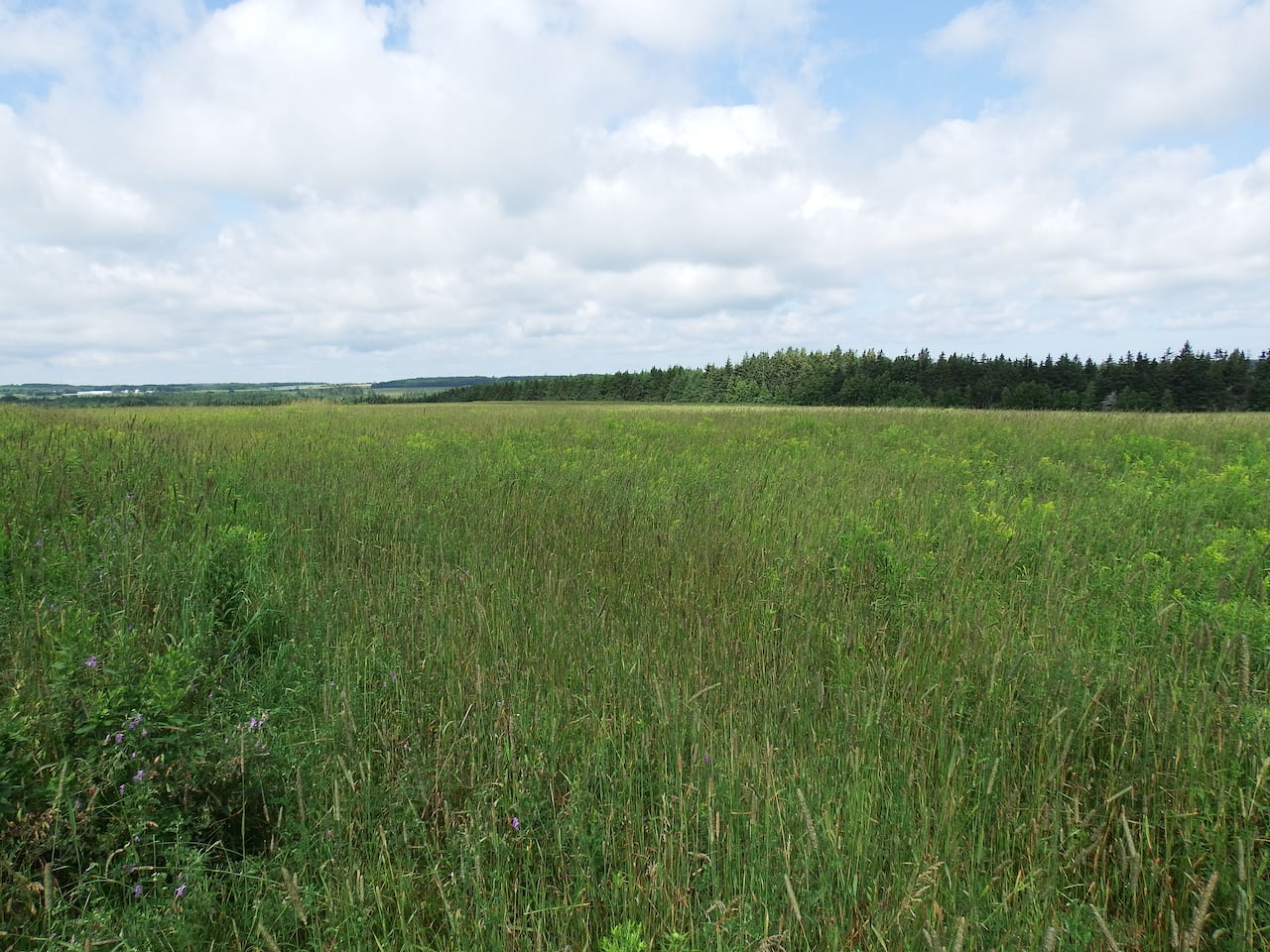 On Wednesday, Island Nature Trust staff travelled across P.E.I. to visit enrolled fields and ensure farmers participating in the program did not cut their hay before mid-July. (Submitted by Island Nature Trust)
She noted that the program is targeted at marginal land — fields that don’t produce good crops, for example because they’re wet or environmentally sensitive.
“The incentive just gives them the option to make a few dollars to not farm that land because it’s not productive anyway,” MacDonald said.
The delayed hay practice also isn’t suitable for every operation.
“Somebody like a dairy farmer wouldn’t have great milk for their animals if they were feeding them hay that was harvested after the 15th of July,” she said.
And so most participants, she said, are beef farmers.
Conservation through collaboration
The delayed hay incentive on P.E.I. is a partnership involving several organizations, including Island Nature Trust.
“We are an organization that goes out and monitors the bobolink that are using the hay fields, and we also provide compliance monitoring,” said Kaylee Busniuk, stewardship and engagement manager with Island Nature Trust.
On Wednesday, staff with the organization travelled across P.E.I. to visit enrolled fields and ensure farmers participating in the program did not cut their hay before mid-July.
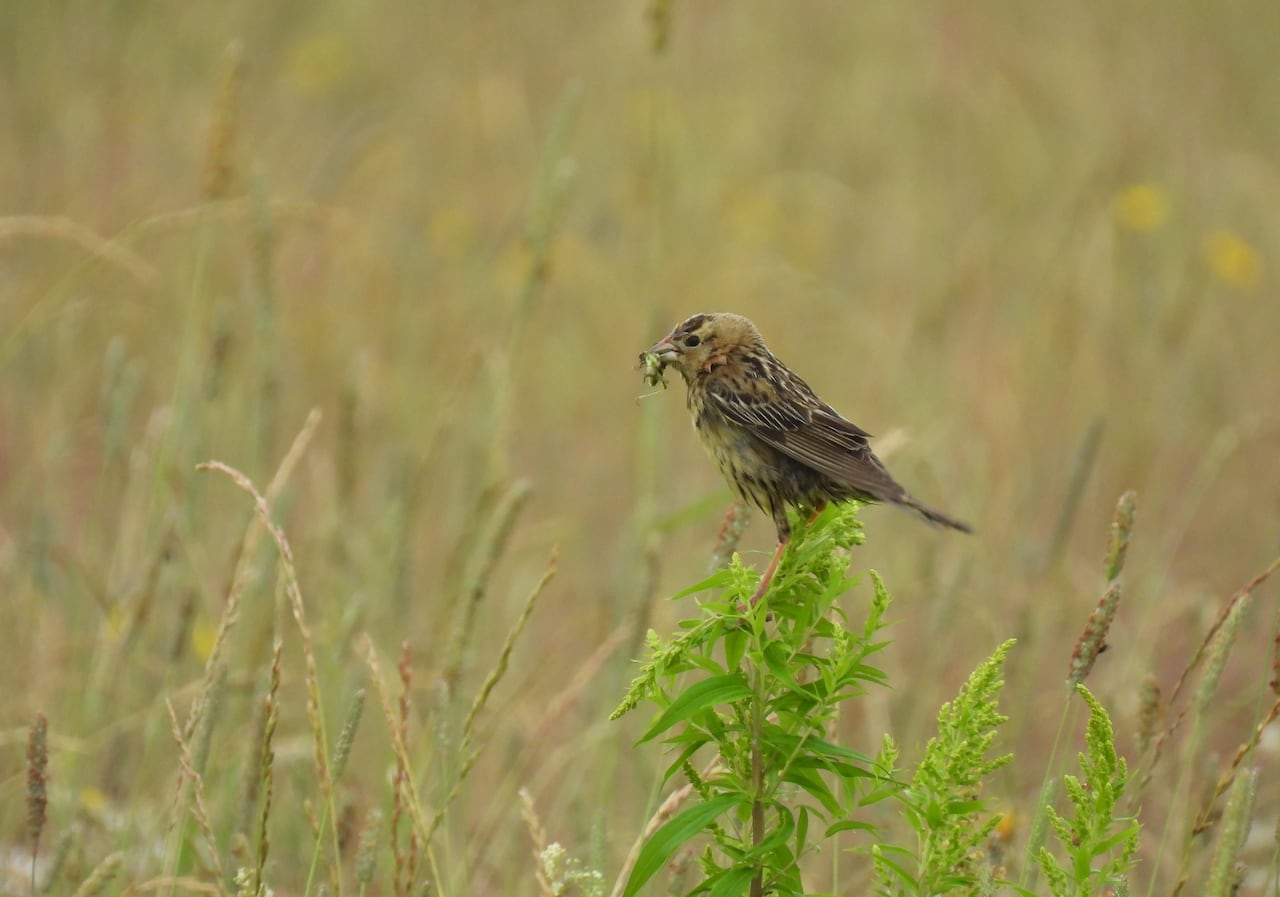 This year, farmers in the delayed hay harvest program were asked to wait until at least July 16 before cutting hay on enrolled fields so that the young bobolinks have fledged and can escape harvesting equipment. (Submitted by Island Nature Trust)
“The vast majority of fields were compliant, which is something we’re really excited to see,” Busniuk said.
“We know a lot of them are just doing it out of the goodness of their hearts, for the conservation of bobolink and other grassland species. Without them, this program wouldn’t exist.”
MacDonald said the incentive has also been supported by ALUS Canada, the national organization, which has provided funding for the program since 2018.
“It’s been a really positive working relationship between all the groups,” MacDonald said.
“Everybody gets along well, and we hope to continue this collaboration in the future.”