
Residents of Mercier–Hochelaga-Maisonneuve are denouncing the Canadian National (CN) railway’s latest weed control operation, after the company sprayed herbicide on the tracks near a residential area without notifying them.
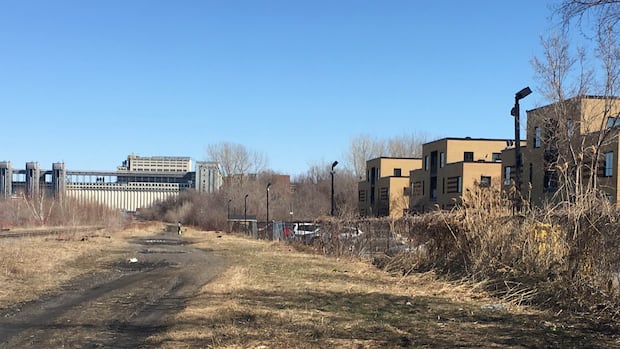
On Wednesday morning, the railway company carried out a spraying operation on its tracks, which run through a vacant lot in the Mercier-Ouest sector, near the Vimont and Steinberg woodlands. Some sections of the tracks are located just a few dozen meters from homes.
Paule Dufour, who has lived in the neighbourhood for three decades, was the first to raise concerns. She said she spotted a truck along the railway tracks equipped with hoses while out for a walk with her dog.
“We immediately smelled it ,” she told Radio-Canada, comparing the odor of the herbicide to that of “old socks that have been forgotten.”
Dufour said she decided to alert her community because she was concerned about the potentially harmful chemicals they might inhale.
According to CN’s website, more than a dozen herbicides can be sprayed on its facilities, including glyphosate, which has been banned in Montreal since 2022.
Citizens and activists in the neighborhood strongly suspect that this product was spread near their homes. The ban does not apply to CN, because railways fall under federal jurisdiction.
The application of herbicide is a regular procedure for the railway company, which must eliminate vegetation growing across the railway to reduce the risk of fire and protect the structural integrity of the track, among other things.
CN must, however, communicate the dates and precise location where the spraying will take place. Once informed by CN, the borough forwards the information to residents so they can take certain precautions, such as closing windows or protecting edible plants.
Mayor says borough not informed
The mayor of Mercier–Hochelaga-Maisonneuve, Chantal Gagnon, told Radio-Canada that the borough became aware of CN’s operation at the same time as citizens.
“We take the situation very seriously and are aware that the lack of prior information can lead to misunderstandings and legitimate concerns among the population,” she said in a statement to Radio-Canada on Friday.
In a statement sent on Saturday morning, CN said it sent the borough a link to its work schedule on March 30. In the same notice, CN advised residents not to harvest or eat vegetation along the railway corridor.
Gagnon confirmed receiving the notice, but added that it only stated operations would take place between May 1st and October 30th, 2026, without specifying the dates or the targeted boroughs.
“Despite several follow-ups with the company, the precise date of the intervention has not been communicated to us,” she said.
A herbicide spraying schedule for the 2026 season can be found on CN’s website, and is updated twice a month. However, the schedule does not specify which borough or day an operation will take place.
The railway company only mentions municipalities, such as Montreal, where operations began on June 27. According to the schedule, operations are still ongoing.
The CN says the document is highly subject to change, and should only be used as a guideline, since spraying depends on weather conditions.
But Gagnon believes the company should be more transparent in its communications regarding its operations and share the precise dates with residents in a timely manner.
During last year’s operation, CN had warned the neighborhood in advance. The spreading on the railway line was eventually cancelled, following pressure from citizens.
According to the Guide de référence du Code de gestion des pesticides, published in July 2026 by the Quebec Ministry of the Environment, the owner of a railway transport corridor who plans to spread a pesticide for its maintenance must publish or disseminate a notice containing information relating to the execution of the work one to three weeks before it begins.
This information includes the location of the work, a timeline of its completion, as well as any restrictions on access to the treated areas and on the consumption of plants that come from those areas.
“This isn’t the first time they’ve done this without prior notice,” Dufour said. “They’re destroying the flora for a railway line they hardly ever use.”
Glyphosate is a herbicide widely used in agriculture to destroy weeds by blocking an enzyme essential to their growth. While the World Health Organization classified it as a probable carcinogen in 2015, Health Canada is less concerned about people exposed to “typical levels.”
The company that handles the spreading, Davey Tree Expert Company of Canada Ltd., did not respond to Radio-Canada’s request for an interview.