

Listen to this article
Estimated 4 minutes
The audio version of this article is generated by AI-based technology. Mispronunciations can occur. We are working with our partners to continually review and improve the results.
There have been 39 suspected drownings across the province so far this year, according to the Quebec Lifesaving Society. It anticipates that figure to rise over the construction holidays, which started this weekend.
Quebec Lifesaving Society’s executive director, Raynald Hawkins, said he expects to see at least nine more drowning deaths in Quebec over the next two weeks, based on data from the past five years. There were 37 suspected drowning deaths at this point last year.
“This is the time of the year where we have more drowning situations during one week, everywhere in Canada,” Hawkins said, explaining that many people are usually on vacation and there’s often beautiful weather.
The combination of those two factors, he says, increases the probability of more people being in, near, or on the water.
Just on Friday, one man from Montreal was pulled out of the St. Lawrence River near Marsoui in the Gaspé region. The Sûreté du Québec (SQ) said on Sunday that a search is still underway for a second man, a 45-year-old from Montreal.
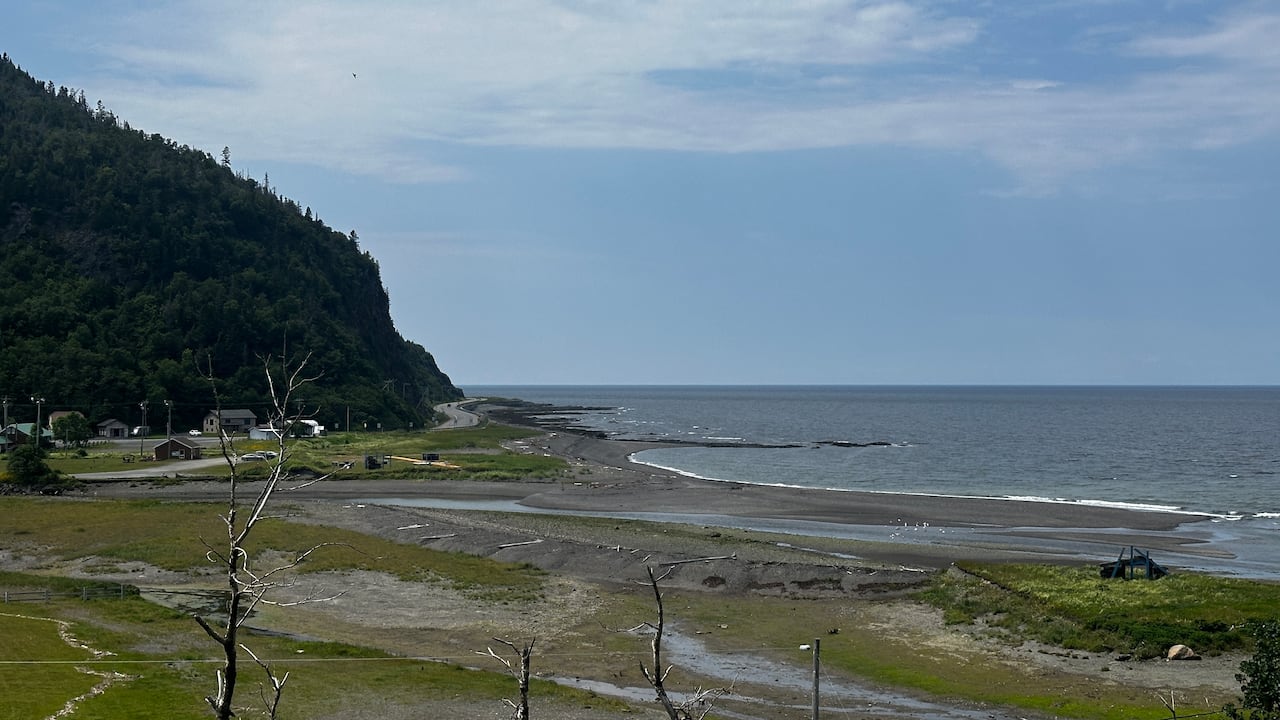 One of the fishermen was found dead by volunteers around 10 a.m. on Friday. (Alice Jacottin/Radio-Canada)
The two were reportedly fishing, when one of the men lost his footing and fell in the water. The other is believed to have attempted to help, but was swept away by the current.
Marsoui Mayor Renée Gasse told Radio-Canada that the tides have been unusually strong in the area in recent days.
Hawkins explained a river like the St. Lawrence may appear “flat,” but that there can be a strong current under the surface that’s like a “vortex.” When there’s a storm, the speed of this current increases.
“At the surface, you will not see that,” he said.
What the data shows about drownings in Quebec
When the Lifesaving Society conducted a survey asking people who they thought was most likely to drown, and where — most people guessed it would be children, in swimming pools. But that’s not what data from the Quebec coroner shows.
Between 2013 and 2022, which is the most recent data on record, more than 50 per cent of suspected drowning deaths in Quebec occurred in open waters like rivers and lakes. Thirteen per cent of drowning deaths occurred in pools.
Children aged from 0 to 11 made up 10 per cent of the drowning deaths in the data, while adults aged 18 to 24 accounted for double that. Adults between 65 and 74 were the second highest age category, at 18 per cent.
The data also shows that drowning victims tend to be predominantly male. Hawkins has a theory for why that is.
“They always overestimate their swimming skills,” he said. “When we overestimate our swimming skill, we say, ‘oh, I don’t need my personal flotation device when I’m doing boating because I know how to swim.’ They will say, ‘I can cross the river, because I’m a swimmer.’”
His rule of thumb is that if you’re not able to swim 25 to 50 metres, in a depth of three metres or more, “you’re not a swimmer. You’re more a bather.”
Hawkins’ water safety advice is to always wear a personal flotation device on boats, never swim alone, and always be within arm’s reach of a swimming child.
“If your child is not [within] arm’s reach, that means he’s too far.”
In a news release on Thursday, the SQ said it will be intensifying its presence across the province over the next two weeks, as a third of Quebecers take their vacations during this period — “thus increasing travel on the road network and traffic on water bodies and on trails.”
“Caution, compliance with safety rules and responsible behaviours are essential to … allow everyone to enjoy their holidays safely,” the SQ said.