
TORONTO — Coming out of the All-Star break, multiple Blue Jays echoed the same sentiment. The American League Wild-Card race is wide open, they said. Toronto didn’t need to rattle off a 10-game winning streak to get back into the race, but simply to win every series. Through three games and two losses against the Chicago White Sox, they haven’t achieved that goal.
The Jays are a season-worst seven games under .500 and the trade deadline is coming up soon. Sand is running low in Toronto’s 2026 hourglass.
“You have to start to win,” manager John Schneider said. “We got to start winning. That’s just the bottom line. Doesn’t really matter how you do it, if you win 1-0, if you win 10-9, you gotta, you gotta start winning.”
Here are three takeaways from the Jays’ first series out of the break, including Joe Carter’s challenge to the team, Jeff Hoffman’s adjustments and Trey Yesavage’s command.
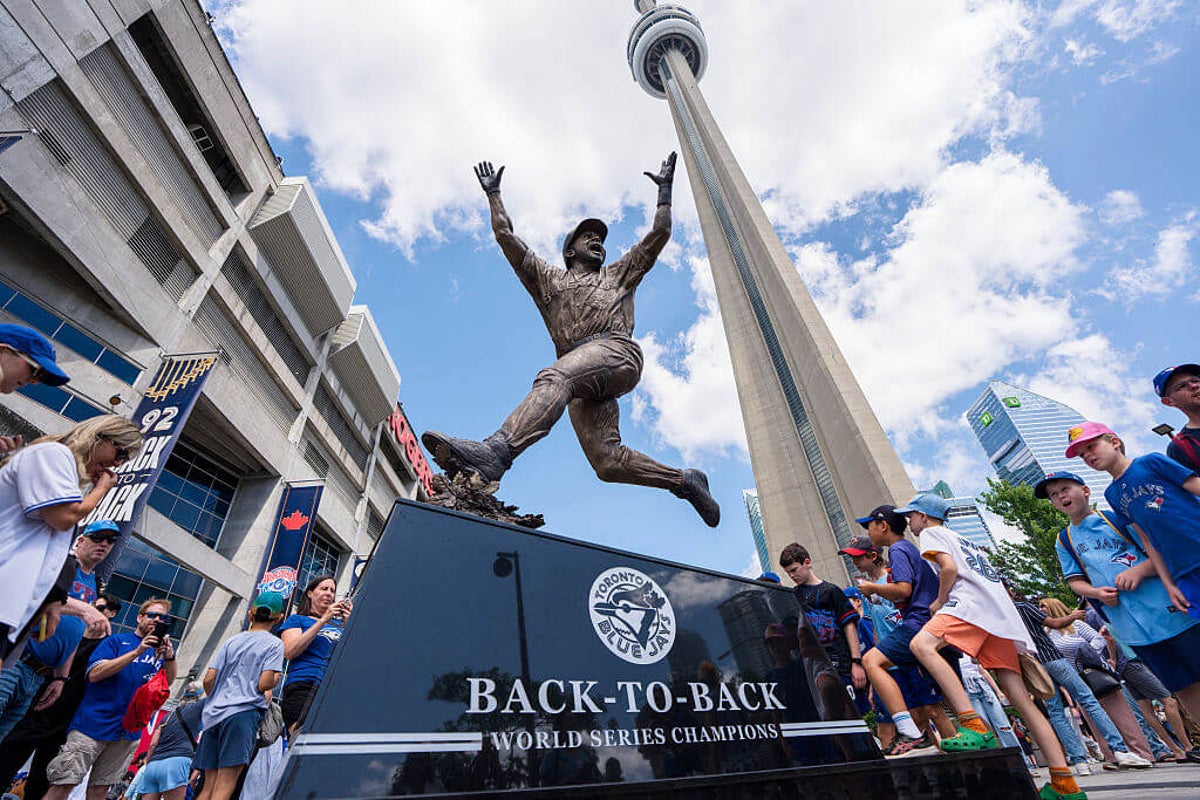
During statue unveiling, Joe Carter challenged the 2026 Jays
Joe Carter doesn’t think about how his life would’ve been different. He doesn’t have to. When you hit a World Series-winning homer and have that moment immortalized with a bronze statue, one the Blue Jays unveiled on Saturday, there’s no need for alternative histories.
“Had I not hit the home run,” Carter said, “I figure somebody else would’ve driven in the run and we still would’ve been World champs. That’s how I look at it.”
Nobody knows what actually would’ve happened if Carter didn’t clip Mitch Williams’ ninth-inning pitch in October of 1993. There likely would be no statue of Carter. The phrase “back-to-back” may not mean much at Rogers Centre and former stars may not have returned to Toronto this weekend. But the beauty of achieving greatness is there are no what-ifs.
“We could’ve failed,” starter Jack Morris said. “But then we wouldn’t be talking about it.”
That indisputable achievement is what these modern Blue Jays are still searching for. They came so close — inches away, as Paul Molitor said — from earning it last year. They are, naturally, stuck with so many “what ifs” in Isiah Kiner-Falefa’s lead, Jeff Hoffman’s slider, Addison Barger’s lead in Game 6, Ernie Clement’s deep drive and so many more.
As videos of Toronto’s 1993 World Series parade played on the video board ahead of Saturday’s game, John Schneider couldn’t help but think what that would’ve been like last year. Carter, looking to Toronto’s dugout before his ceremonial first pitch, directly challenged the 2026 Jays to reach those heights. Go win the title this time.
“We want to have more celebrations in the future,” he said. “So let’s go you guys.”
The Jays certainly have to get going to even have a shot. After Sunday’s 3-0 loss, playoff odds dipped below 15 percent. Maybe this isn’t the year. But for the current era of the Blue Jays, even after 2025’s World Series run, to achieve that indisputable greatness, they’ll have to win it all at some point. That’s how you earn statues and grand reunions, as Carter knows best.
“I think it’s cool for everyone to hear,” Schneider said, “from a guy like him who has such an iconic swing, not just for us but in baseball history, to say ‘let’s f—ing go.’”
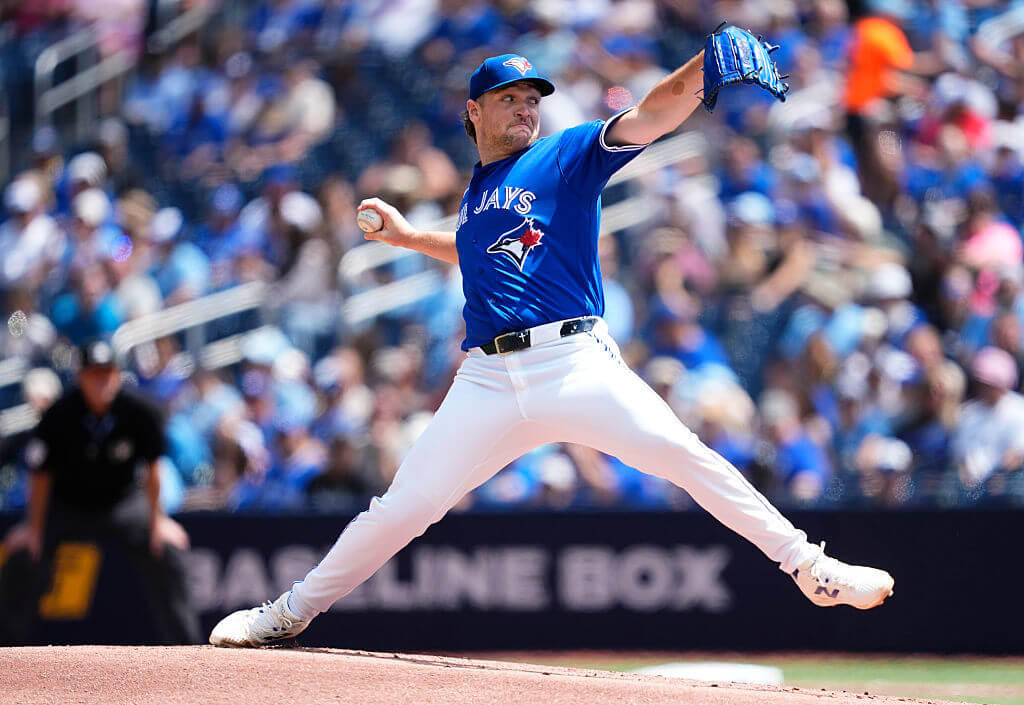
In starts that Trey Yesavage throws over 60 percent strikes, his ERA entering Sunday was 3.12. (Photo: Mark Blinch / Getty Images)
Trey Yesavage can control his outings
When Trey Yesasvage was in high school, an opposing team put their pitching machine 30 feet in front of home plate before a game, cranking it up to maximum velocity. In college at East Carolina, the opposition put their machine on a bucket, hoping to mimic the righty’s high release point.
“They don’t do that for everybody,” Yesavage said. “It’s just funny.”
Those are the lengths other teams must go to in hopes of properly preparing for the Blue Jays’ rookie. He’s so funky and so uncomfortable to face that teams are forced to react to him. As long as he has his command, Yesavage is in control.
Yesavage, after tearing through college and rapidly ascending the minor leagues last year, still wasn’t entirely sure if his release point would play in the big leagues. When his MLB debut last September started with a Chandler Simpson single and Yandy Diaz’s run-scoring double, those doubts didn’t dissipate. It only took five shutout innings after that tough start, a couple more regular-season outings and a record-setting postseason to confirm he could stick. Even at baseball’s top level, Yesavage was nasty enough.
“As a pitcher, going into the game, I don’t really like thinking about what hitters’ strong suits are,” Yesavage said. “I like to pitch off my strong suits and if that’s not working, then we make an adjustment. I just try to pitch off my game.”
Even in his few sideways starts this year, including a 1 ⅔ inning outing ahead of the All-Star break, Yesavage’s struggles were more tied to his mechanical issues than any opposing approach. In starts that Yesavage throws over 60 percent strikes, his ERA entering Sunday was 3.12. When he threw under that mark, his ERA was 5.71.
The righty delivered a quality start with nine strikeouts over six innings against the White Sox on Sunday. With some alterations to his posture over the break, he filled the zone with 22 first-pitch strikes and a 73 percent strike rate. If Yesavage can maintain that aggressiveness over the rest of the season, the Jays won’t have to worry about their funky righty.
Jeff Hoffman wants to be more unpredictable
Jeff Hoffman found a groove in recent weeks. After losing his closing job early in the season, Hoffman has posted a 1.62 ERA since June 1 with 21 strikeouts to six walks and eight hits. The righty attributes the improvement to a mix of his pitch usage, including more sliders and becoming generally more unpredictable.
“Just kind of keeping them in that rocking chair,” he said, “I think that’s what made me great a couple years in Philly.”
Hoffman now wants to take that unpredictability to the basepaths. Hoffman’s never been elite at holding runners, but he hadn’t allowed more than 10 swiped bags in a season before 2026. This year, he has allowed 13 stolen bases on 16 attempts, including two key swiped bags in Toronto’s final loss in San Diego ahead of the break. It needs fixing.
Hoffman introduced a slide step to speed up his motion to the plate, but even that wasn’t enough to stop the Padres from stealing twice against him earlier this month. The reliever and Toronto’s coaching staff dug deeper after the All-Star pause. Hoffman, who stranded a runner on first in his only outing against the White Sox, is now also focused on not delivering his pitches at a similar point in the pitch clock. He’s even conscious of his exhales, suggesting that baserunners may have noticed a tendency for him to release a deep breath before his pitches.
“It’s just knowing yourself inside and out,” Hoffman said, “knowing what your tendencies are and staying away from those tendencies when good runners are on.”
It’s a lot for Hoffman, or any pitcher, to focus on while still needing to pinpoint pitches and get strikeouts. But with the rest of the righty’s game rounding into form, holding runners is the last piece to fix.