
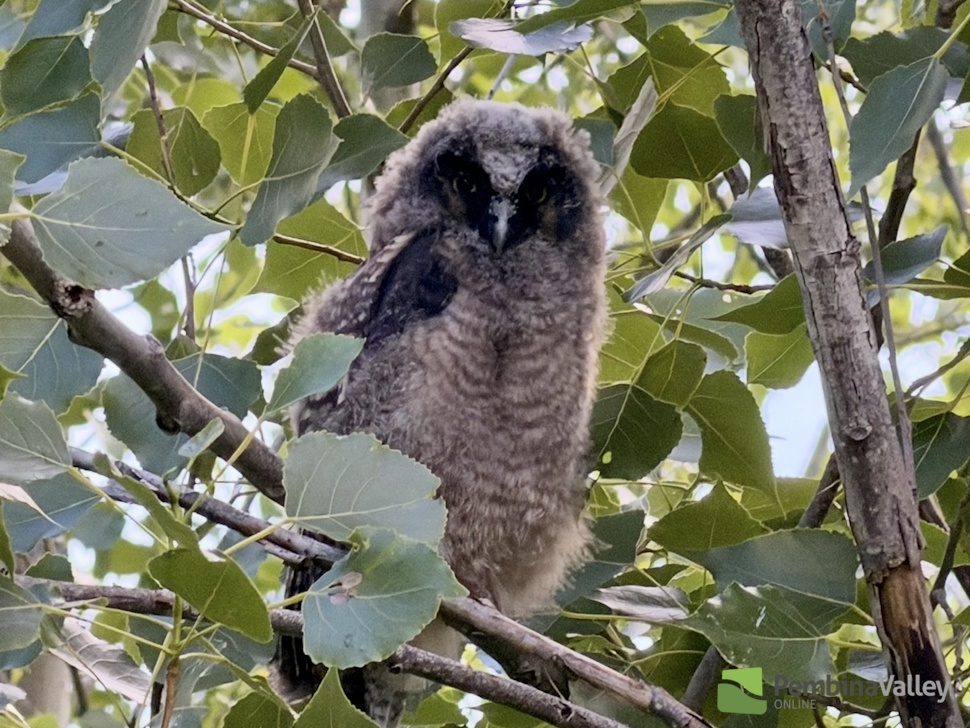
About two weeks ago in Morden, what started as a family enjoying the sight of two long-eared owls in their backyard turned into a rescue mission for one of the species’ young.
Noticing some new neighbours
Kelly O’Donnell, communications coordinator at Wildlife Haven, said the owlet rescue began after the family started seeing two adult long-eared owls — one of the province’s most elusive species — visiting their property regularly.
“They would sit in their hot tub, and they would see these owls sitting and watching them,” she said.
“They said the owls would even fly around and chase each other in the sky, so they were very much enjoying getting these visits from these two long-eared owls every single evening.”
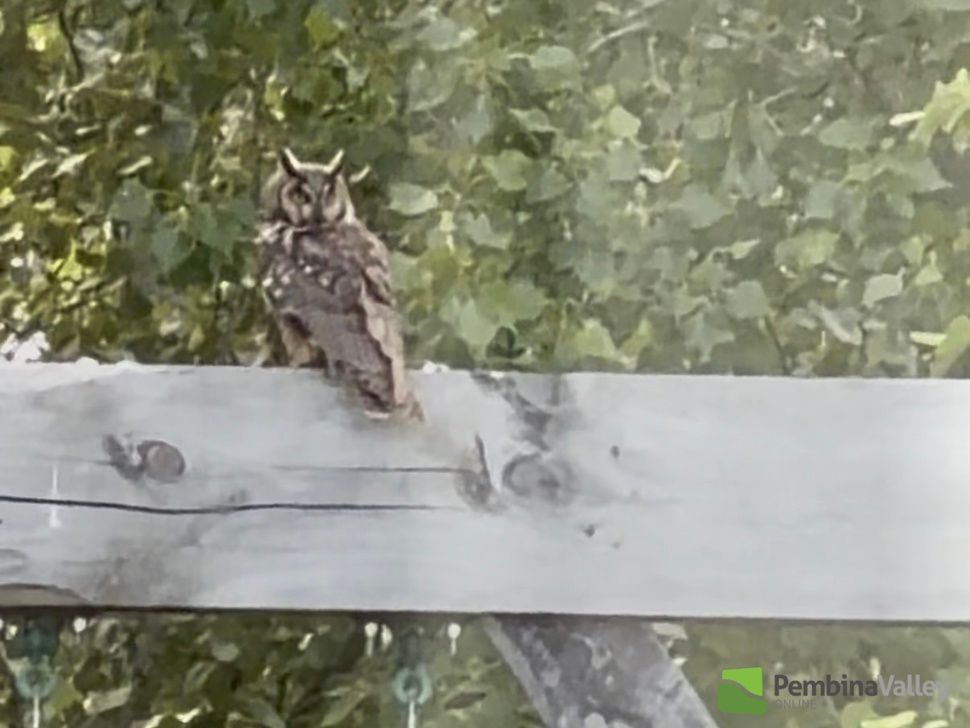 One of the adult long-eared owls a family saw visiting their yard regularly. Submitted photo.
Screeching through the night
O’Donnell said further attention was drawn to the owls one evening when the family’s daughters were camping in the backyard and heard “screeching all night long.”
“The next morning, they were very surprised to see three baby long-eared owls sitting on a branch in their backyard,” she explained.
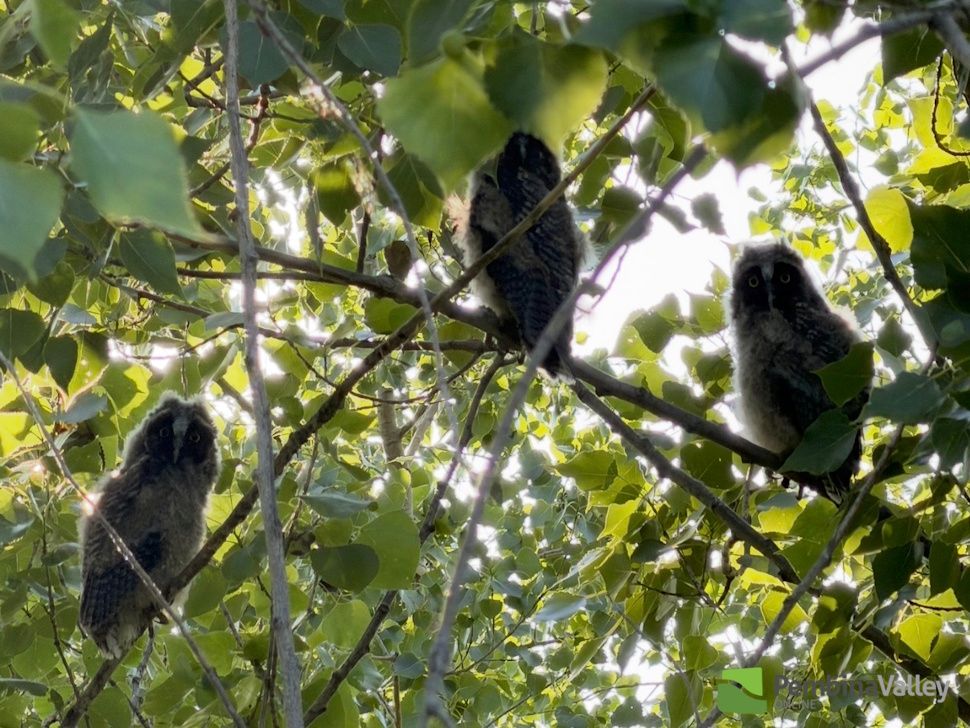 The three owlets that the Morden family was surprised to see perched in a tree on their property. Submitted photo.
While the sighting was an exciting discovery, over the next few days, the family noticed that the number of owlets had started to decline.
“By Monday, there was only one left on a lower branch, and they hadn’t seen the adults at all,” O’Donnell said.
Advice from the experts
Out of concern for the lone owlet, the family reached out for advice.
“It’s hard to know what to do in a situation like that. You don’t want to take an owl without knowing if it’s really in trouble or not, so they called Wildlife Haven,” said O’Donnell.
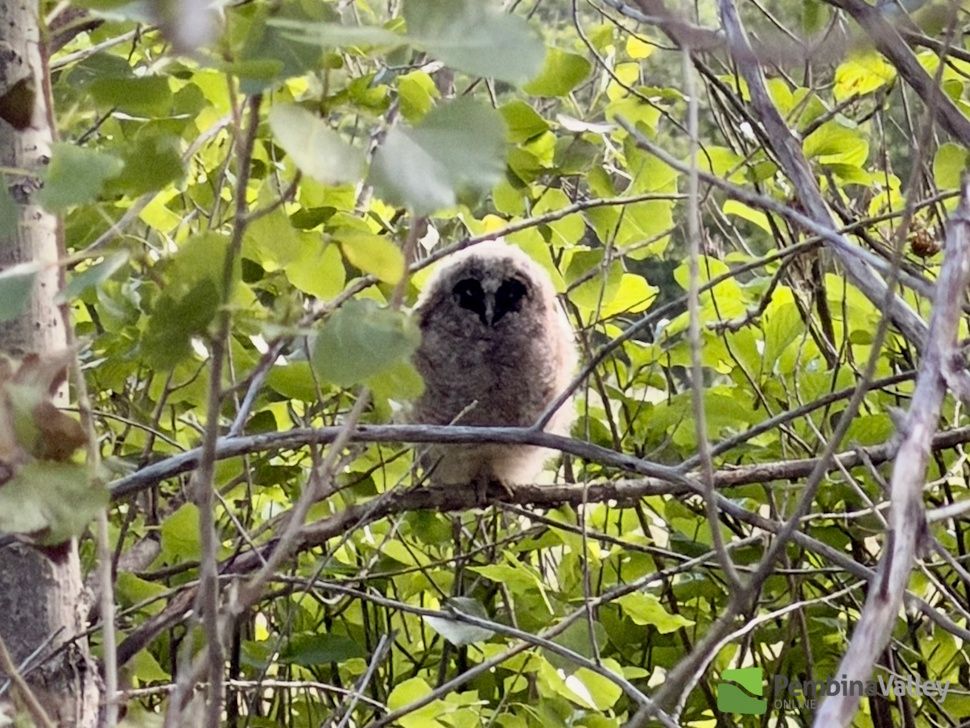 Another photo of an owlet in a tree. Submitted photo.
She said that, with guidance from the rehabilitation centre, the family continued looking into the situation and found one of the young owls deceased at the base of a nearby tree.
Although the third owlet remained unaccounted for, O’Donnell said the circumstances suggested the remaining owlet should be brought to Wildlife Haven for assessment.
‘It wasn’t too late’
As it turned out, the owlet was underweight, which O’Donnell said is a good indication that it needed rescue.
“At that point, you can kind of assume that maybe the adults weren’t around feeding it or weren’t around caring for it, so it turned out to be a really good thing that they brought it in,” she said.
“It was healthy otherwise, so it wasn’t too late …. [We’ve] been hand feeding it because it’s still at the age where it can’t fly on its own. It needs to be hand-fed as it would be by an adult.”
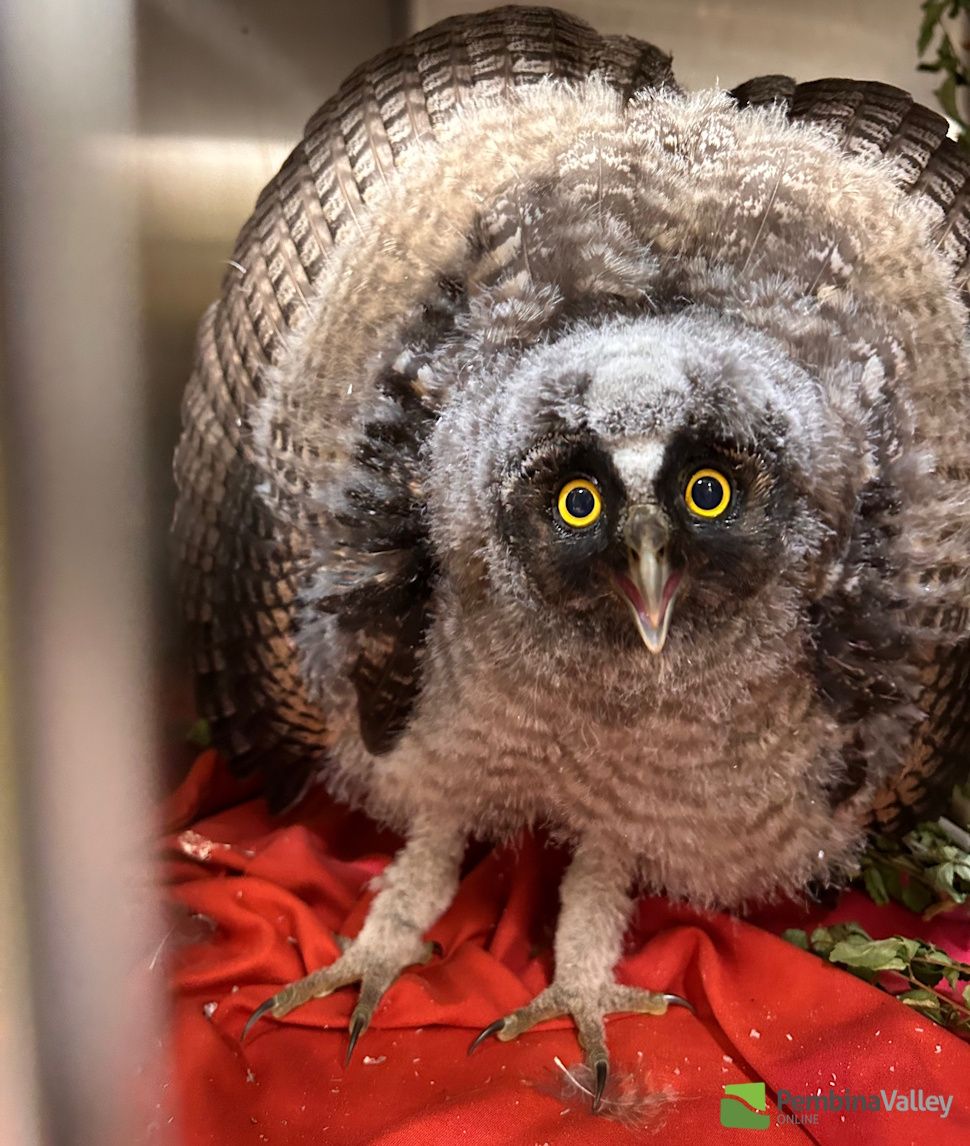 The orphaned owlet after it was taken to Wildlife Haven. Submitted photo.
New adoptive siblings
Despite its rocky start to life, O’Donnell said the owlet is “doing really well” and has been placed with other young long-eared owls in care.
It’s another stroke of luck for the bird, since the rehabilitation centre does not frequently receive the species but happened to have taken in a trio recently.
“They’re around the same age, so [the one found in Morden] actually got added to their enclosure,” she said.
“Now there are four baby long-eared owls all kind of being cared for together, which is ideal. It’s nice when they have one of their own species to stay with while they’re here before they get released back to the wild.”
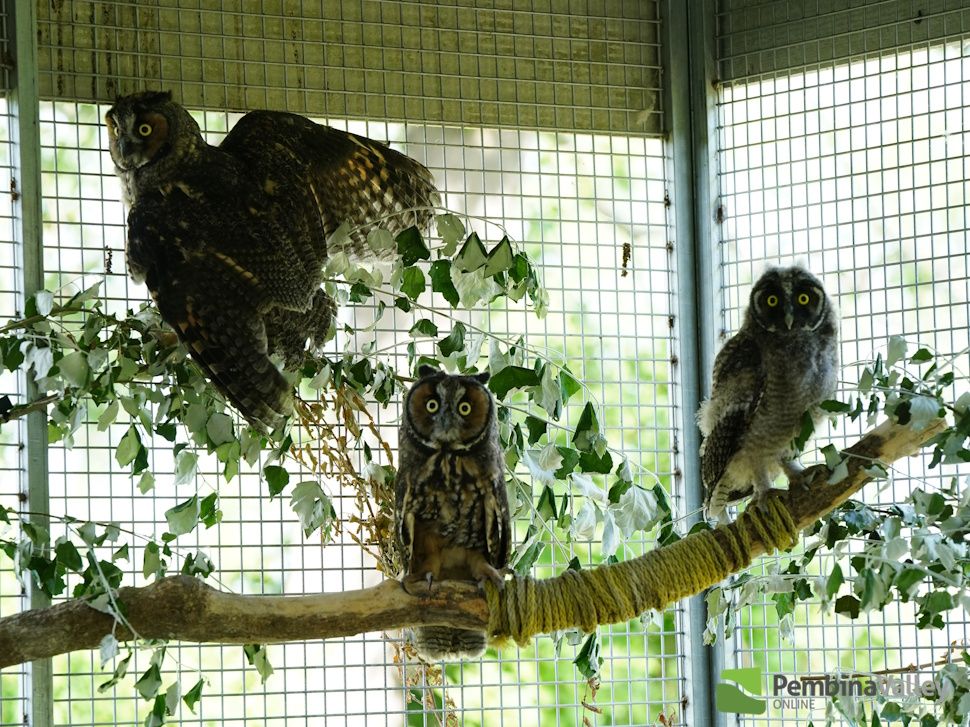 The orphaned owlet (far right) with its adoptive siblings at the Wildlife Haven, where it will stay until it can be released. Submitted photo.
Waiting for the right time
O’Donnell said one of the tools Wildlife Haven uses to determine when long-eared owls are ready for release is live prey testing.
During the process, prey is introduced into the enclosure so the owlets can practise their hunting skills.
“They’re very curious when they’re young, so if they have live prey in their enclosures, they will learn how to catch their prey, so we’ll put GoPros and trail cams to kind of observe them and see if they’re ready,” she said.
“We find very often that they know how to hunt — it’s within their DNA — and once we see that, we feel very confident that they can be released.”
Related stories:
She added that another benefit of keeping the owlets together is that they can learn from one another as they develop.
When it’s time to release the owlets, O’Donnell said Wildlife Haven will receive support from Jim Duncan of Discover Owls, a conservation organization that works through education and research.
Duncan will likely band the owlets before their release to help monitor their activity and also assist the rehabilitation centre in finding a suitable location for their reintroduction to the wild.
Making the right decisions for wildlife
In the end, the communications coordinator said she believes the family took the right approach with the owls.
She said Wildlife Haven always encourages residents who find an injured, orphaned or sick animal to call before intervening. The team can provide guidance on what is normal for different species in the region and when it is necessary to step in.
“We never, ever, ever want to take an animal away from an adult or a parent that might still be caring for it,” she said.
“The parents are always the best caregivers. We always want to keep them with their families, but when it comes to a situation like this, where … the family hasn’t seen the adults around for quite some time, the owls are dwindling, and one is even found deceased right close by — it makes you wonder, and it’s better to be safe than sorry.”
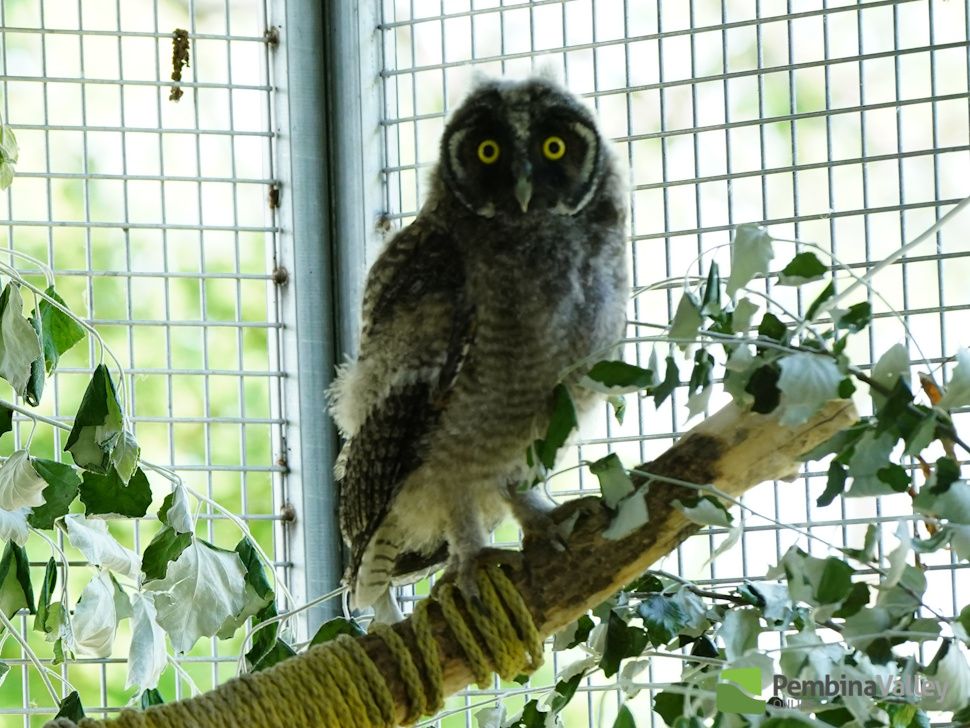 The orphaned owlet, who has been given a second chance at life thanks to the attention of the Morden family who spotted it. Submitted photo.
She also praised the family’s vigilance.
“Thank you to the family for noticing the changes and keeping an eye out for wildlife in their backyard. I think that is something we should all be doing.
“If you see an animal in trouble, it’s so great when you can reach out to us, and we can get that animal the help that it needs so that it can get a second chance at life back in the wild,” she said.
To learn more about the rehabilitation centre’s work, visit the Wildlife Haven website.