
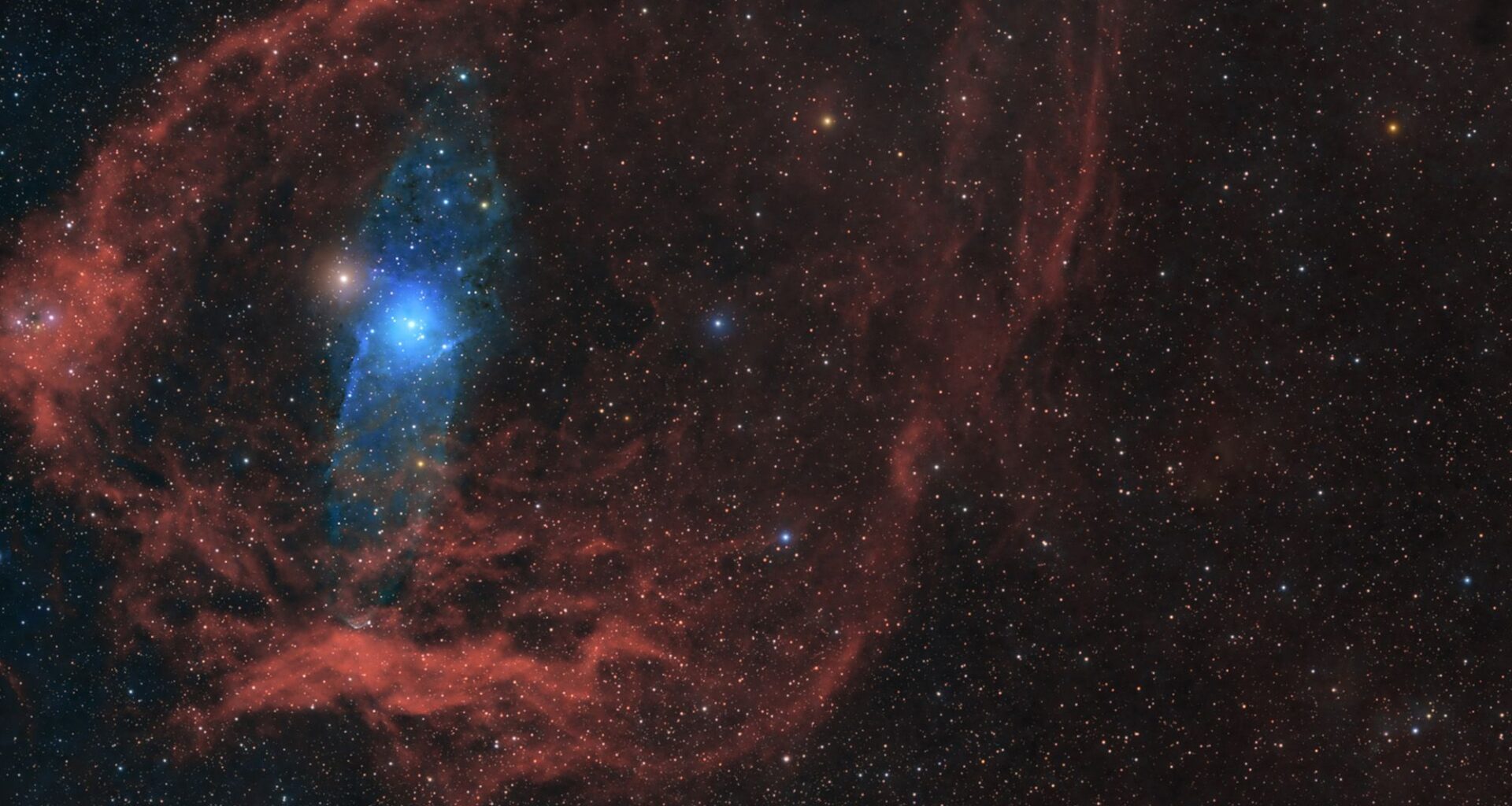
After using the James Webb Space Telescope (JWST) to peer back toward the beginning of time, astronomers have proposed a radical new explanation for one of the universe’s most flummoxing phenomena.
Little red dots (LRDs) are mysteriously compact, brilliant celestial objects found predominantly when the universe was less than 10% of its current age.
Latest Videos From
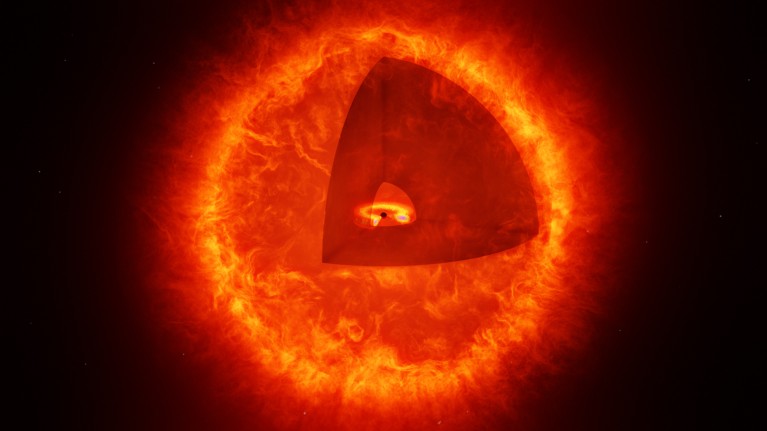
An illustration of a black hole star, or quasi-star, powered by a black hole surrounded by a cocoon of gas.
(Image credit: (MPIA/HdA/T. Müller/A. de Graaff) via Wikimedia Commons)
You may like
Connecting the dots
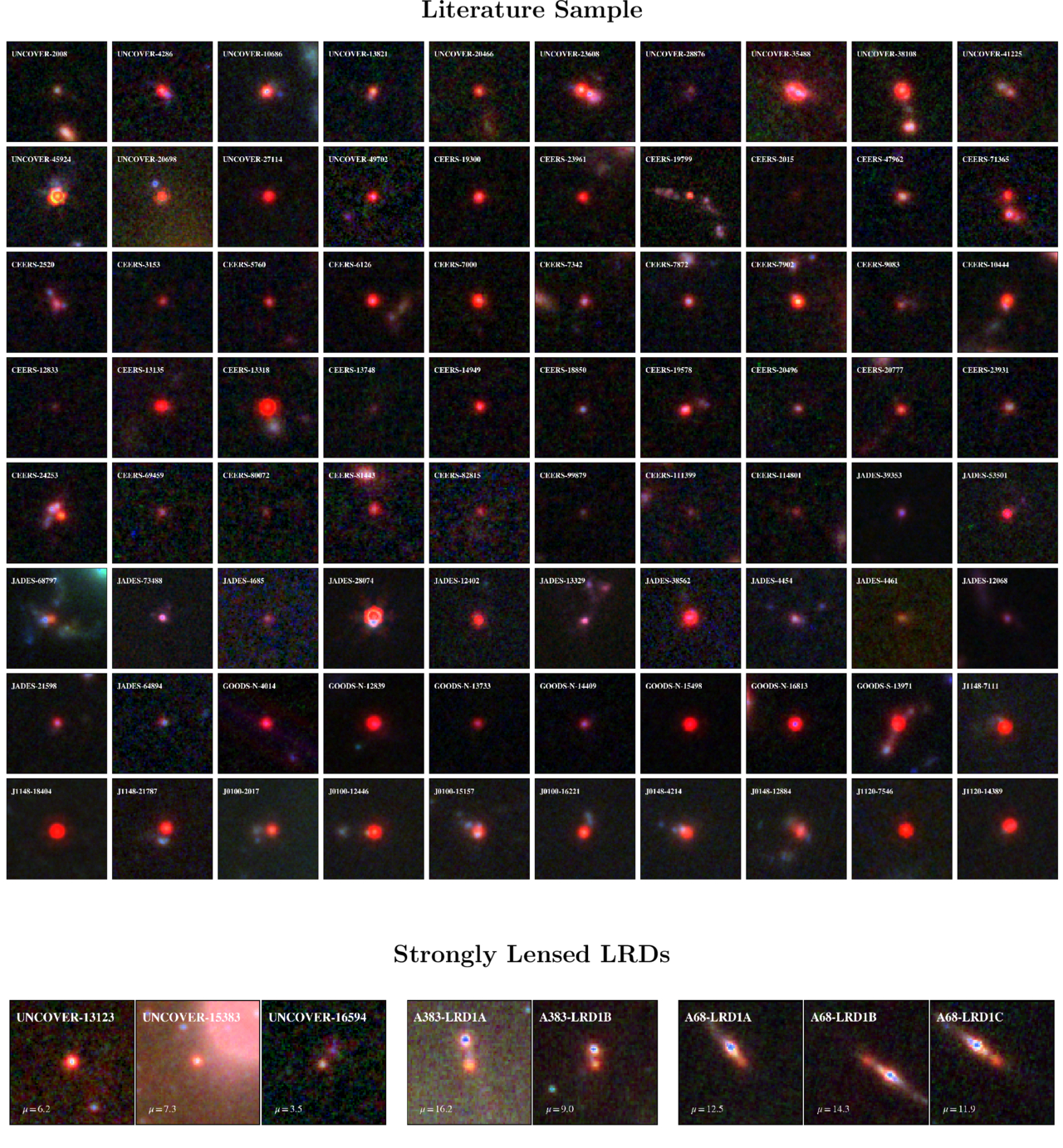
The LRDs sampled in this study.
(Image credit: (Baggen et al., ApJL, 2026))
Galactic potential?
Baggen, J. F. W., Scoggins, M. T., Van Dokkum, P., Haiman, Z., Torralba, A., & Matthee, J. (2026). Connecting the dots: UV-bright companions of little red dots as Lyman–Werner sources enabling direct-collapse black hole formation. The Astrophysical Journal Letters, 1002(1), L4. https://doi.org/10.3847/2041-8213/ae58a5
TOPICS