

Listen to this article
Estimated 3 minutes
The audio version of this article is generated by AI-based technology. Mispronunciations can occur. We are working with our partners to continually review and improve the results.
Ahmad Obeidallah’s not against staying late after work to enjoy downtown Ottawa’s attractions — it just depends on the season.
“In the summer? Probably,” said the federal public servant on Monday afternoon. “In the winter, hell no!”
Obeidallah is among the target audience for an impending city communications strategy aimed at hyping up the downtown in the hope workers won’t all leave for home at the same time.
So far, the idea is getting mixed reviews.
Last week, city council unanimously passed a $29-million transportation plan, with the goal of making it easier for everyone to get around now that public servants are back in the office an extra day each week.
With students also headed back to class in the fall, the city is forecasting an additional 65,000 weekly trips to the downtown core.
“This, and other factors, will lead to an increase in demand on the transportation network, requiring co-ordinated measures to maintain mobility, network reliability, and access to key destinations,” according to the plan’s report.
The plan’s 48 measures include more frequent LRT service, more express buses, a steep hike to no-stopping fines downtown and $20 million to expand a park-and-ride facility in the city’s south end.
It also includes launching a communications strategy that focuses on downtown Ottawa, with the goal of getting workers and visitors to “extend their time in the area in order to spread the egress from downtown over a longer period.”
That includes spending $50,000 to “launch a transit communication campaign geared to federal employees” and $110,000 on “promotion and paid advertising to share mitigation measures and travel tips.”
Specific elements of the communication strategy include:
Creating a “commuter-focused hub” on the city’s website.Issuing a “commuting newsletter” on Sundays that covers things like weather and traffic impacts.Boosting events and activities taking place downtown through what’s being called a “come and stay” campaign.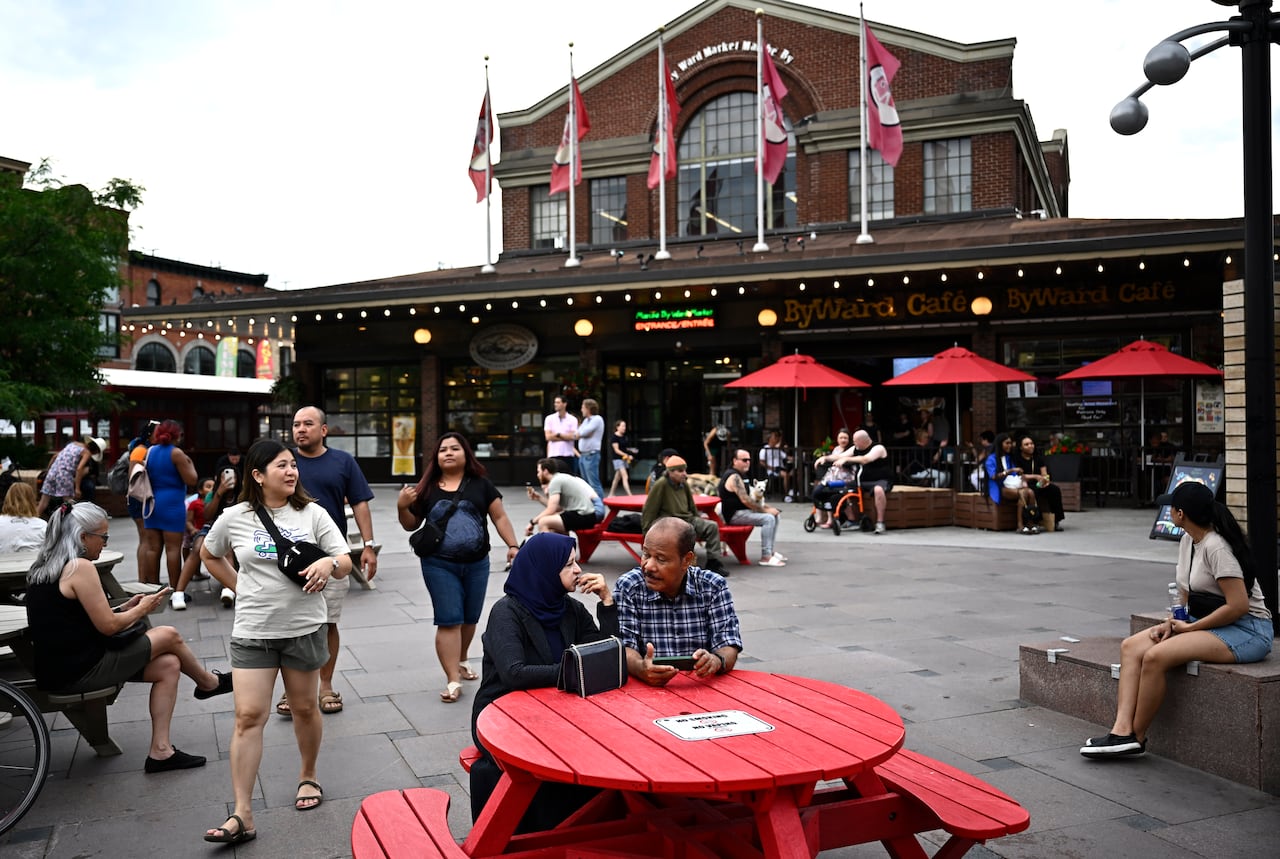 People gather in the ByWard Market on a warm June day in 2023. (Justin Tang/The Canadian Press)’I’ll see when September shows up’
CBC spoke to several workers who were downtown Monday afternoon to get their thoughts on the idea.
“It definitely is needed, right? Because the buses are so busy,” said Zachary Seguin-Forest, who’s already been lingering downtown with a book and a coffee after work some days.
“Is that the solution to full buses? I’m not sure, but we’ll see.”
Melissa Gauthier said the campaign wouldn’t convince her to change her routine.
“I have four kids and I just go pick them up at daycare and I go home,” she said. “I will do the same as usual.”
While it makes sense for the city to do what it can to make the commute more bearable, Obeidallah said the rising cost of living might keep people from sticking around and enjoying the city’s nightlife.
“I think [the trip home’s] going to be much busier, so it might actually incentivize me to stay a little bit over to escape rush hour,” he said. “But I don’t know. I’ll see when September shows up.”