

Listen to this article
Estimated 5 minutes
The audio version of this article is generated by AI-based technology. Mispronunciations can occur. We are working with our partners to continually review and improve the results.
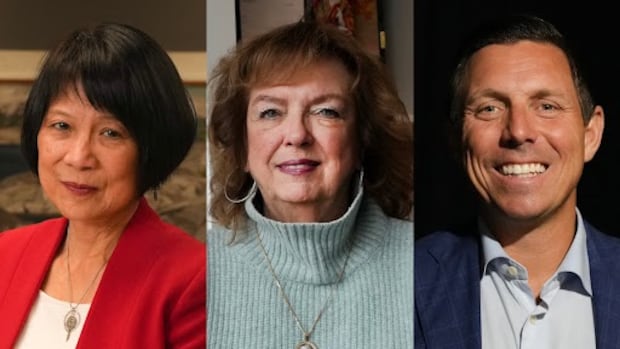
Mayors in the Greater Toronto Area are speaking out as new U.S. tariffs loom, saying they will take steps to protect local businesses from the latest White House actions.
On Tuesday, the mayors of Toronto, Mississauga and Brampton said their respective municipal governments will reconvene panels of experts set up when U.S. tariffs were first imposed on Canadian goods by U.S. President Donald Trump early last year.
They said they will also continue to prioritize local companies when it comes to procurement, work with business leaders to find ways to counter the impact of the new tariffs and help business owners to diversify their markets.
“We will do our part. We will support workers, the businesses and the families,” Toronto Mayor Olivia Chow told reporters.
Trump said Monday the U.S. will impose new 50 per cent tariffs on a wide range of Canadian merchandise. According to a fact sheet issued by the White House, the new tariffs will apply to Canadian products ranging from wine to hockey sticks to cement. The tariffs are to take effect in mid-August.
Chow said she will bring back what she calls the mayor’s economic action team that was set up last year to advise the city on strategies to protect Toronto workers, businesses and residents from U.S. tariffs.
“I will call them back together and look at what else we can do,” Chow said.
Chow said the economic action team, which includes business and labour leaders, already has a 10-point action plan that includes supporting Canadian businesses through changes to the city’s procurement practices and through a campaign to encourage residents to shop locally.
She said she will follow the lead of the federal and provincial governments in fighting the tariffs.
“Absolutely, we’ll take a Team Canada approach.”
WATCH | U.S. President Donald Trump announced new tariffs that take effect in mid-August: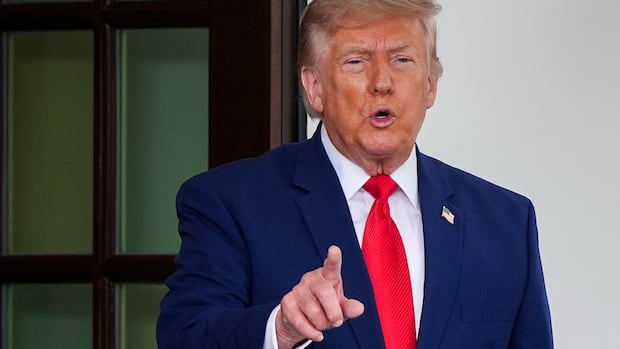
Trump threatens Canada with new 50% tariffs
U.S. President Donald Trump signed three proclamations Monday that will impose 50 per cent tariffs on a swath of Canadian exports in the latest ramp-up in the president’s trade war against Canada. Toronto Mayor Olivia Chow says the city will re-engage its ‘economic action team’ which encourages residents to shop locally.
Mississauga Mayor Carolyn Parrish said it’s important for local businesses in that city to seek out markets other than the U.S. because businesses cannot depend on the U.S. as their sole trading partner any longer.
“We have to find new trade partners in other parts of the world that are not going to inflict outrageous penalties on us,” Parrish said.
‘I think we stay the course,’ Parrish says of booze ban
Mississauga’s economic development department has a partners-in-trade roundtable, which includes councillors and business leaders, and the city will continue to work with it to support businesses through the tariffs, she said. The roundtable was set up in March 2025.
Parrish said the panel has shown that it doesn’t have a desire for retaliation.
“We’re just rolling with these punches,” she said.
But Parrish said the Ontario boycott on U.S. alcohol should continue, adding: “It’s obviously having an impact. It’s going to make the American companies pay attention to what the tariffs are doing to their economy. I think we stay the course.”
Ontario decided to remove U.S. alcohol from LCBO store shelves in March 2025 in response to U.S. tariffs on Canadian goods.
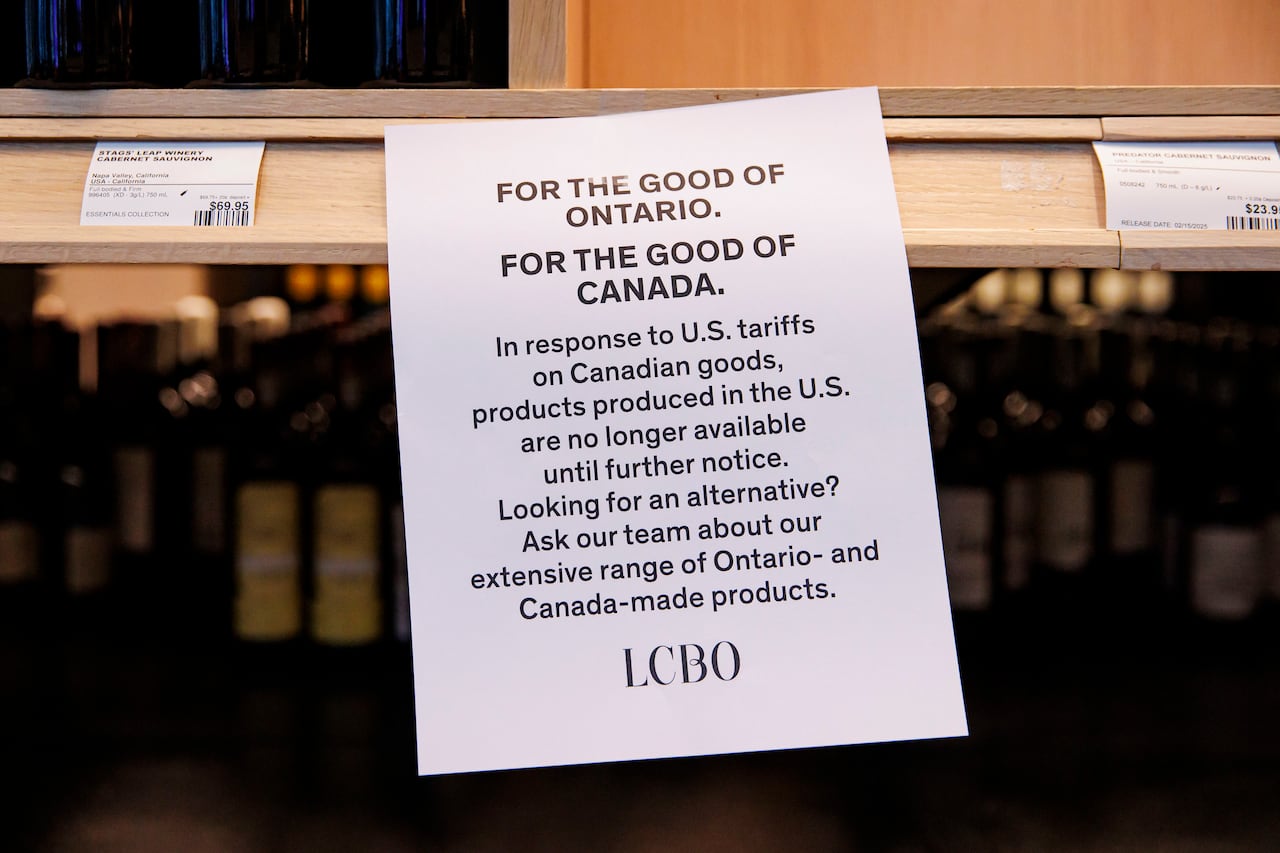 Ontario decided to remove U.S. alcohol from LCBO store shelves in March 2025 in response to U.S. tariffs on Canadian goods. (Evan Mitsui/CBC)
Brampton Mayor Patrick Brown said there’s no question the tariffs will hurt, and the local economy has to adapt. In addition to the impact on local businesses, the tariffs will further damage the historic trade relationship between Canada and the U.S., he said.
“Donald Trump’s continued attacks on the Canadian economy sting. It hurts in communities like Brampton,” Brown said.
“What I would say is for the last year we’ve been pivoting in Brampton. We’ve been trying to diversify trade, identify new markets, train, innovate, adapt.”
Brown said companies that used to make auto parts in Brampton are now building parts for the defence sector, while companies that did work in the U.S. are now doing work in the European Union.
“Unfortunately, we’ve been too comfortable with this cozy relationship with the U.S. for too long,” he said.
WATCH | ‘We shouldn’t panic over Trump’s new tariffs,’ says auto parts association head: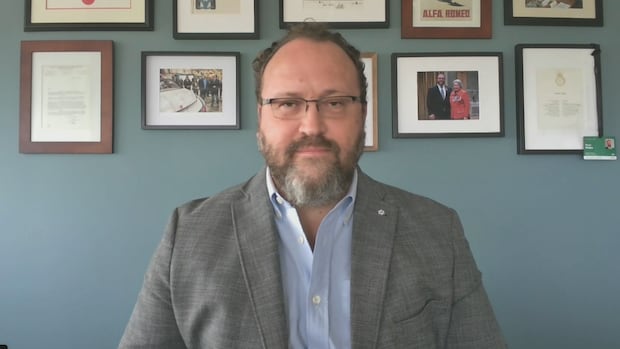
‘We shouldn’t panic’ over Trump’s new tariffs, says auto parts association head
U.S. President Donald Trump signed proclamations on Monday that impose new 50 per cent tariffs on Canadian exports next month. Power & Politics speaks with president of the Automotive Parts Manufacturers’ Association Flavio Volpe on how these tariffs would affect Canada.
Brampton set up a tariff task force in February 2025 after Trump was elected and it has met regularly with federal and provincial officials to help businesses navigate the new trade relationship.
Brown said city staff also help to identify new markets for every company impacted by tariffs.
“We are trying to be as agile as we can in adapting to this new reality,” he said.
‘We will overcome this,’ Brown says of tariffs
Brown said Canadians are resilient and will get through this.
“For every crisis we have faced, every moment of adversity, we have overcome it and we will overcome this,” he said.
“It’s disheartening and disappointing to have this historic neighbour led by President Trump choose Canada as an adversary … This is a moment in time within a U.S. administration that is misguided, but I really believe, our relationship at some point, we’ll be back on track.”