
Overall, the market in the Greater Toronto Area and southern Ontario remains softer than the national trend, but some buyers are willing to risk a purchase in hard-hit tranches now.
In the Toronto-area real estate market, some buyers are bottom fishing.
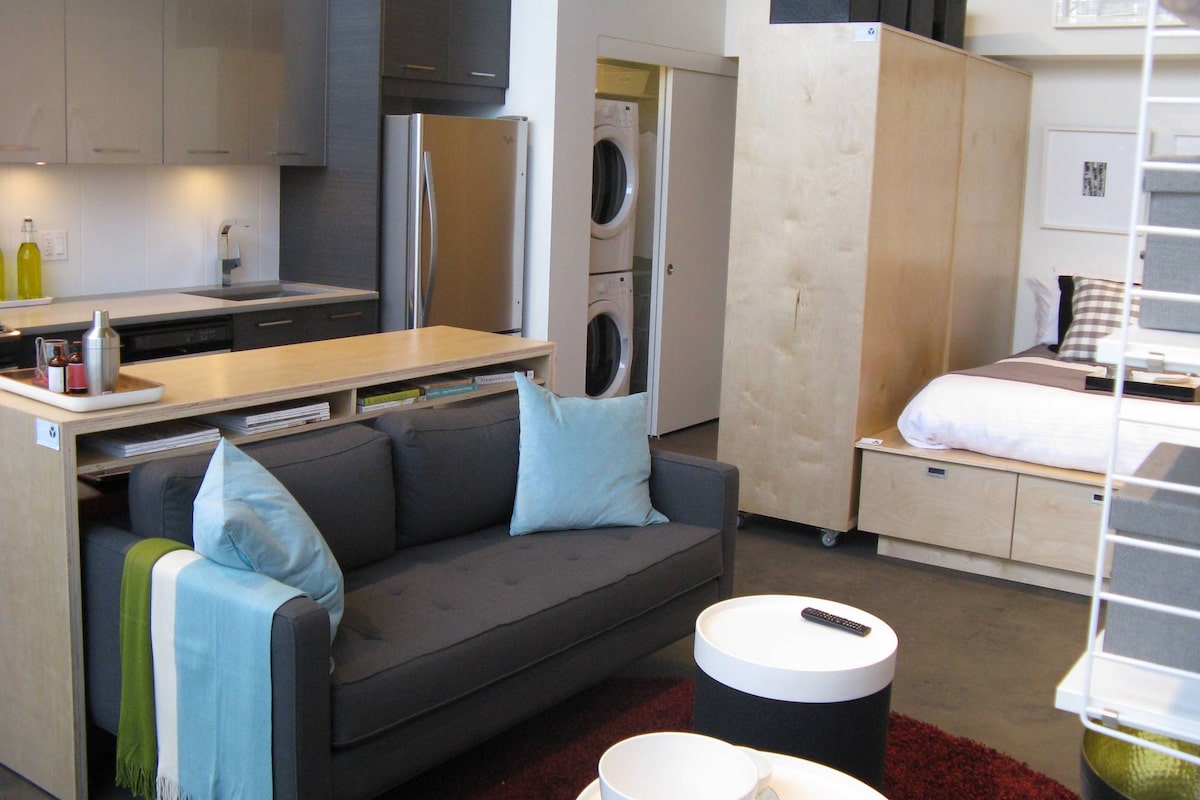
Even miniature condo units can appeal to buyers who are willing to live in a compact space if they strike a good deal.
Robert Kavcic, senior economist with the Bank of Montreal, cautions that the Toronto condo bracket will likely remain weak well into 2027.
Mr. Kavcic is not predicting a sharp recovery in Canadian real estate, but he does see signs that the national market is finding a floor in year five of the downturn.
He points to more steady national sales and stable new listings, which have combined to bring the broad market back into balance.
In June, home sales in Canada edged up 0.5 per cent from May on a seasonally adjusted basis. That result marked the third consecutive increase after five months of decline.
New listings slipped 1.3 per cent in June from May.
The Teranet-National Bank Composite National House Price Index dipped 0.4 per cent in June from the previous month.
Overall, the market in the Greater Toronto Area and Southern Ontario remains softer than the national trend, but some buyers are willing to risk a purchase in hard-hit tranches now.
Davelle Morrison, broker with Bosley Real Estate, notes the condo segment in the GTA remains awash in listings with few buyers for smaller one-bedroom units.
“In the $500,000 range, it’s crickets,” says Ms. Morrison, adding that some units are not even drawing showings.
As a result, Ms. Morrison says, buyers who are willing to look at entry-level units have hefty bargaining power.
Why now might be a good time to buy or sell, according to our real estate experts
She worked with one first-time buyer who recently purchased a unit for $364,000 at Jarvis Street and Dundas Street East.
The buyer was upfront about having a budget below $400,000, Ms. Morrison adds.
“I was shocked at how much I had to show them.”
This buyer was very realistic, she adds, unlike people who have trouble deciding because they tend to like units that are just out of reach.
“‘Like’ what is actually in your budget,” is her advice.
In this case, the buyer purchased a unit with 549 square feet of living space and a balcony in a 10-year-old building.
The main selling point, in a segment saturated with units with unappealing layouts, was that it had a true bedroom with a door, Ms. Morrison says.
The unit, originally listed in April of 2025 with an asking price of $519,000, went through a series of price cuts until it was listed for $368,000, Ms. Morrison says.
The seller was an investor who had purchased the unit from plans. During the time it was listed, a tenant moved out.
She counts herself among the many agents who will not show a unit to buyers if tenants are still occupying the space because sometimes they refuse to move out, which can create complications on the closing date.
She points to the example of one house she listed in the Leslieville neighbourhood that only had one showing while it was rented.
Eventually the tenants did move out, and she is planning to relist the property with a fresh paint job and furniture and décor brought in by a staging company.
“If I have buyers who are looking – no matter the price point – I’m not showing it if it is tenanted. You just don’t know that the tenants are going to leave,” Ms. Morrison says.
Two couples combine resources to buy Leslieville triplex
Anna Wong, real estate agent with Strata Real Estate, recently worked with tenants who decided to buy when their landlord notified them of a rent increase.
“That kick-started their search,” Ms. Wong says. “It’s actually a risky move for landlords to raise rent.”
The buyers had been keeping an eye on the market for a couple of years, she says.
They purchased a two-storey townhouse in the Leslieville neighbourhood for $775,000 after it was listed with an asking price of $799,000.
The sellers paid approximately $950,000 near the height of the market, says Ms. Wong.
Her clients figured they could buy the freehold townhouse for the same price as many two-bedroom condos they had seen listed in the area.
“It made sense for them to pull the trigger. It was definitely a deal,” says Ms. Wong.
Ms. Wong’s clients, who purchased a two-storey Leslieville townhouse below the asking price, figured they could buy the freehold townhouse for the same price as many two-bedroom condos they had seen listed in the area.Laura Proctor/The Globe and Mail
Ms. Wong says many people are content to sit on the sidelines if they are in a fairly affordable rental property.
Most buyers are not counting on a condo to provide any capital appreciation any time soon.
But if they can break even with a combined mortgage, maintenance fee and tax bill roughly equivalent to the amount they’re paying in rent, they are willing to buy.
“There are a lot of renters out there who are doing the math,” says Ms. Wong.
Those condos that do attract interest tend to be larger units in upscale buildings because that is the tranche where many downsizing baby boomers are concentrating their search.
Ms. Morrison recently listed a two-bedroom corner unit at 38 Avenue Rd. with an asking price of $2.68-million.
Within a couple of days, two buyers booked showings for the unit with 1,845 square feet of living space and an elevator that opens directly into the foyer.
She says the unit is out of the price range of many younger aspiring buyers, but the property is more likely to suit a homeowner with a house to sell around the $4-million mark or higher.
Locked out of the city, some young buyers are heading to cottage country
The building in the Yorkville neighbourhood near Avenue Road and Bloor Street offers valet parking and a concierge, she says, and many buyers are looking for those services at the higher end.
Still, condos in that price range have been sitting in the area, she says, as buyers take their time making decisions.
Mr. Kavcic at BMO points out that demand and supply eventually rebalance in housing cycles, and he is predicting that a new, well-behaved cycle will emerge from this correction as well.
In his view, a drying up in the supply of small investor-dominated condos that end users clearly don’t want is the factor that will ultimately rebalance that segment.
Many parts of the Canadian market could drift through 2027 until affordability and investment arithmetic get more compelling, he says.
Looking back to 2022, the economist notes that the peak of the last cycle coincided with valuations stretched beyond levels that income, rent and interest rate fundamentals could justify – all fanned by speculative interest and the false narrative of a lack of supply.
And just as the Bank of Canada’s moves to cut interest rates to near zero helped to fuel that run-up, the tightening cycle that began in 2023 brought it to a halt, Mr. Kavcic says.
Stretched valuations can’t absorb higher borrowing costs, so prices must fall.
“This is how almost all housing bull markets end, and this was no different,” says the economist.