
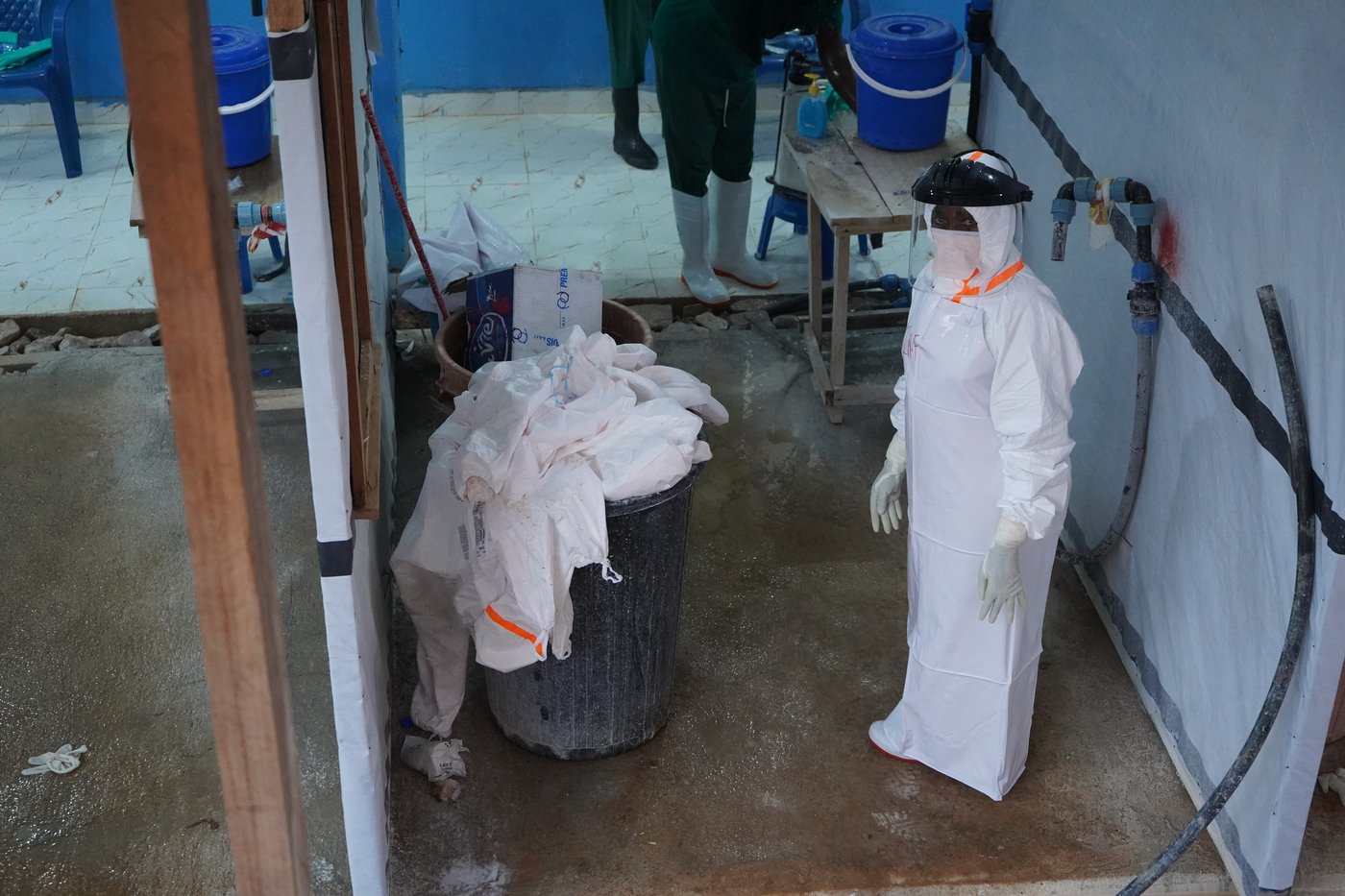
Ebola is rare, but highly contagious and can be contracted via bodily fluids such as vomit, blood or semen. The disease it causes is severe and often fatal.

Officials have also warned that 80% of new cases have emerged through unknown chains of transmission, a sign the outbreak is spreading faster than health officials can track it even as they step up their response in Ituri province, the epicenter of the outbreak, as well as in four other provinces where cases have been recorded.
Community resistance to Ebola teams, particularly those carrying out safe and dignified burials, has also hampered response. Robert Ndjalonga, head of civil protection in Ituri province, said some communities have refused to allow burial teams to operate as they seek traditional burials, increasing the risk of further transmission.
“The biggest challenge remains resistance from, or outright refusal by, some communities to accept response teams,” Ndjalonga said. “On several occasions, burial teams have had to be escorted by security forces to ensure that safe and dignified burials could be carried out without incident.”
Shortages of burial supplies have delayed responses to reported deaths, while some affected health zones still lack operational burial teams, Ndjalonga said.
Attacks on health facilities and response teams have also forced front line workers and aid groups out of some areas. Some health workers have gone on strike, complaining that they haven’t been paid since the outbreak started.
A member of a team carrying out safe Ebola burials was recently injured after assailants pelted their vehicle with stones as it returned from a burial in Bunia last week, according to provincial civil protection authorities.
The attack highlighted the challenges facing the response in eastern Congo. In Ituri’s Irumu territory, the local military administrator recently described Ebola as a greater threat than the Islamic State-affiliated Allied Democratic Forces insurgency and urged residents to support, rather than attack, health workers.
Speaking at the Africa health summit in Ghana on Tuesday, Dr. Jean Kaseya, the Director-General of Africa Centres for Disease Control and Prevention, called for intensified efforts to slow the outbreak.
“If we do not stop this outbreak today, it could become one of the worst Ebola outbreaks the world has ever documented,” Kaseya said.
Less than 9% of expected contacts from confirmed cases are currently being monitored, far below the level needed to contain the outbreak, according to Africa CDC. More than 60% of deaths are occurring in the community before patients reach care.
Pierre Akilimali, the Ebola response incident manager at the National Public Health Institute of the Democratic Republic of the Congo, said the high number of community deaths suggests many infections are not being detected or isolated in time, allowing the virus to continue spreading.
Prosper Heri Ngorora And Constant Same Bagalwa, The Associated Press