

We compared the prices and performance of all 110 putters in our biggest-ever test to discover whether spending more really buys a better flatstick – or if there’s a sweet spot where value and performance meet.
In the last few months, two of my regular golf playing partners have each spent around £700 ($900) on a putter.
And fair enough. Everyone is free to spend however much they want on whatever they want.
But it got me thinking: how much should you spend on a putter?
Not in a “golf clubs are getting too expensive” kind of way – that’s a debate for another day – I mean from a performance perspective.
Because when it comes to drivers, the most expensive models tend to feature premium materials, more sophisticated technology, and cutting-edge engineering that can increase forgiveness and/or ball speed. In our annual driver tests, the premium models almost always come out on top in terms of performance.
But putters seem different.
No matter how beautifully they’re designed, surely there’s only so much a lump of metal on the end of a shaft can do to help you roll a golf ball 15 feet?
After all, major championships have been won with battered old putters that look like they belong in a charity shop.
So is a premium putter just a waste of money?
With models ranging from $99.99 (£79.99) to $700 (£650) included, our biggest-ever putters test was the perfect opportunity to find out.
Seven golfers tested 110 putters over three days at Stoke Park, scoring every model for looks, alignment, stability, feedback, and roll.
Price played no part in the testing, scoring, or final rankings.
Only once we’d finalized the rankings did I compare performance against price.
The results were very interesting.
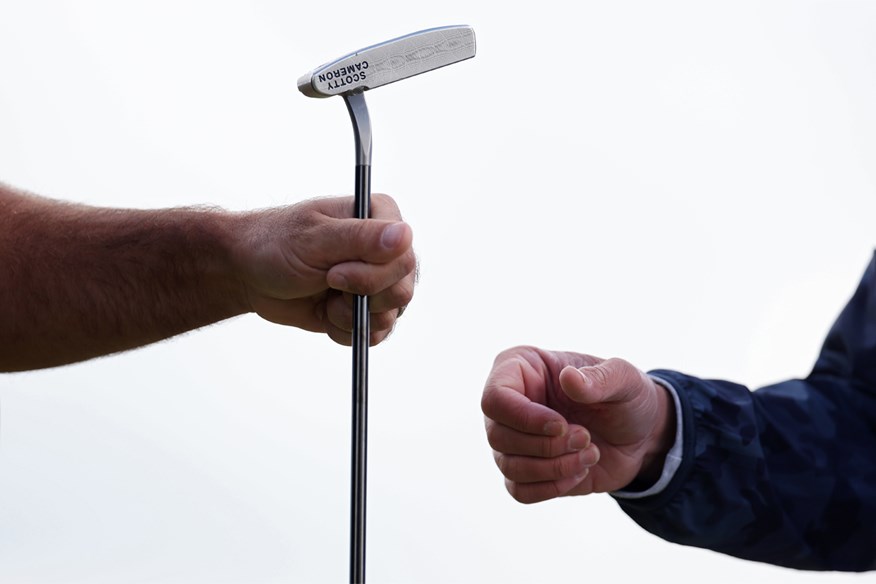
How much should you spend on a putter?
The data paints a pretty clear picture. There is a relationship between price and performance – but only up to a point.
The average score of putters costing less than $200 (£150) was 57.4/100, rising only slightly to 59.9 out of 100 for models priced between $200 and $299 (£150-250).
The biggest jump came when moving into the $300-399 (£250-350) bracket, where the average score leapt to 68.4.
Interestingly, spending beyond that didn’t bring extra performance. In fact, putters priced between $400 and $499 averaged 67.7, while those costing $500 or more averaged 67.9.
In other words, once you reach around $300-400, spending more doesn’t automatically buy you a better-performing putter.
Price bandModels testedAverage score (/100)Under $2001457.4$200–2991859.9$300–3992868.4$400–4993667.7$500+1467.9The law of diminishing returns
Our testing found a clear jump in average score between putters costing less than $300 and those in the $300–399 bracket. Beyond that, however, the gains were minimal, with both the $400–499 and $500+ categories returning almost identical average scores.
The individual rankings tell a similar story.
Of the 20 highest-rated putters in our biggest-ever test, 18 were priced between $300 and $499. Not a single putter costing less than $300 made the top 20, while only two models priced at $500 or more managed the feat.
Price bandPutters in Top 20Under $2000$200–2990$300–3996$400–49912$500+2
The $300-399 bracket wasn’t just strong on average – it also contained the two highest-scoring putters in the entire test.
The TaylorMade Spider Tour (90/100) and Spider Tour X (88/100) both retail for $349.99 (£299), proving you don’t have to spend $600 or more to buy one of the very best-performing putters on the market.
The same price range also featured standout performers from PXG, L.A.B. Golf, Mizuno, and Evnroll, reinforcing the idea that golfers don’t need to spend top dollar for great putters.
By comparison, many of the ultra-premium models command their higher prices through premium materials, meticulous machining, limited production runs, and brand prestige – rather than a significant improvement in on-green performance.
That’s not to say expensive putters are to be avoided. If you love the look, feel, or craftsmanship of a premium model, or a fitting shows it suits your stroke, the extra investment may well be worthwhile.
But if you’re judging purely on performance, our testing suggests you’re unlikely to gain a significant advantage simply by spending more than around $400 (£300).
 Verdict
One of the biggest myths in golf is that a more expensive club is automatically a better one.
Our biggest-ever putter test suggests there’s some truth to that – but only up to a point.
Moving from a budget putter into the mid-market delivers a clear improvement in average performance, but once you reach the $300-399 bracket, the gains largely level off.
Some of the most expensive putters we tested were outstanding. Others were comfortably outperformed by models costing hundreds less.
Our biggest-ever putter test didn’t prove that expensive putters aren’t worth buying. It simply showed that, beyond a certain point, spending more is increasingly likely to buy you craftsmanship, premium materials, and exclusivity, rather than a meaningful improvement in performance on the greens.