
Article content
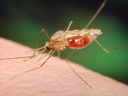
Public health authorities in the Belleville area are warning of the presence of West Nile virus in mosquitoes found there.
Article content
Two crows in the health unit’s service area also tested positive in the week of July 13, a health unit news release noted. It did not state the specific area in which the crows were found.
Health unit staff operate mosquito-monitoring traps at locations across the area and tests the insects routinely to monitor local West Nile activity and assess public risk.
“The recent identification of West Nile virus in local mosquito populations, along with the recent detection of the virus in two birds, serves as an important reminder for residents across the region to take steps to protect themselves from mosquito bites and eliminate potential mosquito breeding sites around their homes,” said Kim McCann, the health unit’s manager of environmental health.
The virus is found mainly in birds and mosquitoes, which get the virus from biting infected birds. The insects can then spread the virus to humans and other animals.
Article content
Read More
West Nile Virus detected in Prince Edward County
Mosquitoes carrying West Nile Virus found in Picton
Early symptoms of infection in humans may include fever, muscle weakness, stiff neck, confusion, severe headache, sudden sensitivity to light, tremors, numbness, and vision loss.
Most people who are infected have no or mild symptoms – however, in severe cases, the virus can cause encephalitis, an inflammation of the brain.
Anyone suspecting they may have early symptoms should contact a health care provider, the release stated.
Infected mosquitoes appear typically in July, with a peak in their numbers occurring by mid-August, followed by a decline.
“During these times it is recommended that residents are diligent about protecting themselves and their families,” the release stated.
How to guard against West Nile
Mosquitoes are most active at dawn and dusk. Health unit staff encourage people who are outside during those times to wear light-coloured, long-sleeved shirts and long pants, socks, and a hat, and to use an insect repellent containing DEET or Icaridin.
Remove any standing water from around your home, including from bird baths and small pools, since mosquitoes lay their eggs in standing water.
Ensure windows and doors have intact screens to keep mosquitoes outside.
If you find a dead bird or other dead animal, don’t touch it, as it may be carrying West Nile or another pathogen.
Public health staff recommend using a shovel to bury those animals at a depth of at least 50 cm (1.5 ft) in an area that won’t be disturbed.
For more information, visit SoutheastPH.ca/west-nile-virus.
Share this article in your social network