

Listen to this article
Estimated 5 minutes
The audio version of this article is generated by AI-based technology. Mispronunciations can occur. We are working with our partners to continually review and improve the results.
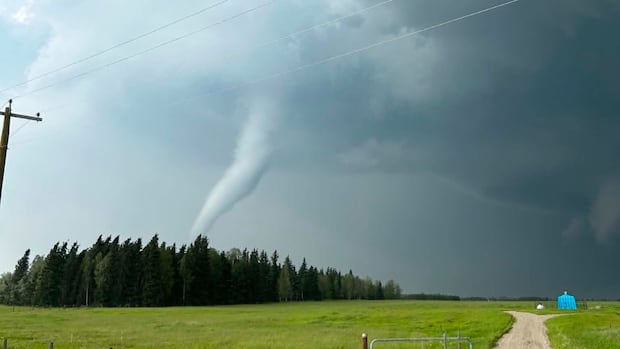
Investigators with Western University’s Northern Tornadoes Project (NTP) have confirmed two tornadoes that touched down in west-central Alberta on Saturday were EF-2 twisters [on the enhanced Fujita scale], with wind speeds reaching roughly 190 km/h and causing extensive structural and tree damage.
Matthew Woodward, the Alberta damage survey lead for the NTP and the Canadian Severe Storms Lab, said the sheer volume of destruction stands out to him.
“These tornadoes were EF-2+, which means they were significant tornadoes by definition,” he told CBC News on Wednesday.
According to the NTP’s blog, the first tornado developed southwest of Rocky Mountain House and “tracked to the southern limits of the town” while the second developed east of the town before tracking eastward. Both twisters hit in Clearwater County.
“We’re estimating over 50 structures damaged,” Woodward said. “Unfortunately, it is a relatively populated area, and we just hope the people of Rocky Mountain House can recover from the tornadoes really well.”
He said his team determined the EF-2 rating for both tornadoes after finding a barn completely swept off its foundation.
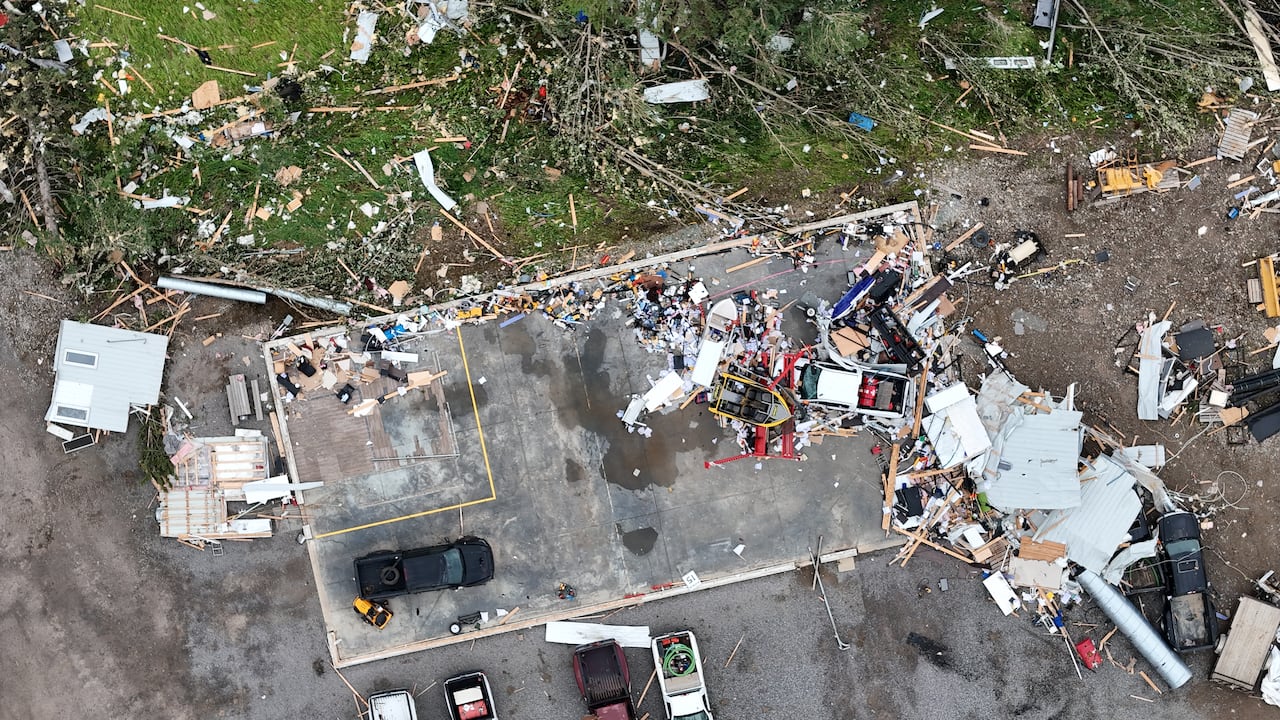 Photo showing severe damage and dispersed debris from an outbuilding in Alberta’s Clearwater County after a tornado hit the area in July 2026. (Submitted by the Northern Tornadoes Project)
While no injuries were reported, the NTP noted the first tornado destroyed a well-constructed outbuilding and swept away the debris, while the second tore the roof off a home.
For comparison, Woodward pointed to the major EF-4 tornado near Didsbury in 2023, which completely swept a house off its foundation and caused significantly more devastation.
Sticky summer fuels active season
The NTP has been tracking tornadoes across Canada since 2017. With a month and a half of peak season remaining, Alberta already has 27 confirmed twisters this year. Woodward said previously, the most that the NTP has counted in the province since the research initiative started, was 23 in 2019.
“It has been a very active year,” he said. “Alberta has had significant tornadoes so far: four have been EF-2 and one has been EF-3 – the one at Tulliby Lake.”
Janelle Gergely, a meteorologist with Environment and Climate Change Canada (ECCC), said an unusually wet summer across central Alberta is driving the severe weather.
“One thing I think we all notice in the air is that it’s moist,” she said. “All that rain we got in June through much of central Alberta is providing available moisture for those storms.”
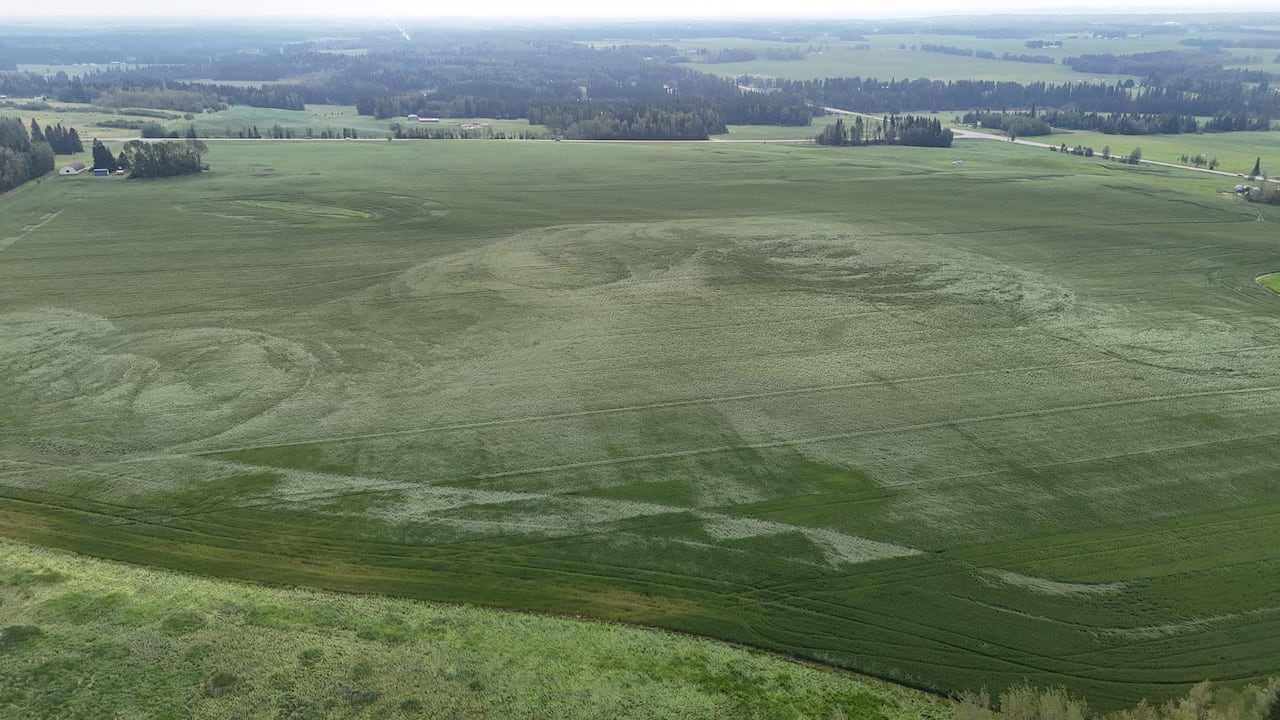 The Northern Tornadoes Project said this photo exhibited definitive swirl marks caused by tornadic winds over a crop in Alberta in July 2026. (Submitted by the Northern Tornadoes Project)
Gergely explained that’s one of the factors that could be contributing to tornadoes.
However, she noted that of the 27 twisters recorded this year, roughly 10 were landspout tornadoes – which tend to be weaker – that touched down over a couple of days in May near the Red Deer Corridor.
Based on 35 years of records, Alberta averages 10 to 12 tornadoes annually, according to Gergely. But she pointed out that better reporting might be skewing the historic average.
Increased social media use, smartphone cameras and the work that the NTP is now doing mean more storms are being detected, Gergely said.
“But yes, the numbers are high this season,” she said.
Community in shock as cleanup continues
Clearwater County has moved into the cleanup and recovery stage. County officials said it is fortunate there was no loss of life or serious injury as a result of the tornadoes.
Reeve Jordon Northcott said the community remains in a state of shock after seeing the magnitude of the destruction firsthand.
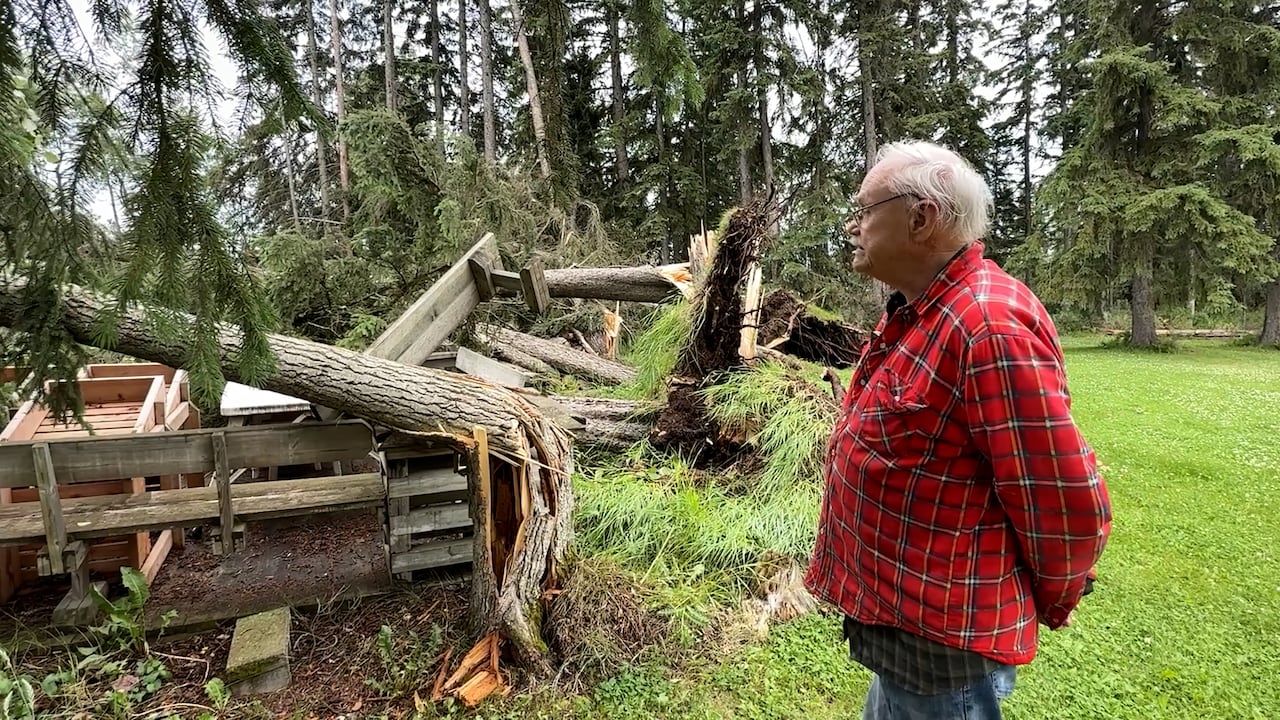 George Lambertus looks over the damage a tornado caused to his property in Rocky Mountain House, Alta., in July 2026. He said buried underneath the debris is a backyard firepit where he and his wife used to sit, roast wieners and have a good time. (Nadeer Hashmi/CBC)
He said that while much of the damage affected outbuildings like granaries, calf shelters and workshops, about eight homes will also require extensive repairs before they are livable again.
“Some of the roofs were almost completely removed,” Northcott said.
The county said displaced residents have found accommodations through family or friends and that at this time it has not been received any requests for emergency social services support.
Northcott said there have been discussions with the province — including with Finance Minister Jason Nixon who also serves as the area’s MLA — about potential grant funding to help landowners clear downed trees.
“There’s potential of future wildfire risk if those trees are not cleaned up,” Northcott said. “So it will be beneficial to get those forested areas that were damaged cleaned up.”
George Lambertus, whose home sits on the southern edge of Rocky Mountain House, hired a crew to clear his yard while municipal workers clear debris near the road.
“It’s going to take a long time, and we’re going to be kind of bare around here for a while,” he said.
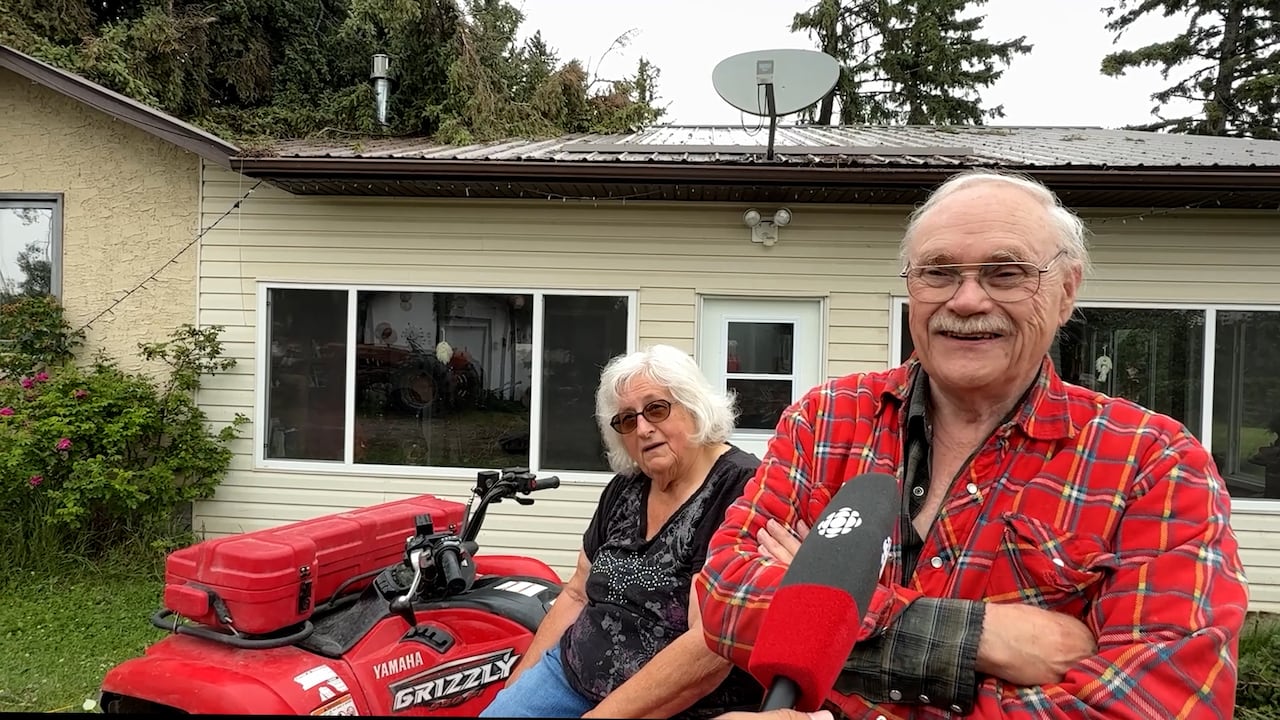 George and Doreen Lambertus outside their home in Rocky Mountain House, Alta. The couple said they have been most struck by the number of community members showing up at their door to offer help after a tornado passed through the area in July 2026. (Nadeer Hashmi/CBC)
Despite the devastation, he said one thing stood out to him above everything else.
“I am totally and thoroughly shocked at the number of people that [have] come to the door and offered their help,” he said. “It is just marvelous.”