
This article discusses topics including suicide and the deaths of children. Reader discretion is advised.
Three children died in a matter of weeks this March while under the care of Montreal’s anglophone youth protection agency, a Gazette investigation has found.
Two of the children — whose deaths are reported here for the first time — were on wait-lists for home visits from social workers, according to employees at Batshaw Youth and Family Centres. The third died by suicide in Prévost while being held in a unit operated by the youth protection agency.
The Quebec coroner’s office has confirmed the deaths and acknowledged that all three remain under investigation.
Batshaw employees who spoke to The Gazette say the children were failed by a short-staffed organization that struggles with limited budgets and high turnover. They allege a decline in the quality of care and supervision provided to the most vulnerable members of Montreal’s English-speaking community.
“Kids dying — that’s unacceptable,” said one Batshaw worker, explaining why they’d chosen to speak to a reporter.
The Gazette agreed not to reveal names of the workers in this article, who said they feared losing their jobs if caught speaking to the media.
The finger can keep pointing in every direction — up, down, sideways, everywhere — and no one takes accountability.”
Batshaw employee
Staff were deeply disturbed by the death of a four-year-old girl on March 31.
The girl, whose household was under Batshaw’s supervision, had bruises on her body and showed signs of malnutrition at the time of her death, a child protection worker told The Gazette.
She was the second child in her household to die in recent years, Batshaw employees say; a sibling died as an infant while also under the agency’s supervision.
The four-year-old was known to Batshaw and should have received home visits every two weeks, according to interviews with Batshaw workers. Instead, they say she hadn’t been visited in months after the caseworker assigned to her switched departments in December 2025.
Two weeks prior to the four-year-old’s death, a teenager died after also waiting months for Batshaw to assign a caseworker, according to an employee. The teenager died by suicide March 17, two days after his 17th birthday, an employee familiar with his case said.
The teenage boy had been flagged as requiring child protection services in October 2025 and was due to receive a first visit from a caseworker, the Batshaw worker said. Put on a wait-list, he died without receiving a visit.
And earlier that month, a 16-year-old girl in Batshaw’s custody at the Prévost campus north of Montreal died March 3 by suicide. She was taken off life support after being declared brain-dead in hospital.
Her death was “the ultimate failure for the agency,” one of the workers said.
The teenage girl, whose death was reported in La Presse, had been in Batshaw’s care for years after being removed from her family home under the agency’s youth protection mandate.
She had made previous suicide attempts, employees said, and had been placed in a locked unit alongside young offenders, despite not being one herself. Workers said Batshaw often places children at risk of suicide in locked units alongside young offenders.
While the 16-year-old had previously been subject to round-the-clock supervision, employees said she had been taken off 24-hour care after a phone interview with a psychologist. One worker who spoke to The Gazette insisted the 16-year-old would not have died had she been kept under 24-hour supervision.
There comes a point where you can only tolerate so much.
Batshaw employee
“The question is: Who do you hold accountable?” a worker asked. “The finger can keep pointing in every direction — up, down, sideways, everywhere — and no one takes accountability.”
Batshaw employees spoke of lapses at all levels, from employees waiting too long to meet at-risk children to managers unavailable to discuss concerns.
“There comes a point where you can only tolerate so much,” a worker said.
Batshaw Youth and Family Centres — which provides English-language services to children across the island of Montreal — does not report deaths to the public. The health authority responsible for the agency, Santé Québec Ouest-de-l’Île-de-Montréal Universitaire, declined to comment on the deaths, citing privacy rules.
Batshaw informed only some workers about the deaths, opting not to release an agency-wide memo, employees said.
“It led to gossiping. It led to second-guessing the administration,” an employee said. “Because it wasn’t dealt with head-on, people kind of scrambled to make sense of it.”
Following the March 31 death of the four-year-old girl, the agency began a blitz that saw caseworkers temporarily reassigned from their usual departments to meet vulnerable youth who had in some cases waited months for a home visit.
The caseworker assigned to the four-year-old had switched departments in December 2025, employees said, but Batshaw had not yet assigned a replacement.
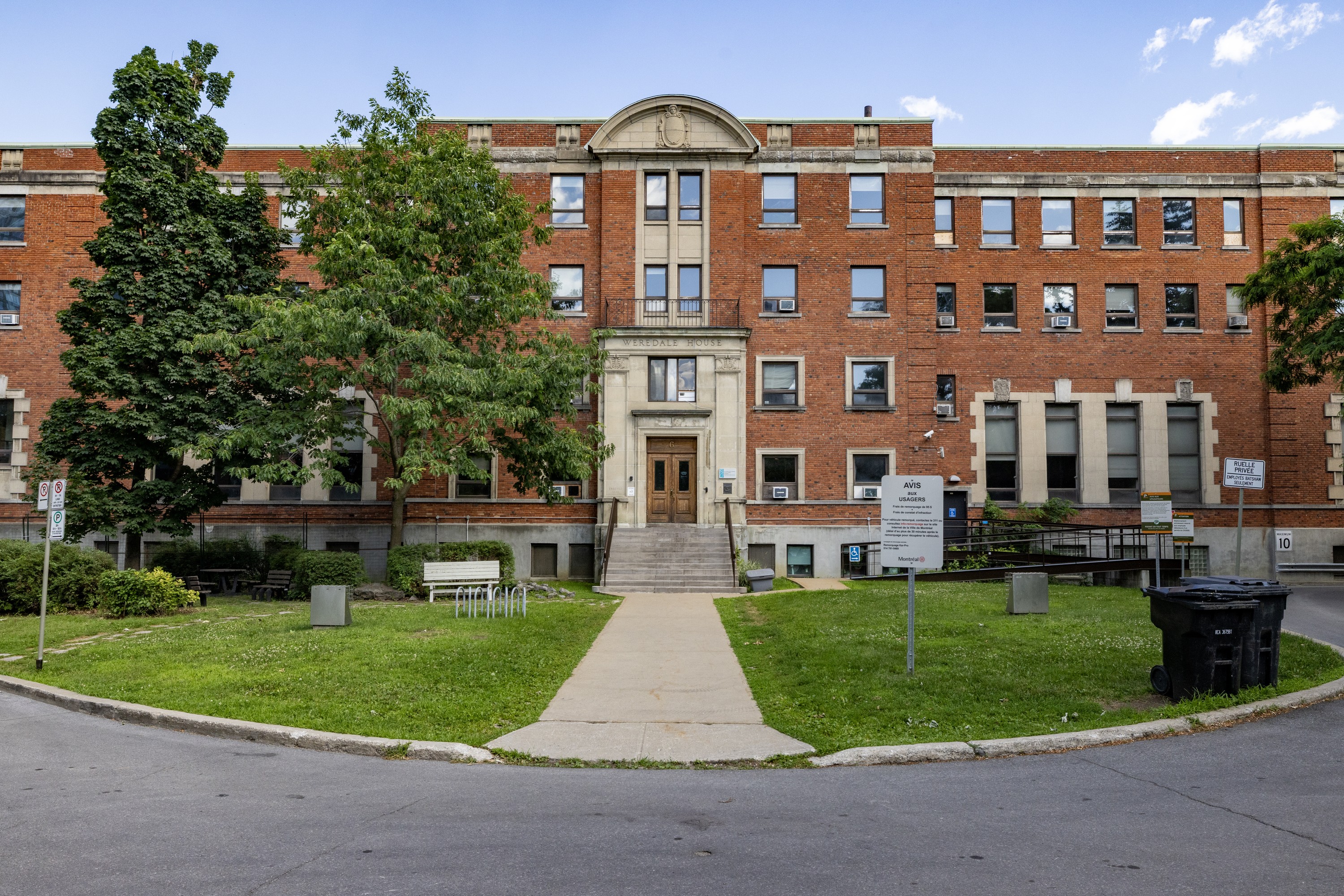 One of the Batshaw Youth and Family Centres buildings on Weredale Park Ave. in Montreal on Wednesday July 15, 2026. John Mahoney / Montreal Gazette
Other children involved with Batshaw have died in recent years, including Isaiah Leopold Roach, a 16-year-old homicide victim whose body was found in a farmer’s field in St-Zotique in April 2023, weeks after he left Batshaw’s Prévost campus without permission. Another 16-year-old died in 2024 by suicide in a Montreal hotel room, just days after Batshaw had closed his file. A recent coroner’s report found that Batshaw had not sent workers to meet him, despite receiving several reports about his concerning behaviour.
Multiple employees who spoke to The Gazette said Batshaw often closes and discards files of children believed to be at risk without assigning a worker to visit their home. Batshaw did not respond to the allegation.
Batshaw Youth and Family Centres suffers from chronic staff shortages, said Josée Asselin, the West Island representative for the APTS union, which represents many Batshaw workers.
Youth protection work “is emotionally demanding, so it’s difficult to recruit and it’s difficult to retain personnel,” she said, suggesting that improved working conditions could alleviate staff shortages.
Asselin shared vacancy figures, which report dozens of empty positions across Batshaw’s workforce. Almost half of all social worker positions in the agency’s Application of Measures and Evaluation and Orientation departments aren’t filled, the figures show, with 27 of 56 positions vacant as of July.
The issue remains that they need to improve retention. People need more training, need more mentorship.
Josée Asselin
APTS union
Droves of workers have quit Batshaw’s Application of Measures department, which supports and supervises families to ensure child welfare, Asselin said. The department saw an average of one departure every month in 2024 and 2025, she added.
“People talked a lot about excessive workload, that their professional judgement wasn’t listened to, that many people didn’t feel safe in certain situations,” she said.
The employer now plans to hire for new positions, Asselin said, adding she hoped that would alleviate some of the pressure.
But adding jobs won’t fix the issue if Batshaw can’t keep workers in the positions, she said. “The issue remains that they need to improve retention,” Asselin said. “People need more training, need more mentorship.”
Batshaw workers said the staff shortages contribute to what they described as a general lowering of standards at the agency.
Many are entering positions without proper training, they said, while other employees — who often carry massive workloads — have been caught fudging paperwork to report home visits that didn’t actually take place.
Workers also blamed the arrival of centralized health authorities, which saw Batshaw absorbed into the CIUSSS de l’Ouest-de-l’Île-de-Montréal in 2015.
Since the arrival of the CIUSSS, which was recently renamed Santé Québec Ouest-de-l’Île-de-Montréal Universitaire, “management is much further from the ground,” Asselin said.
“There are so many administrative demands. Everyone is always doing paperwork, projects, administrative tasks, much more than before,” she said.
Budgets are also managed by the health authority, Asselin said, meaning Batshaw competes with other institutions for funding. Tighter budgets lead to tighter staffing, she said, including a prohibition against taking overtime for many employees.
Santé Québec Ouest-de-l’Île-de-Montréal Universitaire declined The Gazette’s request to interview a Batshaw representative.
The Gazette sent the health authority a list of the allegations reported in this article. In a statement, spokesperson Hélène Bergeron-Gamache didn’t address any of the allegations directly.
The health authority doesn’t comment on individual cases, she said, but “every death involving a child is a profoundly sad occurrence.”
“When a concerning situation is brought to our attention, it is subject to rigorous analysis,” Bergeron-Gamache said. “Over the years, the challenges faced by young people and their families have become more complex. Despite this increased pressure, our organization is pursuing its efforts to improve access to services, reduce wait times and support front-line workers.”
Help is available if you or someone you know is struggling. Call Info-Social at 811, Option 2. If you are having thoughts of suicide, call 911 or Suicide Action Montreal at 1-866-277-3553.

I’ve reported for The Gazette since 2024. I love covering politics, labour and health, but any day I tell Montrealers something new about the world around them feels like a good one. Got a tip for me? Email me at jawilson@postmedia.com
jawilson@postmedia.com