
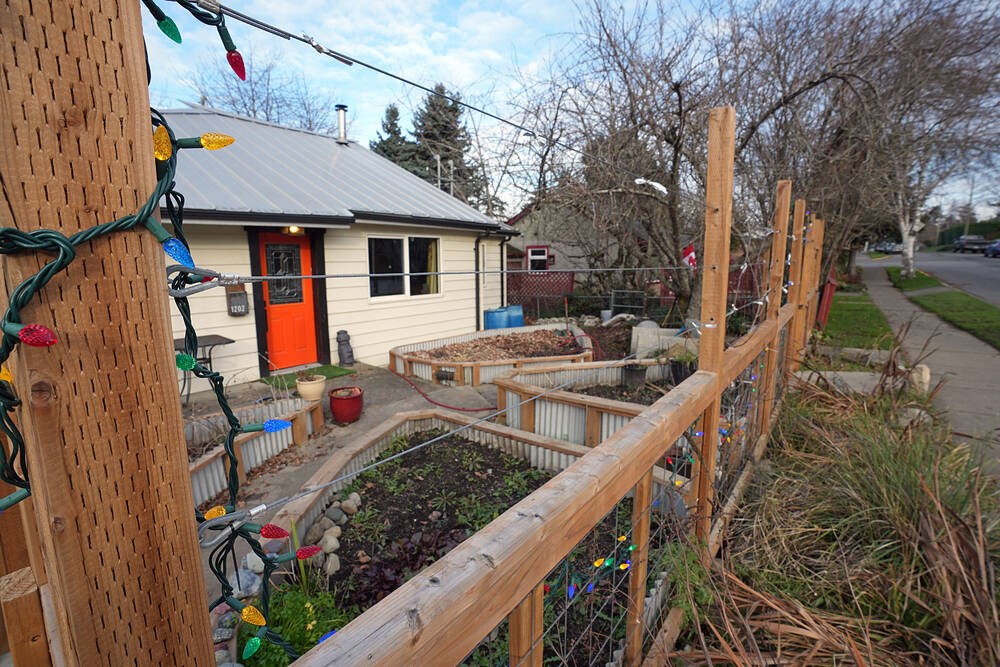
The new rules call for any portion of a fence above 1.2 metres to be woven wire mesh, in part to retain a more open aesthetic.
Residential-property fences in Esquimalt can now be up to 2.5 metres tall to keep deer out, as long as the top portion is made of wire mesh.
Council unanimously approved the new deer-fencing regulations for the township this week. A public hearing on the issue attracted just one speaker, who supported the changes.
The new rules call for any portion of a fence above 1.2 metres to be woven wire mesh, in part to retain a more open esthetic in the township, similar to the regulations in the District of Saanich.
In that municipality, deer fences and deer-fence extensions can have a combined height of 2.5 metres, as long as they don’t border a street or street corner, and the fencing must be made from “woven-wire mesh, horizontal wires or similar material” that is see-through.
“Excessive fencing creates a fortress appearance that can damage the public’s perception of an area and reduce the esthetic appeal of a streetscape,” an Esquimalt staff report said.
Plastic mesh and netting fences will not be allowed, as they can catch deer antlers and trap other creatures, including bats, reptiles and amphibians, the staff report said.
Coun. Meagan Brame said she’s happy that the regulations include protections for wildlife.
“I think we found a really nice balance, and I’m excited to see this go forward,” she said.
Township planner Jakub Lisowski told council that native Columbian black-tailed deer in the township have been known to jump over two metres high and squeeze through 20-centimetre-square holes, so the new rules were designed to prevent “even the most agile deer” from jumping over fences.
Lisowski said the new regulations also forbid fence protrusions that could potentially injure or impale deer, including the horizontal bars common in many deer fences.
“If a deer hits the top of the bar, it could get injured as well.”
Barbed wire and electrification are also not allowed.
Esquimalt has been considering changes to its deer fencing bylaws since 2021, but it only became a priority at the council table last June following a motion from Coun. Duncan Cavens.
The regulations will only apply to residential properties that have six or fewer homes on a single lot.