

Linda Herbert Gilmet estimates she has spent more than $1,000 this year advertising her home daycare.
The 65-year-old Calgary resident is licensed, educated and has 34 years of experience. When she started out, she always had a wait list of parents clamouring for her services.
Now, two of her six dayhome spots are empty. In September, that will rise to four empty spots as kids head to school. She hasn’t been able to find new clients, despite her fees being $15 a day — the government-subsidized flat rate in Alberta.
Herbert Gilmet is one of several home child-care providers who say the business is struggling, despite reports of lengthy wait lists and parents across the country struggling to find child care. A lot of home-based providers are looking at closing their doors.
Some point to the federal government’s Canada-Wide Early Learning and Child Care plan —colloquially known as the $10-a-day child-care program — as a cause. They say it forces them to choose between making string-thin profit margins, losing clients or shutting down altogether.
While Herbert Gilmet is part of that program, she says she’s losing out because she can’t compete with bigger centres that offer free months of child care and gift cards to attract clients.
Meanwhile, experts suggest home child care has been declining in popularity for much longer. The trend could further squeeze providers and leave the families that depend on them searching for another form of child care.
“The actual future of family home child care in Canada, I think, is one that is a bit of an open question right now,” said Susan Prentice, a University of Manitoba professor who studies child care.
WATCH | Cracks showing in the $10-a-day child-care program: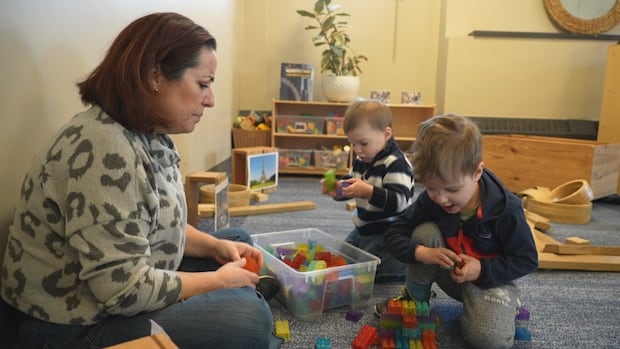
Parents react after Toronto daycare joins growing list leaving national $10-a-day program
Sunnyside Day Care, with two west-end Toronto locations, represents two out of 14 centres in the city that have given notice to leave the $10-a-day system since the province announced a long-awaited new funding formula this summer. As CBC’s Ali Chiasson reports, this has left some parents feeling frustrated.Counting the numbers
Home-based care is a small part of Canada’s child-care system — the vast majority of children are enrolled in larger daycare centres. But even that small share is shrinking.
In 2010, 15 per cent of daycare spaces were in homes. By last year, that share had dropped to about eight per cent, according to data collected by the non-profit Childcare Resource and Research Unit of Canada. Numbers from Statistics Canada show a similar trend.
In an email statement to CBC News, Employment and Social Development Canada said federal funding is “predominantly supporting” not-for-profit daycare centres, like the YMCA or community centres, as well as home child-care providers.
Ultimately, the distribution of federal funding is up to the provinces and territories, wrote spokesperson Liana Brault.
“The Government of Canada is actively working with all provinces and territories to create new spaces where they are needed most, get parents off waitlists, provide kids with a great start in life — and support the essential workforce that makes this all possible,” Brault wrote.
LISTEN | Federal child-care program not right fit, Sask. parent says:
The 3068:07Affordable daycare may be causing more problems for rural families
Hospitals, mines and grocery stores in Moosomin rely on shift workers to keep operating. Working parents need childcare to match their schedules. The 306 talks with a Moosomin parent who argues the affordable federal and provincial childcare program could negatively affect people in those jobs. Between a rock and a hard place
Home child-care providers say it has been a tough few years.
Nicole Maloney, who runs a home daycare in Ottawa, has felt it first hand and said she’ll be shutting down after August. (CBC News is not using Maloney’s full name because she fears that speaking critically about the federal daycare program might harm her employment prospects.)
First, there was COVID-19. Now, many parents still work from home, so they’re looking for either part-time child care or none at all, Maloney said.
Then came the $10-a-day program, which started rolling out in some provinces in 2021 with the aim of cutting fees and upping the number of affordable child-care spaces.
WATCH | Some still struggling to find affordable child care:
Parents scramble with future of $10-a-day childcare program at risk
It’s been five years since the federal government launched its plan for a Canada-wide $10-a-day daycare program, but many parents say they are still struggling to find child care in the first place. The provincial government says the future of the subsidized daycare program is unclear. Parents tell CBC’s Kendra Seguin that they’re feeling the pressure to find their child a spot.
Maloney chose to stay out of the program and continue charging $59 a day per child. If she had opted in, she said that would mean making about $40 a day — lower than her rate 15 years ago — despite decades of experience in schools, child care and nutrition.
But that choice also came at a cost.
Since government subsidies rolled out in Ontario in 2022, she’s had several families sign up for her daycare and pay deposits, only to pull out early because they got into a subsidized centre.
Maloney said the financial insecurity has been “insane,” and a stark change from years ago, when she was never short of families.
“They would actually say to me … ‘Choose my family and I’ll pay you more per day,'” Maloney said.
It’s a similar struggle for Herbert Gilmet.
WATCH | Sask. paying providers per space, not per child:
Changes to daycare funding cause concern among providers
Some daycare spots could be tough to find this summer due to changes around 10-dollar-a-day childcare.
Now, two empty spots means she’s missing out on fees and government funding that would total about $2,500 a month, Herbert Gilmet said. While she won’t have to close, she said she still feels the effects.
“These are also the years that I’m madly saving for my retirement. How can you do that?”
A long-term shift
The decline of home child care started a while ago, according to Gordon Cleveland, an associate professor of economics at the University of Toronto’s Scarborough campus.
One potential reason is that women’s employment opportunities have changed massively in recent decades and jobs outside of the child-care sector can offer much higher wages, he said.
“If you have the capability of earning decent money at a regular job, you’re giving up quite a lot when you stay at home and look after your own kids, or you stay at home and look after the neighbour’s kids.”
WATCH | N.S. mom has to sacrifice work:
Some N.S. parents forced to leave workforce over lack of child care
The provincial government says it’s making progress on creating more daycare spaces, but it’s not happening fast enough for many families. Celina Aalders reports.
Parents’ priorities could also explain why some home-based daycares are feeling squeezed while centres are booked and busy. Centres can offer more programming, more resources and more stability, according to Prentice.
“Even [if] two of three staff leave a centre, the centre continues to operate,” she said. “If a family home provider stops providing child care, then boom, you have no care.”
What happens if dayhomes shut their doors?
While the home child-care sector likely won’t disappear, the proportion of home-based spaces is expected to keep shrinking, Prentice said. Providers are expected to keep leaving the sector due to long and hard work hours, as parents continue to prefer centre-based care.
Cleveland said that could mean losing providers who offer care that serves specific needs, such as different languages or extended hours. It could also affect parents trying to find any form of child care, because expanding licensed home care is a simple option for governments looking to boost capacity at a time of lengthy daycare wait lists, he said.
Herbert Gilmet said she’s worried about dayhomes being squeezed out and clients losing great spaces for their kids.
“It’s a small, nurturing environment,” she said.