


Listen to this article
Estimated 4 minutes
The audio version of this article is generated by AI-based technology. Mispronunciations can occur. We are working with our partners to continually review and improve the results.
Health-care coverage for the 2SLGBTQIA+ community is lacking in Newfoundland and Labrador, according to two newly released reports from a local non-profit — though the organization behind the findings hopes it will spur improvements when it comes to access and treatment.
On Thursday, Quadrangle released its findings that showed significant shortcomings in health-care access. The study was conducted in 2022 and 2023 and surveyed both health-care providers and students, as well as 2SLGBTQIA+ community members across the province.
Among community members surveyed, 73.7 per cent said they needed mental health support in the past year but did not receive it. In addition, 44.4 per cent of respondents said they have been required to educate their provider about their own medical needs.
“We wanted to be able to really clarify and gather the data so that we could make evidence-based decisions about what we can do next in order to support health care needs for the 2SLGBTQIA+ population in the province,” said Ailsa Craig, a sociologist at Memorial University who was part of the research team.
The reports found a strong need for improved medical support, with 47 per cent of respondents identified as having a disability, and 91.2 per cent say they have experienced trauma.
It also found many people have limited financial means to support their medical care, with more than 40 per cent of respondents making less than $30,000 a year, despite a majority having graduated from post-secondary education.
Craig identifies that as a gap between education and income that aligns with earnings penalties that are seen for 2SLGBTQIA+ people across Canada.
Quadrangle also released a report with results from a survey of health-care workers and students studying in the industry, which identified key limits within education and training.
The second report found less than half of health-care providers who responded felt they had sufficient knowledge to treat 2SLGBTQIA+ patients. More than half of students disagreed they had enough knowledge and training to properly do the same.
A key blind spot identified by Quadrangle relates to the prevention of HIV. Among surveyed providers, more than three quarters reported insufficient knowledge to prescribe post-exposure prophylaxis (PEP). PEP is treatment which helps prevent the transmission of HIV to a person who has been exposed to the virus and must be initiated within 72 hours of exposure to be effective.
This lack of awareness extends to the community members surveyed. Half of respondents were unfamiliar with PEP and 10.9 per cent report having been in a situation where they would have benefited from the treatment but did not access it.
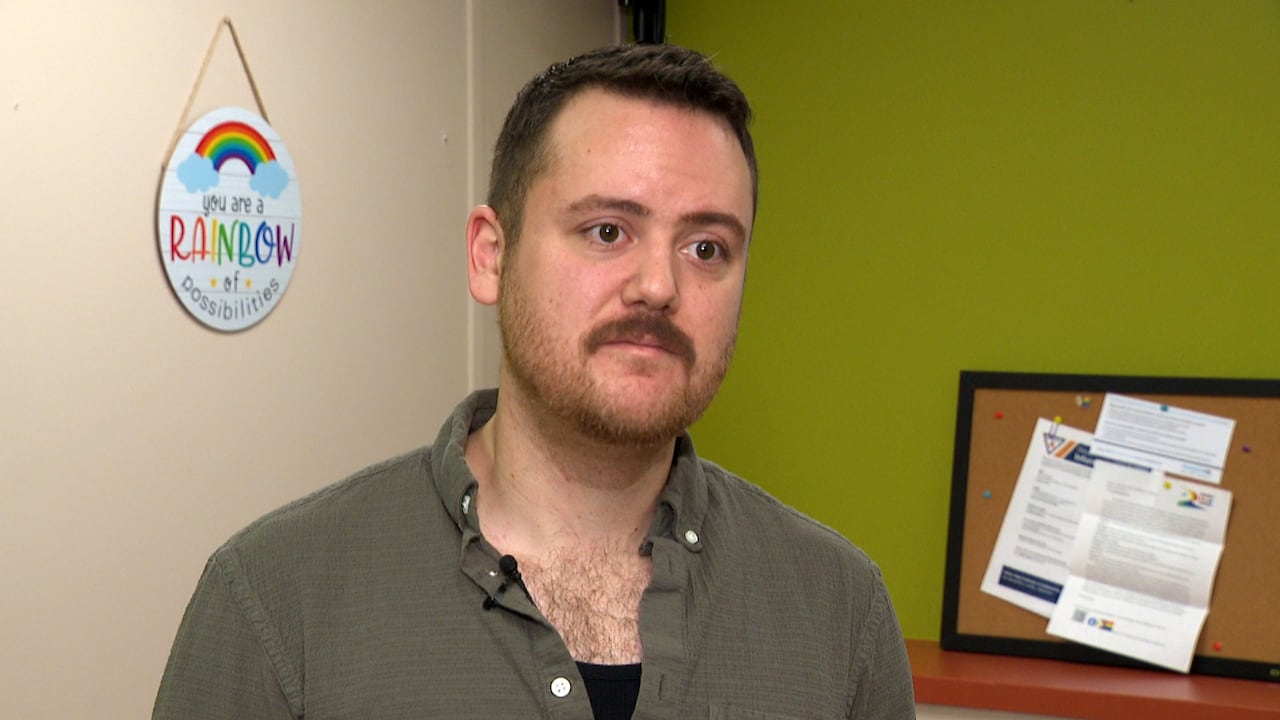 Colt Politte, the executive director of Quadrangle, hopes the reports help create positive impacts in health care for the province. (Curtis Hicks/CBC)
Colt Politte, executive director of Quadrangle, hopes the reports findings have a positive and immediate impact.
“I think in the very short-term, we hope that this report helps to eliminate some of the issues that are being faced by the queer and trans community of this province, especially when it comes to accessing gender-affirming care and mental health resources,” he said.
Craig acknowledges circumstances may have changed since the study concluded in 2023, noting demographic changes and increased visibility of the 2SLGBTQIA+ community.
Plans are underway for a similar study to be conducted in 2027, and Quadrangle has a goal of gathering a larger sample size.
“Our reach was not as ingrained across the province, and we didn’t have as many partnerships and collaborative relationships that we do now,” said Politte.
In November, newly-installed Health Minister Lela Evans committed to improving inclusive and accessible health care for the province’s transgender and LGBTQ+ population.
Download our free CBC News app to sign up for push alerts for CBC Newfoundland and Labrador. Sign up for our daily headlines newsletter here. Click here to visit our landing page.