

Listen to this article
Estimated 3 minutes
The audio version of this article is generated by AI-based technology. Mispronunciations can occur. We are working with our partners to continually review and improve the results.
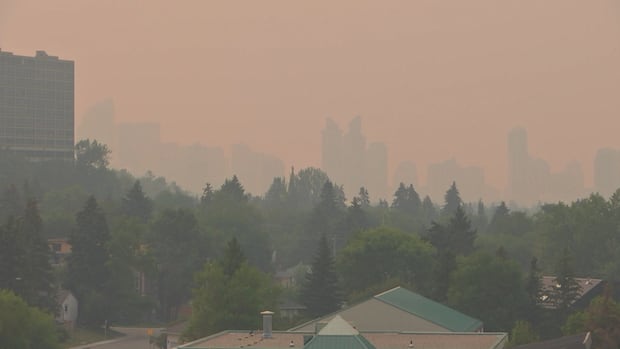
Wildfire smoke from fires burning in British Columbia settled over Calgary and surrounding areas Friday morning, prompting warnings of unsafe air quality.
Environment and Climate Change Canada (ECCC) issued an “orange” alert for poor air quality in Calgary and surrounding communities, such as Airdrie and Banff.
Heat warnings are also in effect for the southern and east-central regions of the province.
According to the federal Air Quality Health Index, Calgary’s air quality hit the highest risk level at 10-plus, posing a very high risk. Airdrie and Red Deer were also rated as very high risk.
Forecasting models from FireSmoke Canada, a University of British Columbia project tracking wildfire weather, show the haze drifting east from B.C.
More than 80 wildfires are active in the province, including a large wildfire complex near Boston Bar, which has prompted evacuation orders.
ECCC issues orange alerts when severe weather is widespread and likely to cause significant damage, disruption or health impacts that may last a few days.
Smoky conditions are expected to improve for Calgary and other affected areas over the weekend, ECCC said.
The federal weather agency also cautioned that air quality and visibility can change rapidly over short distances and hour to hour.
It is asking people to limit their time outdoors and cancel or postpone outdoor activities to avoid the potential health risks of prolonged smoke exposure.
Residents in affected areas are urged to stay indoors as much as possible, with windows and doors shut. When extreme heat conditions are coupled with poor air quality, however, ECCC advises prioritizing keeping cool first.
Using high quality air filters can also help limit exposure indoors.
People more likely to be affected by wildfire smoke include those aged 65 and older, infants or young children, those who are pregnant or who have an existing medical condition.
For those who must be outdoors, ECCC recommends wearing a respiratory mask and avoiding strenuous activity.
Mild and common symptoms of smoke exposure include eye, nose and throat irritation, headaches or a mild cough. More serious symptoms include wheezing, chest pains or severe cough.
Anyone experiencing severe symptoms is urged to seek medical assistance right away.