
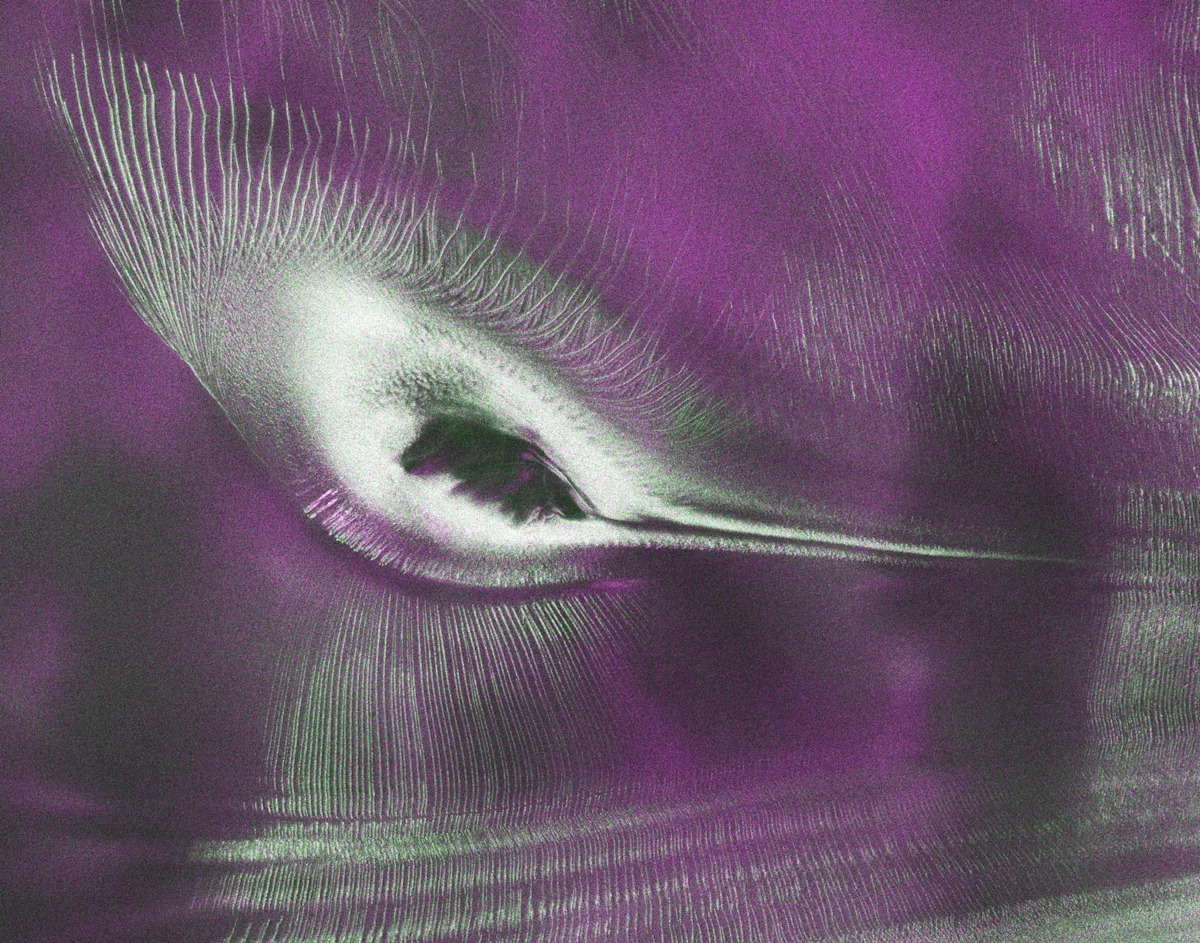
A newly published satellite image of Antarctica‘s frozen tundra captured what looks like the plumage of a humble hummingbird in flight.
The NASA-ISRO Synthetic Aperture Radar, otherwise known as NISAR, is attached to a satellite developed by NASA and a team of scientists in India. It is described as “one of the most powerful radar systems ever launched.”
Here’s what you should know about the image and the power of NISAR.

Scientists used data from the L-band radar aboard the U.S.-India Earth-orbiting NISAR satellite to produce this image of Nunatak Zaterjavshijsja, a mountaintop in East Antarctica, poking out amid a stream of ice flowing northeast to the ocean.
‘Awe-inspiring:’ See 5 stunning photos of the cosmos captured by Europe’s Euclid telescope
Seeing what’s hidden beneath the surface
NASA, alongside the Indian Space Research Organization (ISRO), published an image July 21, showing what appears to be a hummingbird in mid-flight.
However, it’s not a bird at all. Rather, it’s an “intricately detailed” image of a glacial ice stream enveloping the Nunatak Zaterjavshijsja mountaintop in east Antarctica, according to NASA’s news release.
The hummingbird’s “body” is the mountaintop “poking out amid a stream of ice flowing northeast to the ocean,” the news release states. The plumage, meanwhile, is formed by stresses in the ice which create deep crevasses, depicted as sharp green lines, in the surrounding landscape.
The image was made possible by two high-powered radar instruments capable of capturing two different wavelengths. The system enables the satellite to penetrate the surface of the ice, producing a highly detailed image of the landscape.
“First, it’s a beautiful image, with rich details of features that provide insights to how the glacier is moving. Then, because radar can often see through snow and deep into the ice, NISAR can observe fundamentally different properties of Antarctic ice than can be seen in optical imagery,” said Seongsu Jeong, the signal analysis engineer who produced the image at NASA’s Jet Propulsion Laboratory in Southern California. “With NISAR we’re seeing what’s hidden beneath the surface.”
NASA published the same image captured by optical imagery, which records sunlight as it reflects off the Earth’s surface. The result is nothing more than a barren landscape with little detail.
A year of unprecedented data
An image from the Landsat 9 satellite shows Nunatak Zaterjavshijsja on Nov. 2, 2025. Because microwaves can penetrate frozen surfaces, signals from NISAR’s L-band radar captured more detail of the structure of the surrounding icescape than is visible in this optical image.
The image’s release coincides with the one-year anniversary of NISAR’s launch, which departed India’s Satish Dhawan Space Centre on July 30, 2025.
The satellite monitors “nearly all the planet’s land- and ice-covered surfaces twice every 12 days,” NASA’s news release states, generating dozens of terabytes of data each day.
Over the past year, the U.S.-India team has gleaned valuable insights about everything from urban street grids and agricultural fields to landslides, earthquakes and Mexico City’s sinking land.
“The ‘hummingbird’ exemplifies one of the young mission’s hallmarks,” NASA stated in its news release, “intricately detailed imagery that is both informative and eye-catching.”
Drew Pittock covers national trending news for USA TODAY. He can be reached at DPittock@usatodayco.com.
This article originally appeared on USA TODAY: This satellite image of a ‘hummingbird’ isn’t what you think