
This First Person column is written by Edlyn To, who lives in Toronto. For more information about CBC’s First Person stories, please see the FAQ.
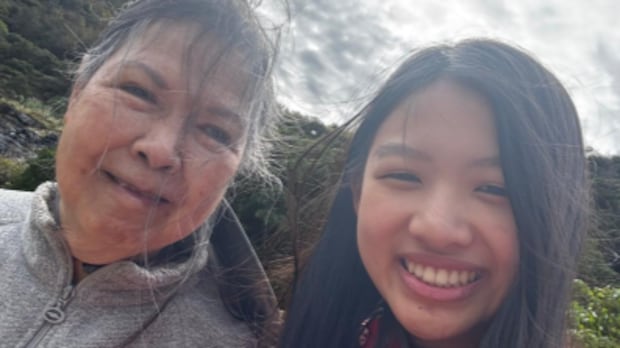
From afar, she looks the same as I’ve always remembered. Black hair with a few streaks of white. Wrinkles beside her eyes that form whenever she smiles. The same gentle gnarled hands that raised me. Still, looking at her lost expression, I find it hard to recognize my grandma sometimes. I know she won’t recognize me soon.
My grandma’s life story is worthy of a novel. She came to Canada as a refugee in the ’70s, escaping Vietnam with her two young daughters in tow, while my grandpa remained behind as a prisoner of war.
I’ve always known her as a survivor. She was diagnosed with breast cancer, ovarian cancer and hepatitis C. A few years ago, she had a critical fall and was hospitalized. She survived. Her physical health is resilient. But Alzheimer’s is a mental battle.
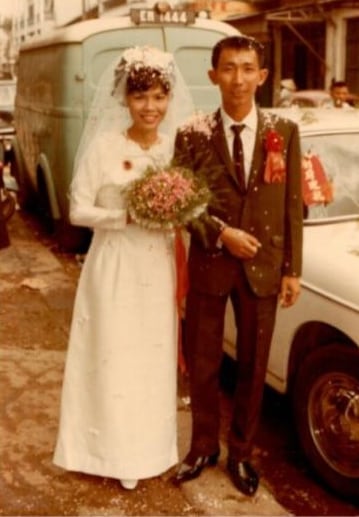 To’s grandparents on their wedding day in Vietnam. (Submitted by Edlyn To)
When I was in elementary school, she and my grandpa picked my siblings and me up after school and came over to help my parents make dinner. She would sleep over on weeknights, and I’d wake up to the sound of dishes as she made us a hot breakfast every morning.
I first started noticing changes during the pandemic. The world shut down and as it did, the door to my grandma’s condo stayed shut, too. By the time the lockdown ended, some doors to her mind never opened again and some memories were already locked away forever.
I first noticed it in our conversations. She’d ask the same questions, over and over again. She’d tell the same stories, over and over again.
In life, and especially as children, when we encounter a problem, we’re taught to try to find a solution. When I heard from my mom that my grandma had Alzheimer’s, I felt the only solution to the problem was to help her remember and keep her memories.
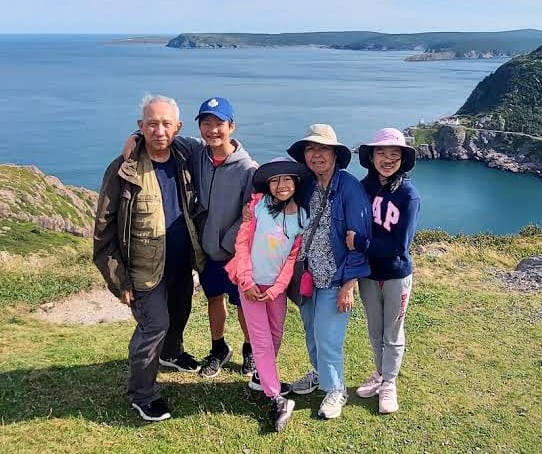 To says her Po Po (grandma) and Gong Gong (grandpa) helped raise her and her two siblings, Kayi and Elyse To. This photo was taken on a family trip to Newfoundland in August 2022. From right to left: Edlyn To, her Po Po, her sister Elyse, her brother Kayi and her Gong Gong. (Submitted by Edlyn To)
I started reading everything I could about Alzheimer’s. I researched clinical trials, memorized scientific facts, knew all the stages of the disease and how long they typically last. In my mind, I knew that there was no cure. But in my heart, I couldn’t stop searching for any reason, just a small piece of hope, to fuel my denial.
Every conversation became a test of her memory. Every time she remembered something, a fragile hope rekindled and the weight on my heart felt lighter. So I kept digging for that relief. If she couldn’t remember a detail, I pleaded and pressed.
“We went hiking yesterday, remember?” I’d say.
“At Centre Island? You bought us ice cream? Do you remember?” Please remember.
And she’d finally say, “Yes, yes. I remember.” Even when she didn’t.
Denial. Anger. Bargaining. Depression. Then, the denial returned, with desperate, lingering feelings of hope. I felt it all, yet I couldn’t bring myself to accept her reality — not while she was right there, alive and sitting next to me. For a long time, I thought acceptance meant giving up, like an admission of defeat. So I kept trying to hold on.
For the first few years, the stages of grief dragged on. But slowly, asking her to remember no longer made a difference. As Alzheimer’s locked more pathways in her mind, acceptance quietly settled into mine. It didn’t feel like defeat. I started finding solace in the small things she recalled on her own, realizing that one day she won’t recognize who I am.
On my recent 16th birthday, we went out for dinner and ate cake. She gave me a red envelope for good luck. The next day she wished me a happy birthday again, with the same excitement, the same smile, the same tilt of her head as she looked me in the eye. For a moment, I was ready to correct her, to remind her that we’d just celebrated. But I didn’t. I smiled back, letting her wish me happy birthday twice.
Looking back, I wish I hadn’t spent so much time begging her to remember things the way they used to be. I wish that I recognized that her feelings were real, even when her memories weren’t. I missed so many precious moments together, buried under the weight of denial. But now, I let her memories come and go as they please because I know that each one is a gift.
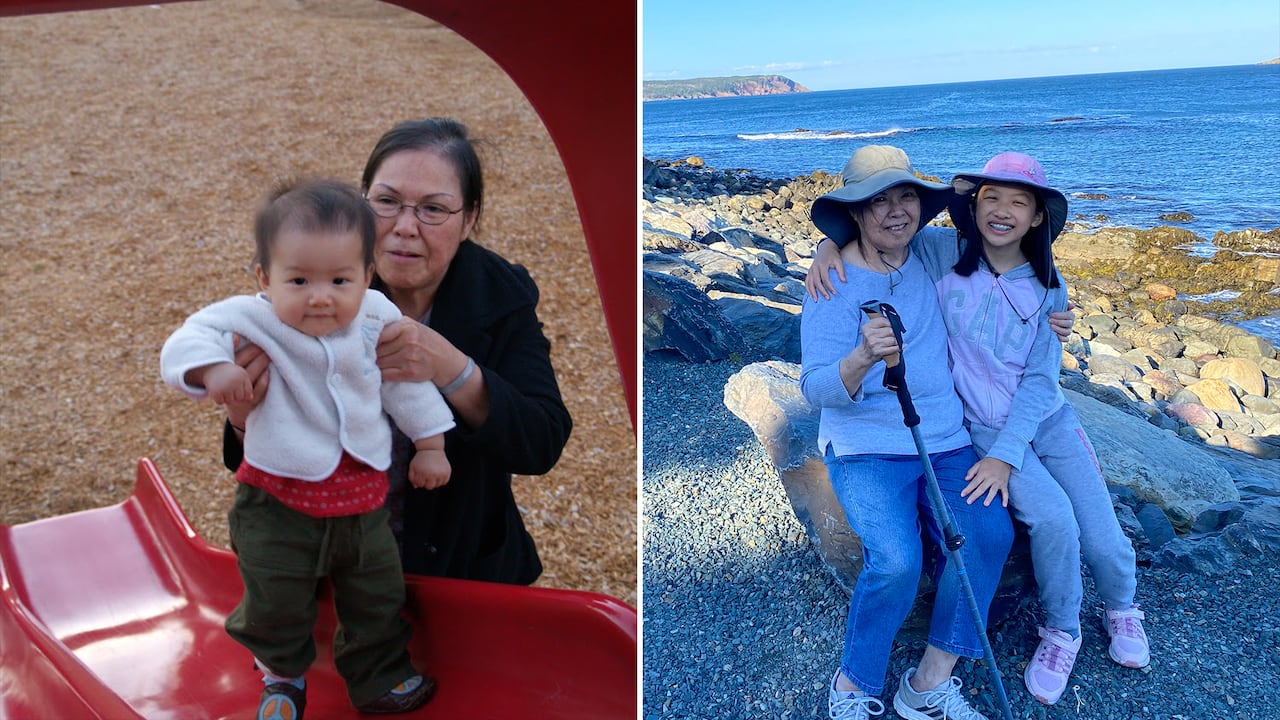 To used to wish her grandma would recall more of their shared experiences, but she’s come to realize that even if her grandma won’t recognize her some day, her love was real. (Submitted by Edlyn To)
As a child, my grandma told me that she would always love me and be there for me. But one cannot love someone they don’t know, and soon my grandma will not know me.
My idea of unconditional love is shattered, but through this journey I learned about selfless love. The love that you give someone when expecting nothing in return. Love without expectation, without needing her to remember who I am.
I know that this is just the beginning of a long story, but no matter how far into the future, how little she knows or how much she’s changed, I know I will still love her the same.
Do you have a compelling personal story that can bring understanding or help others? We want to hear from you. Here’s more info on how to pitch to us.