
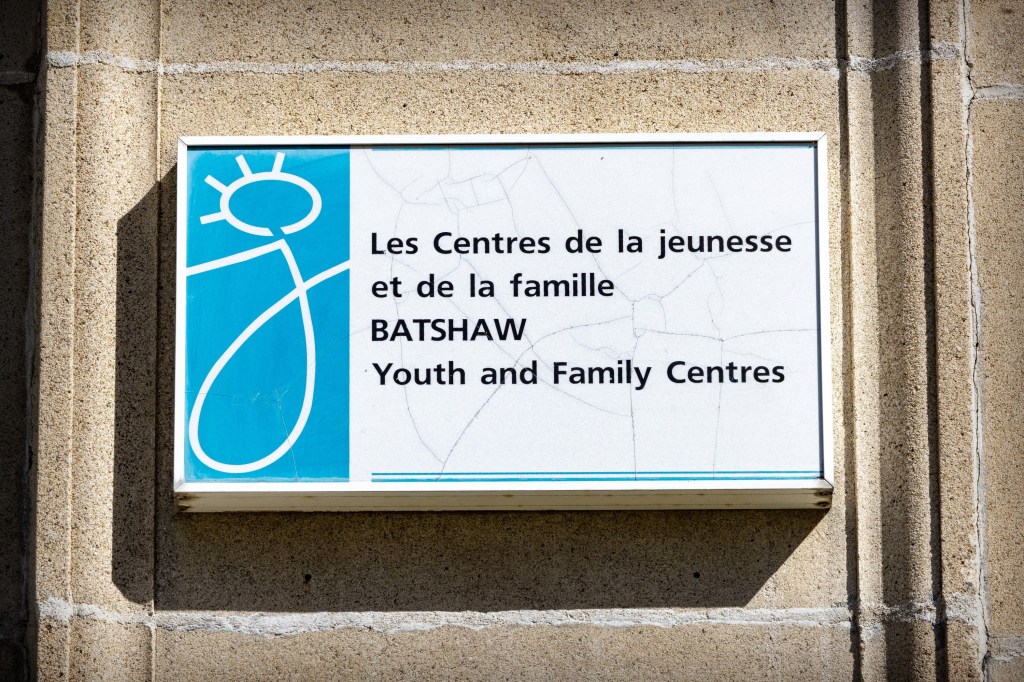
Re: “Children’s deaths shake Batshaw workers” (The Gazette, July 24)
Whatever the reason — be it short staffing, lack of resources, administrative issues or lowered standards — nothing can justify the deaths of at-risk children who are supposed to be under the supervision of a government agency, in this case Batshaw Youth and Family Centres.
The three deaths in a span of a month — two teenagers and a four-year-old girl — are heartbreaking and difficult to understand. You’d expect children under the supposed watchful eye of an institution such as Batshaw would receive the attention and care they need — not end up dead almost before they have had the chance to live.
The article quotes a source as saying the little girl had bruises and signs of malnutrition when visited by a Batshaw worker — but died before the next visit was to take place.
The workers who spoke anonymously to The Gazette, despite the fear of repercussions, deserve gratitude for putting the children ahead of their own concerns.
Based on this disturbing article, I believe an independent inquiry is essential. For the sake of the most vulnerable in our society, things must change, no matter what it takes.
Goldie Olszynko, Mile End
Let’s get our priorities right
When is Quebec going to prioritize the safety and welfare of children, our health care system and mental health? It is outrageous that Quebec spends money on chasing down words like “nosh” on restaurant signage while children are dying.
Victoria Jonas, Beaconsfield
Wildfire smoke versus floods
Re: “Trump suggests tariffs, ‘damages’ for smoke” (NP Montreal, July 21)
U.S. President Donald Trump is complaining about the smoke from the wildfires and wanting to punish Canada by threatening new tariffs.
Perhaps Canada should consider reciprocating whenever Washington state’s Nooksack River floods across the border into Abbotsford, B.C.
I would expect the cost to Abbotsford residents to be much higher than the smoke drifting into the U.S.
Helen Dylla, Verdun
Who would buy U.S. booze?
Re: “Let consumers decide on ban” (Letters, July 18)
Those who favour allowing U.S. alcohol back onto Canadian shelves so consumers can choose for themselves whether to buy it seem to be forgetting one thing: the stores would have to purchase the said booze and then let it linger on the shelves, much of it likely unsold.
Faced with unfair and exorbitant Trump tariffs, would we want our stores to go to these expensive lengths with little hope of recuperating expenses?
Valerie Habib, Châteauguay
Access to care inconsistent
Re: “My broken leg versus our fractured system” (Toula Drimonis, July 17)
I’m glad Toula Drimonis received excellent, prompt care when she fractured her leg. The problem with health care in Canada, however, is not when something demands immediate attention in a hospital. In those cases, the care here is as good as probably anywhere in the world.
The problem is with much more common cases, when treatment can be put off days, months or even years — like a balky hip that causes pain.
Or if you need to see a specialist for a chronic problem that could end up being life-threatening.
In those instances — and they are legion — our health care system often falls woefully short of what is acceptable, despite the best efforts of our overworked doctors and nurses.
Pierre Home-Douglas, Dorval
Other fatality overlooked
Re: “Roughriders mourn death of their teammate Dalke” (Sports, July 22)
Am I the only one who finds this article disturbing?
Police say Saskatchewan Roughriders linebacker Jayden Dalke was driving in the wrong direction on a highway when he was killed in a head-on collision and that alcohol and cannabis were found in his vehicle.
And yet, while the article focuses on players and coaches paying tribute to their teammate, there is barely a mention of the person killed in the other vehicle — Bhishma Rajyaguru, 22.
It has often been said that professional sports are a boys’ club, and athletes can do no wrong. Though some will argue this view is outdated, I think this article proves otherwise.
Vicky Welch, Pierrefonds
Editor’s Picks
Submitting a letter to the editor
Letters should be sent by email to letters@montrealgazette.com
We prioritize letters that respond to, or are inspired by, articles published by The Gazette.
If you are responding to a specific article, let us know which one.
Letters should be sent uniquely to us. The shorter they are — ideally, fewer than 200 words — the greater the chance of publication.
Timing, clarity, factual accuracy and tone are all important, as is whether the writer has something new to add to the conversation.
We reserve the right to edit and condense all letters. Care is taken to preserve the core of the writer’s argument.
Our policy is not to publish anonymous letters, those with pseudonyms or “open letters” addressed to third parties.
Letters are published with the author’s full name and city or neighbourhood/borough of residence. Include a phone number and address to help verify identity; these will not be published.
We will not indicate to you whether your letter will be published. If it has not been published within 10 days or so, it is not likely to be.
Please send the letter in the body of an email, not as an attachment.