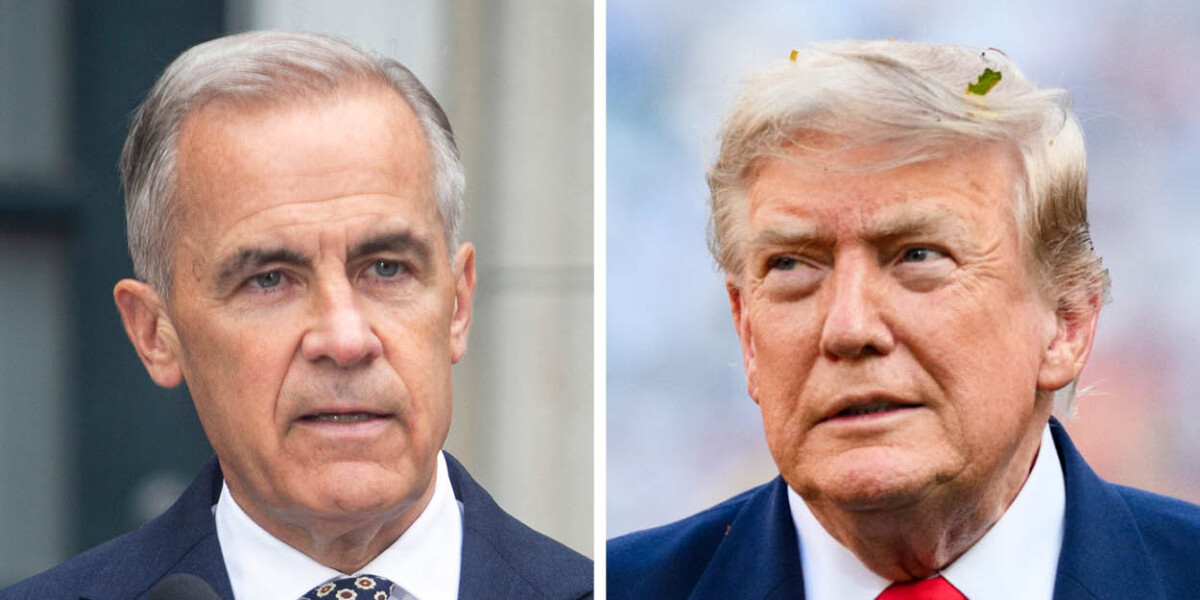
CHELSEA, QUE.—Rage, fear, contempt: an incomplete list, but it captures this country’s overall reaction to United States President Donald Trump, easily the most aggressively-ignorant, narcissistic, emotionally-damaged bully to lead that country in living memory.
It is our misfortune to live right next door, although no corner of the globe has escaped Trump’s towering need to humiliate, intimidate, and dominate.
So we loathe him, we can’t stand the sound of his voice—although we are careful to exempt American friends, relatives, and allies from our fury—but what do we do? How do you defend against a bully as powerful and remorseless?
Fight, flatter, disregard, or finesse?
Ontario Premier Doug Ford offers the populist—and probably most popular—prescription: push back. “If he continues to bully us, we can’t back down. You have to stand up to bullies in the schoolyard, or they’ll take your lunch money.” Last week, Ford hinted at withholding unspecified energy exports to the U.S.: “We could dismantle the U.S. if we wanted to … they need to feel the pain, rather than us constantly feeling the pain.”
When you recall Trump’s furious reaction to Ford’s World Series ad last year—the one that quoted then-president Ronald Reagan praising free trade—putting tariffs on our oil exports (which would not pass muster with Alberta, obviously), or turning off the lights in New York City could provoke the notoriously unstable genius to close the St. Lawrence Seaway, occupy Newfoundland, even force the Blue Jays out of Major League Baseball.
On the other hand, would Trump’s response amount to anything more than a few scary headlines, foot-stomping tantrums, and frankly ludicrous threats? We are supposed to be punished, somehow, for the recent wildfires fuelled by climate change, caused by the carbon emissions that are one of America’s biggest global exports.
In January, we faced a threat of 50-per-cent tariff on Canadian-made aircraft. Then there was the staggering 100-per-cent levy on everything, to be imposed if Canada signed a trade deal with China, also in January.
As for the 10-per-cent additional tariff that followed the World Series ad, it has been superseded by an almost weekly cascade of ongoing threats, leaving most Canadians apprehensive, but puzzled as to actual impacts.
Many of these penalties vapourized, or were much diminished, and, notwithstanding the latest threat, the great majority of Canadian goods covered by CUSMA continue to cross the border tariff-free. The new 50-per-cent tariffs, however—announced last week, on the cusp of CUSMA negotiations—would apply to CUSMA goods, as well.
If they ever materialize.
Former Alberta premier Jason Kenney urges calm—although he doesn’t criticize Ford’s reaction. He said Canada must be “strategic not tactical; patient, not impulsive.” He offered reassuring perspective not only about the latest shoulder-shoving, but also on Trump’s whole approach to trade.
The latest threat, for instance—while possibly fatal for some small and medium-sized businesses making hockey sticks, cement, furniture, wigs, and 500 other mostly retail products—covers $20-billion-plus in exports, but only two per cent to five per cent of our total trade outflow.
Second, as with most of Trump’s threats, these latest proposed tariffs come with a 30-day deadline. This gives opponents, in the U.S. and Canada, time to push back, to press the argument that it is American consumers who pay, not only Canadian businesses. Or, wait for Trump to be distracted by another issue.
Even if Trump proceeds—if Canada doesn’t put U.S. booze back on the shelves, open our dairy market to U.S. milk, and drop counter-tariffs on American-made cars, as he demands—American courts are not guaranteed to endorse the president’s latest tactic, which is based on a never-used clause in a 1930 U.S. trade law.
Trump is already on the wrong side of public opinion in his own country, where two-thirds of Americans oppose his foreign tariffs which have driven costs higher for everyone living there. As well, November midterm elections could produce a Democratic majority in Congress, and embolden the president’s trade critics.
Kenney, and others, have also noticed that Canadian potash, oil and critical minerals are exempt from the putative 50-per-cent tariff, to take effect Aug. 19. So perhaps the U.S. does need some of what Canada has, after all. As Kenney says “we have headwinds, he has tailwinds.”
But should these crucial exports be used as leverage in ongoing CUSMA negotiations? That extremely fraught decision rests with Prime Minister Mark Carney, and no one envies him the responsibility. Putting oil and potash in play would frighten Saskatchewan, infuriate Alberta, and potentially destroy the national solidarity evident at last week’s first ministers conference in Charlottetown.
To date, Carney has tried artful flattery—repeatedly praising Trump for galvanizing new defence investments among NATO partners, for instance, and even endorsing the president’s reckless and failed attack on Iran.
He hasn’t been as cringeworthy as former British prime minister Keir Starmer—who flourished an embossed invitation to Windsor Castle for the president in the Oval Office—and nowhere near as embarrassing as NATO chief Mark Rutte, or slimy FIFA boss Gianni Infantino. But when Carney gave Trump his chair at a recent G7 meeting, that small gesture grated nerves at home.
The prime minister’s preferred tactic with his easily-triggered counterpart has been finesse—calling the president “transformative,” for example. But, while Trump isn’t the sharpest twig in the dam, he can sniff out mockery in a nano-second. Those feral instincts fed his dislike of Justin Trudeau, whom he denounced as two-faced after the 2018 G7 in Charlevoix, Que., in a spat over—again—tariffs.
Canadians continue, by and large, to support Carney’s approach, as do most premiers, recognizing that the world is dealing with an arsonist with unlimited access to matches. But patience is running out after a number of government concessions—on the digital tax, the Gordie Howe Bridge, our disgraceful support for the war on Iran—have not changed a thing.
If Canada agrees to buy more F35 fighter jets from a hostile neighbour, Carney will be deservedly roasted.
Get Weekend Point of View Newsletter
Top Canadian political and policy opinion and analysis. Saturdays and Sundays. Weekends.
By entering your email address you consent to receive email from The Hill Times containing news, analysis, updates and offers. You may unsubscribe at any time. See our privacy policy
On the other hand, unlike keyboard warriors and inflamed podcasters, Carney has to measure the potential damage to Canadian families of a tougher stance. So far, that has been limited to the steel, auto and lumber sectors, and somewhat mitigated with aluminium, where smelters are profitable thanks to $1.5-billion federal support and a rebounding U.S. market, despite 50-per-cent tariffs. (The U.S. has no other ready, affordable source of aluminum, and has exhausted stockpiles.)
To conclude: finesse only works until it doesn’t. Flattery only demeans the flatterer; keep your Nobel Prize and your dignity. Disregarding U.S. posturing and developing new markets is smart, but will take time—and some painful disruption.
That leaves fight—not bombast, but unified, targeted resistance. Canadians are, increasingly, up for it. We will fight in the grocery aisles, we will fight in the liquor stores, we will cancel our trips south: we will never surrender!
British Columbia Premier David Eby spoke for many last week when he declared: “There is not a chance in hell that U.S. alcohol is going back on the shelves!”
Not exactly Churchillian as a rallying cry, but Eby has the full-throated support of an increasingly disgusted nation.
Susan Riley is a veteran political columnist who writes regularly for The Hill Times.
The Hill Times