
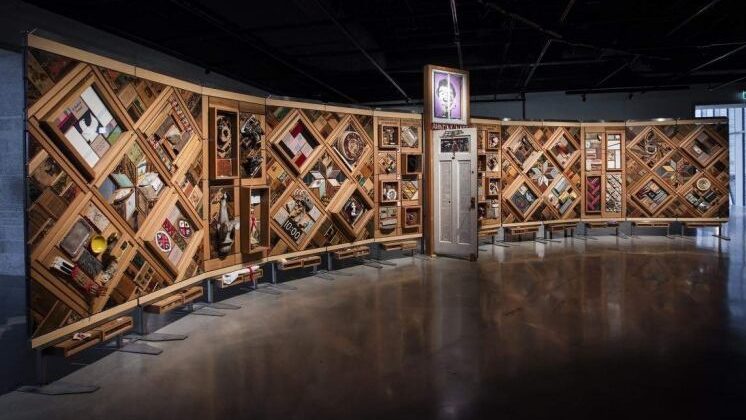
Camosun Innovates is partnering with Indigenous artist Carey Newman and the Canadian Museum for Human Rights on a new project aimed at expanding access to the Virtual Reality Witness Blanket and creating new opportunities for immersive Indigenous storytelling.
The applied research project will develop a multi-user virtual reality environment that allows groups of people to experience the Virtual Reality Witness Blanket together.
The goal is to encourage dialogue, shared reflection and collaborative learning while creating new technological foundations for future Indigenous virtual reality experiences planned by the Canadian Museum for Human Rights.
The Virtual Reality Witness Blanket builds on Newman’s original Witness Blanket, an art installation that brings together hundreds of items connected to the history and legacy of Canada’s residential school system.
“This VR builds on the original Witness Blanket, offering users the opportunity to interact with the objects, discover sounds of culture and language that have been collected from Indigenous community members before being integrated into the virtual experience,” said Newman, a Kwakwaka’wakw and Coast Salish artist and University of Victoria professor in a release.
“It’s exciting to work with this new technology to engage audiences with the history and legacy of residential schools in a new way, while supporting meaningful dialogue and continuing education.”
The project will introduce two major enhancements to the existing virtual reality platform: a multi-user interface and a narrative designer tool.
The multi-user component will allow participants to interact with one another in the virtual environment at the same time. The experience can be explored independently or guided by facilitators, educators and community organizers.
The new narrative designer tool will allow curators, educators, Elders, residential school survivors and community witnesses to create customized journeys through the Witness Blanket.
Users will be able to select artifacts, create guided pathways, record personal audio narratives and develop thematic experiences designed to deepen understanding of residential school history and support reconciliation and truth-telling.
“This project will break new ground in the world of Virtual/Extended Reality technologies while expanding the impact of this Indigenous artwork on communities and individuals around the world,” said Richard Gale, director of Camosun Innovates.
The enhanced platform is expected to expand access to the Virtual Reality Witness Blanket for remote and Indigenous communities, educational institutions, partner organizations and invited curators across Canada and around the world.
Gale said the project builds on a long-term collaboration between Camosun Innovates, Newman and the Canadian Museum for Human Rights.
“It takes our previous work with Carey Newman and the CMHR to a new level, once again supporting and enhancing what has become a long-term collaboration in support of reconciliation and the Residential Schools era in our history,” he said.