
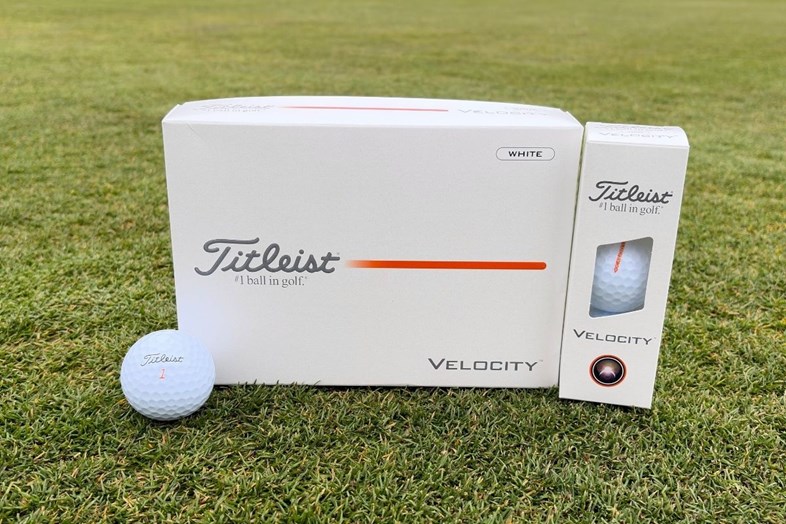
Hitting the ball far and straight off the tee is important for a lot of golfers, but if it comes at the cost of spin and control, is it time to look for a new golf ball?
I’m a big believer that the vast majority of golfers would play better golf and see their scores improve if they played with a high-spin golf ball. However, does that mean they are the best golf balls for everyone?
No. Sadly, golf isn’t that simple.
Two-piece distance golf balls like the Titleist Velocity exist for those golfers who need a low-spin golf ball.
You might naturally generate ample spin, and want a golf ball that’s going to offset your high launch, uncontrollable spin, and deviation. (Although, it could be an issue with your clubs, but that’s a story for another day.)
For the golfers wanting to increase distance, two-piece distance golf balls aren’t always the longest – as we uncovered in our 2025 golf ball robot test – but they do reduce spin, which in turn, should help golfers with a fade (or slice) rein it in.
The caveat of two-piece distance golf balls is they often struggle to generate spin and offer the control many golfers want when playing into greens.
So, does the 2026 Titleist Velocity fit the trend or break the mould?
Quick verdict
The Titleist Velocity is a much-loved two-piece distance golf ball that has stuck to its guns ever since it was first introduced 14 years ago. It is designed to help golfers hit the ball farther. If you’re looking for more spin and control, this isn’t the golf ball you’re looking for, but for golfers chasing distance, it’s a solid option.
{“imageID”:320253,”imageAlt”:”Titleist Velocity 2026 golf ball packaging”,”imageURL”:”https:\/\/pub-production-tg.s3.eu-west-2.amazonaws.com\/wp-images\/320251\/titleist-velocity-golf-balls-2026-1.jpg”,”imageTitle”:””,”advgbBlockControls”:[]}
{“imageID”:320255,”imageAlt”:”A sleeve of the 2026 Titleist Velocity”,”imageURL”:”https:\/\/pub-production-tg.s3.eu-west-2.amazonaws.com\/wp-images\/320251\/titleist-velocity-golf-balls-2026-3.jpg”,”imageTitle”:””,”advgbBlockControls”:[]}
{“imageID”:320256,”imageAlt”:”Titleist Velocity 2026 golf ball”,”imageURL”:”https:\/\/pub-production-tg.s3.eu-west-2.amazonaws.com\/wp-images\/320251\/titleist-velocity-golf-balls-2026-4.jpg”,”imageTitle”:””,”advgbBlockControls”:[]}
{“imageID”:320257,”imageAlt”:”Titleist Velocity 2026 golf ball side stamp”,”imageURL”:”https:\/\/pub-production-tg.s3.eu-west-2.amazonaws.com\/wp-images\/320251\/titleist-velocity-golf-balls-2026-5.jpg”,”imageTitle”:””,”advgbBlockControls”:[]}
{“imageID”:320409,”imageAlt”:”The 2026 Titleist Velocity is available with an AIM Performance option”,”imageURL”:”https:\/\/pub-production-tg.s3.eu-west-2.amazonaws.com\/wp-images\/320251\/titleist-velocity-2026-aim-performance-golf-ball.jpg”,”imageTitle”:””,”advgbBlockControls”:[]}
Long Game Performance: 4/5
Since debuting in 2012, the Titleist Velocity has been a popular golf ball for amateurs because of its fair price point and emphasis on distance.
Let’s face it, who doesn’t want to hit the ball far! But if gaining that distance hinders other parts of your game, is it worth it? We’ll come onto that in due course. But for now, I’m going to discuss this golf ball’s strength – long game performance.
For certain golfers distance is their priority. Having a golf ball that travels farther than other can be the difference between hitting a 6-iron or a 9-iron into the green. If you factor in distance off the tee and then the shorter distance into the green.
There’s no denying that distance is important, and the Velocity is purpose-built to provide that distance certain golfers search for.
While I was testing the Velocity at my home course, Cleveland, it’s distance wasn’t blowing me away, but it’s consistently long. This is worth more than it flying 250 yards nine times out of ten, and then surpassing 300 yards once, because the consistency allows you to account for roll and makes it easier for you to pick your target on every shot without fear of running out of room.
The Velocity is a low-spin golf ball off the tee, but it’s not drastically low. I categorize it as mid-low spin because it retains enough spin for it not to fall out of the sky, like other two-piece low-spin golf balls, but it’s never high enough for it to hinder distance.
I really enjoyed watching the Velocity travel off the tee because of its spin, launch, and flight characteristics. Most golfers want to see the ball penetrate the air, and the Velocity certainly does that. Visually, the Velocity is a pleasant golf ball – at least off the tee…
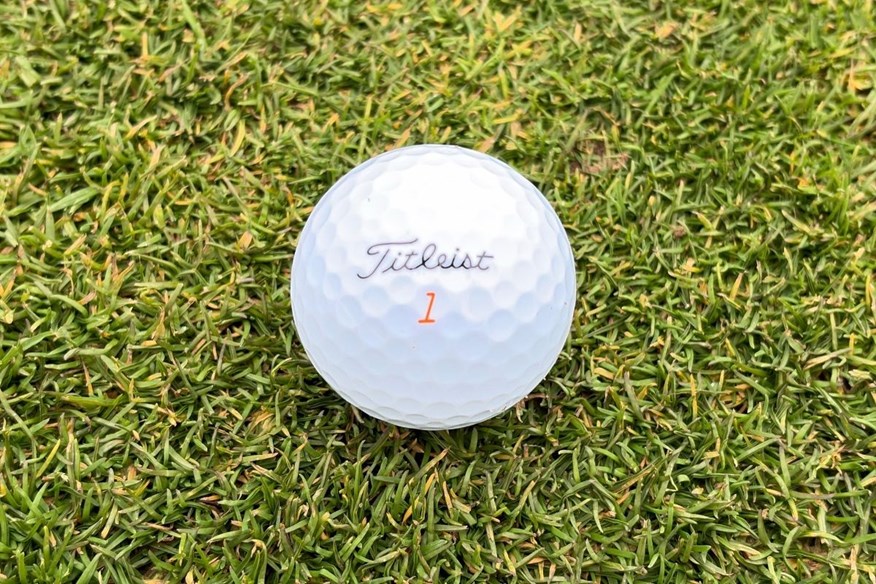
Short Game Performance: 3/5
Titleist fit golf balls from the green and work backover to the tee box. With that being the case, any golfer who follows that some process themself will likely rule the Velocity out very early on – unless you naturally generate copious amounts of spin.
While the Velocity is pleasing to watch off the tee, when hitting into greens, there is a lot more uncertainty with how the ball will react, which creates some apprehension from certain lies until the ball comes to rest (hopefully) on the green.
The Velocity isn’t known for its short game performance, and anyone who uses this golf ball or has in the past will be well aware of that. But for anyone thinking of trying the Velocity or using it going forward, it’s important to spend some time getting used to how this ball reacts compared to what you have previously used before making a decision.
Some golfers wanting more distance will like the extra roll out, especially if you find yourself coming up short from the fairway, or if you want to start hitting a 9-iron where you may previously have been hitting an 8- or even a 7-iron.
Personally, I prefer using a golf ball that I can fly the whole way. As little run out as possible is much easier for me to work with. For that reason, I wouldn’t game the Velocity. But for any golfer out there wanting more distance when hitting at the pin, there aren’t many balls better or at the same level as the this model.
The biggest obstacle I had to overcome when testing the Velocity was how fiery it felt coming out of the rough and while playing delicate shots around the green. In both circumstances I enjoy using a golf ball that feels tame, and the Velocity is at the other end of the spectrum. Again, those golfers who want to feel the ball jump off the club face in those areas will appreciate the Velocity.
My biggest takeway from the Velocity’s performance was that distance is consistent and competitive off the tee, but playing into greens is where its distance really shines. With that in mind, if you’re looking for a golf ball that offers more spin and control, you probably want to choose a different model.
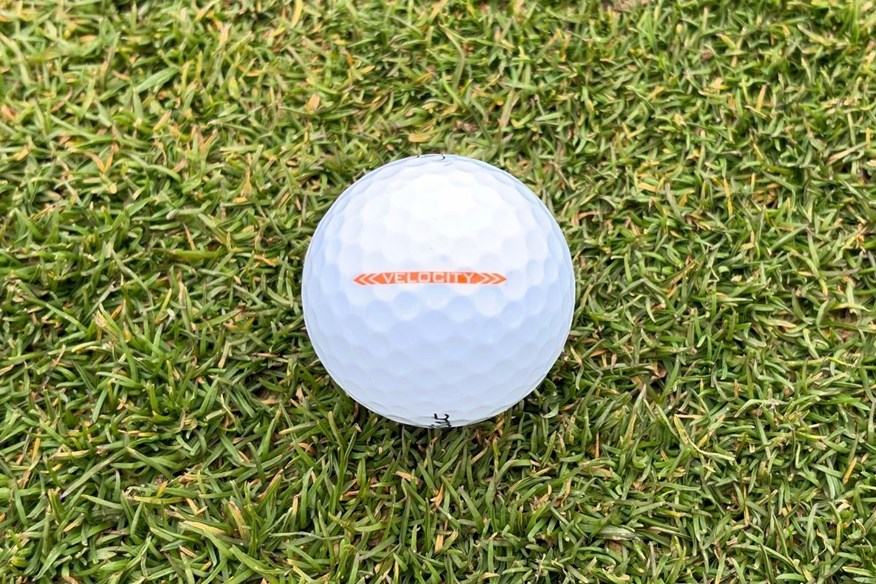
Feel and Response: 4.5/5
Titleist class the Velocity as a soft golf ball, but I wouldn’t go as far as to say it’s soft. I grade it somewhere more in the middle, but towards the softer end of the spectrum.
The Velocity’s feel is going to please more golfers than it will put others off, which is a plus for a two-piece distance golf ball.
With it not being soft, it is responsive. No matter what shot you hit with the Velocity you will feel it. I like this because you learn more about your good shots and bad shots than you do if a ball lacks responsiveness.
The Velocity feels hot when you hit it well and dull when you miss the middle of the club face.
Some golfers might not like how responsive the Velocity is, but it does help you distinguish the difference between a mishit and a pure strike.
Durability: 4.5/5
Titleist say this golf ball is for “players who value explosive distance and durability”. Based on that, I was heavily scrutinizing every Velocity ball I tested to see just how durable they are.
I have to say, it passed. I played with six balls from the same dozen. Using each ball for a minimum of nine holes and a maximum of 18.
I noticed a couple of scuffs from being in a bunker and when I clattered one ball into the wooden slats surrounding the 17th tee. But in normal play, other than picking up dirt and grass that could be wiped off, there was nothing major to report.
Durability is good with the Velocity, but it shouldn’t be a determining factor as to whether you opt for this ball over another. At the price, even if the Velocity did cut up slightly quicker than it does, it wouldn’t majorly impact its value for money.
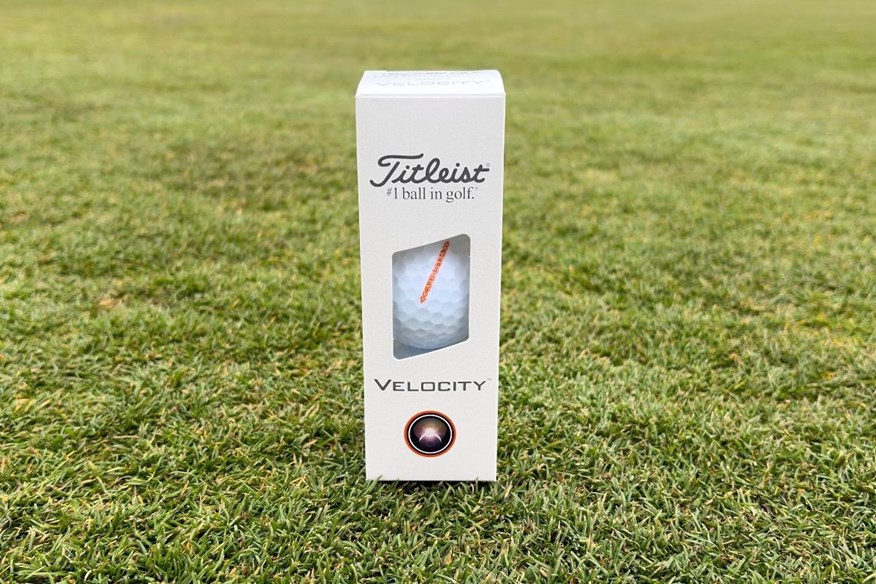
Final Verdict: 4/5
To answer the question I posed at the beginning of this review, the Titleist Velocity has got other strengths than its performance off the tee, but they are aligned to its off-the-tee performance.
Most notably, its long distance when hitting into greens. Also, its strong distance when playing out of the rough.
The beauty of a golf ball like the Velocity is that every element of its performance is expected. It might not buck the trend of two-piece distance golf balls offering low shrort-game spin, but that’s clearly not its intention.
This golf ball is designed for distance, and distance it delivers.