
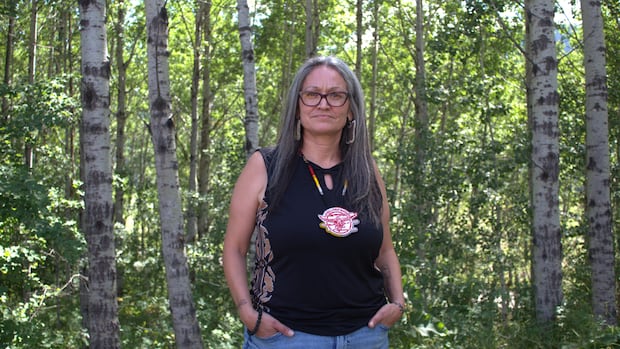
A First Nation in the central interior of B.C. says Canada and the province have failed to halt the decline of southern mountain caribou, and wants the federal government to intervene.
Xatśūll First Nation, about 50 kilometres north of Williams Lake, said in a news release it, and Sylix Okanagan Nation, recently petitioned the federal government to issue an emergency protection order under the Species at Risk Act (SARA).
“We need the federal government to use the tools that it has,” said Kúkwpi7 (Chief) Rhonda Phillips of Xatśūll First Nation.
“We’ve raised these issues with B.C., and despite that, the province just continues to authorize forestry activity in very important caribou habitat.”
A 2014 recovery strategy by the federal government said habitat loss, development and increased predation have contributed to the decline of southern mountain caribou, listed as threatened under SARA since 2003. The population was designated as endangered by the Committee on the Status of Endangered Wildlife in Canada, the advisory body under SARA, in 2014, but the federal government referred the assessment back to the committee for further consideration.
B.C. has worked to recover caribou populations in the province through predator control programs, spending nearly $1.5 million destroying wolves and cougars in winter 2024–25, and through maternity pens.
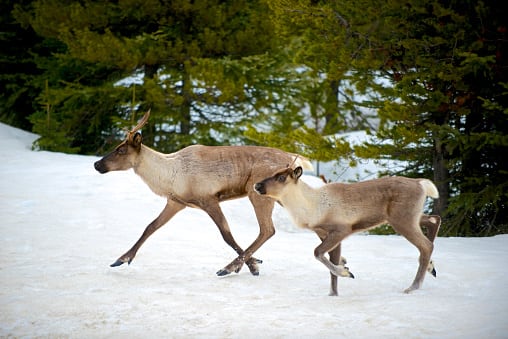 “There has been lots of area that have been protected, but most people feel that’s not enough,” said Chris Johnson, professor of ecosystem science and management at the University of Northern British Columbia. (Getty Images)
The province also approved logging in some caribou habitat areas earlier this year.
Phillips said she grew up going out on the land with her family, but its been over 35 years since she’s had caribou.
“The last time I had caribou… I’m 49 years old, and I had caribou when I was a child,” said Phillips.
“It traditionally fed our people and have provided for our people since time immemorial but we haven’t been able to hunt caribou for the longest time and that’s quite concerning.”
Phillips said her nation wants a stewardship management model on forestry in its territory, and is advancing solutions through a proposed First Nations Woodland Licence.
“Over the years, I watched the clear cuts expand,” said Phillips.
“It’s about protecting the lands that shaped who I am and ensuring future generations still have those opportunities.”
More habitat preservation needed, says biologist
Chris Johnson, a professor of ecosystem science and management at the University of Northern British Columbia in Prince George, B.C., said while predator culling is “effective over the short term,” more habitat preservation is needed.
“We can’t keep going out every year and killing sort of 60 to 90 per cent of the wolves in a population. It’s expensive and for the most part, the public doesn’t like it,” said Johnson.
“There has been lots of area that have been protected, but most people feel that’s not enough and that forestry is resulting in the destruction of critical habitat for caribou in important places.”
Southern mountain caribou are divided into a northern group, central group and southern group, with four out of 13 southern group herds — Barkerville, North Caribou, Wells Gray North and Wells Gray South — near the Williams Lake area.
Johnson said there are between 50 and 60 caribou left in the Barkerville population.
“I think about the amount of habitat that’s been lost for the Barkerville population, and the amount of habitat that has been protected, which is not very much — it looks pretty bleak,” said Johnson.
A statement by a spokesperson for the Ministry of Forests said forest sector activities occur based on the recommendations of foresters, geotechnical engineers, hydrologists and biologists, who provide recommendations and input into harvest practices, composition and location.
“Any permitting for forest harvesting and road building in caribou habitat is guided by recommendations from these professionals,” said the statement.
“That advice supports beneficial management practices and mitigation strategies to manage impacts on caribou and many other forest values.”
The statement said forest landscape planning tables in the region are being developed through collaborative planning with First Nations, including Xatśūll, and engagement with forest licensees, local communities and other stakeholders in each local area.
Okanagan Nation Alliance was not available for comment before time of publishing.
Court challenge
Three environmental groups have gone to court alleging the federal government failed to complete promised critical habitat mapping of southern mountain caribou started in 2014.
Stand.earth, Wilderness Committee, and Wildsight filed an application for judicial review in Federal Court in Vancouver in February.
“We’re going on 12 years later and that’s the first step in their legislative duties, in terms of the Species at Risk Act,” said Eddie Petryshen, a conservationist at Wildsight.
“They’re not living up to those those duties.”
Phillips said her First Nation wants to work collaboratively with both the federal and provincial governments to protect the southern mountain caribou.
“The federal government has stated that we’re full partners, so I’d just like to see that in action,” said Phillips.
Enivronment and Climate Change Canada did not provide comment before time of publishing.