
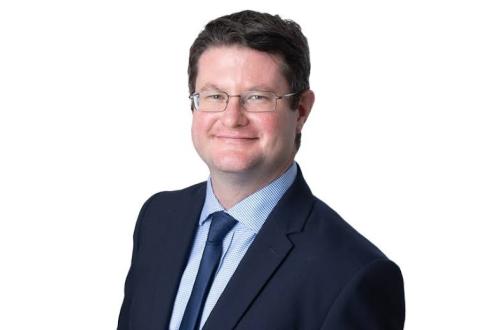
Greater scrutiny of offshore wealth is changing the way families across Greater China approach trusts, succession and the governance of international assets. Restrictions on capital leaving mainland China, the growing use of tax transparency data and a rise in disputes involving the next generation are increasing the risks attached to structures established without sufficient planning or substance.
For James Russell, Managing Director, Hong Kong at ZEDRA, these developments are pushing the market towards more defensible arrangements, with clearer responsibilities for trustees, directors and other professional parties. At the same time, families are seeking succession structures that can provide for younger generations without transferring unrestricted control, while Hong Kong’s relatively straightforward family office regime is attracting interest from clients both within and beyond Asia.
Key Takeaways
Mainland China’s exchange controls and the active use of Common Reporting Standard (CRS) data are increasing scrutiny of offshore arrangements held by People’s Republic of China (PRC) clients.
Families are moving away from nominal or template-based structures towards arrangements with greater substance and more meaningful roles for trustees, directors and independent protectors.
Rising litigation and family disputes are reinforcing the need for structures capable of withstanding challenge from tax authorities, beneficiaries and other interested parties.
Succession planning increasingly involves balancing financial support for the next generation with safeguards intended to encourage responsibility and productive participation.
Hong Kong’s family office tax concessions appeal to international families because the qualifying criteria are comparatively clear and do not require a lengthy pre-approval process.
The private wealth market may become smaller in terms of client numbers, but more technically demanding and better suited to specialist providers.
Greater Scrutiny Is Changing Greater China Structuring
Announcements in late July confirming that trust assets would be taxable as part of the personal wealth of the settlor, combined with the tightening of controls on capital leaving the country and the use of information received through the CRS, are keeping the market on its toes. The clarification of the tax position in respect of trusts will be welcomed in some quarters, but it ensures that all structuring must be carefully planned and executed, and clients must work on the assumption that their structure may be scrutinised by authorities and plan on this basis.
Chinese authorities are increasingly using this CRS data to question taxpayers about trusts, companies, investment accounts and other arrangements established outside mainland China.
“The information is not simply being collected and left untouched,” Russell says. “Clients are being approached and asked detailed questions about the structures they hold overseas.”
The new tax clarifications will change the market. Structures built on an “old-school” assumption that offshore ownership would remain largely invisible are likely to falter as authorities gain a clearer view of the assets and entities connected to individual taxpayers.
Russell expects this to change the allocation of responsibility within private wealth structures. Clients who previously retained extensive powers may become more willing to appoint trustees and other professionals with genuine decision-making authority.
That could mean a move away from reserved powers trusts, under which settlors retain specified investment or administrative powers, towards fully discretionary trusts. It may also increase the use of independent protectors and professional directors, particularly where clients have historically managed trust-owned companies or investments themselves.
“Clients will still want their views to be heard, but the structure has to operate as a real structure,” Russell says. “A trustee or director cannot simply be present in name while every substantive decision continues to be made by the client.”
Structures Must Withstand Challenge
The direction of travel extends beyond regulatory enforcement. Russell is also seeing greater scrutiny from banks, advisers and family members, alongside an increase in disputes involving beneficiaries who question decisions taken during the founder’s lifetime.
This is particularly relevant when wealth passes from the first generation to the second. A structure that appeared satisfactory while the patriarch or matriarch remained alive may be examined far more critically once younger family members begin asking how assets were managed, why distributions were made and whether trustees exercised their powers appropriately.
Families are therefore paying greater attention to the purpose of a structure, the powers granted to each participant, the documentation of decisions and the mechanisms through which disagreements will be handled.
“Families increasingly recognise that a structure may one day be attacked,” Russell says. “That challenge may come from a tax authority, a creditor or family members who have fallen out. If it cannot stand up to scrutiny at that point, the purpose of establishing it has been defeated.”
For Russell, this is one of the clearest changes he has observed during more than a decade in Asia. Clients are becoming more willing to spend time and money on detailed planning rather than relying on standard documentation and a trustee whose role is largely nominal.
A template may provide the basic architecture of a trust, but it cannot determine how authority should be divided within a particular family, how competing interests should be managed or how the arrangement should respond to changing circumstances.
Succession Without Unrestricted Control
Succession remains one of the principal reasons families approach ZEDRA. The challenge is often not whether children should benefit from family wealth, but how much authority they should receive and at what stage.
Russell recently worked with a Taiwanese patriarch who was concerned that his children did not yet possess all the skills required to manage the family’s assets independently. The underlying wealth included an investment portfolio that would require continued oversight after the founder’s death.
The issue was not necessarily a lack of intelligence or goodwill among the beneficiaries. Younger family members may still be developing professionally, may have limited investment experience or may have no interest in the business or assets from which the family wealth originated.
In these circumstances, a professional trustee can provide continuity while still consulting beneficiaries and taking their views into account. The objective is not to exclude the next generation, but to prevent responsibility from transferring faster than capability.
“You can listen closely to the children without giving them unrestricted control from the outset,” Russell says. “The professional’s role is to make sure the assets continue to be managed within the principles the founder considered important.”
In the Taiwanese case, the patriarch also wanted his children to enjoy financial security without allowing the trust to become a permanent substitute for employment or personal responsibility. The structure was therefore designed to permit distributions while linking support to evidence that a beneficiary was working or otherwise engaged in productive activity.
“He wanted the children to benefit and he did not want them to suffer,” Russell says. “But he was equally clear that the structure should not allow them simply to live from the family wealth without doing anything themselves.”
Such provisions illustrate the attraction of retaining some influence beyond the founder’s lifetime. They also require careful judgement. Conditions that appear sensible when drafted may become inappropriate if a beneficiary experiences illness, changes career or faces circumstances the founder could not have anticipated.
The trustee must therefore understand the intention behind the condition rather than applying it mechanically. The structure should preserve the founder’s values while retaining enough discretion to respond sensibly to the lives of future beneficiaries.
Hong Kong’s Family Office Advantage
ZEDRA is also working with international families seeking to establish family office structures in Hong Kong. Recent clients have included families from Southeast Asia and South America attracted by the territory’s tax concessions and the relative simplicity of the regime.
Russell contrasts this with Singapore, which historically served as the more obvious entry point for many international families entering Asia. Singapore remains a major family office centre, but its regulatory and administrative requirements have become more layered over time.
Hong Kong’s appeal, in his view, lies in the clarity of its qualifying criteria. Broadly, an eligible single-family office arrangement must meet conditions that include employing at least two full-time staff in Hong Kong and incurring annual operating expenditure of at least HKD2 million.
The framework does not require families to spend several months obtaining family office status before commencing operations. Instead, they can establish the arrangement, operate it in accordance with the rules and claim the concession through the tax return once the requirements have been met.
“In Hong Kong, the criteria are understandable and capable of being planned around,” Russell says. “You establish the operation, make sure the substance is there and demonstrate at the end of the year that the requirements have been satisfied.”
This gives families a relatively clear basis on which to assess whether the economic benefits justify the cost. Advisers can model the likely expenditure, establish the required operating presence and determine whether the structure should qualify without a lengthy pre-approval process.
Russell also credits Invest Hong Kong with taking an active role in encouraging family offices to establish a presence in the territory.
“The message from the authorities is that they want these operations to succeed,” he says. “That matters when a family is deciding where to place people, assets and decision-making functions.”
When the Economics Make Sense
There is no single wealth threshold at which every family should establish a trust or family office. The calculation depends on the complexity of the assets, the family’s objectives and the value created by the structure.
For a standalone trust, Russell generally considers assets of approximately USD15 million a reasonable starting point before the ongoing professional fees become easier to justify. A trust can be established with less, but fixed administration costs may create friction if they consume a disproportionate share of the underlying wealth or investment return.
Family offices require a different assessment because they do not necessarily need to include a trust. Russell has seen arrangements established for families with USD5 million or USD6 million, although the economics become more difficult at that level.
The central question is whether the value generated by bringing the operation to Hong Kong exceeds the required expenditure, including the HKD2 million annual operating threshold.
That expenditure can include employee costs, office accommodation and fees paid to service providers. As a result, it is not difficult for a genuine operation to reach the required level, but the spending must still make commercial sense for the family.
“It is ultimately an expenditure-versus-benefit decision,” Russell says. “The family needs to consider the tax outcome, the operating advantages and the wider strategic value of locating the function in Hong Kong.”
Families may therefore need to take a multi-year view rather than assessing the structure only against its first-year cost. Establishment expenses may be higher at the outset, while the benefits may become clearer as assets, family members and investment activity are consolidated within the arrangement.
A More Technical Private Wealth Market
The next phase of the Greater China private wealth market will depend partly on how mainland China’s outbound capital controls develop. Russell expects the restrictions to sustain demand for more technical structuring, particularly among families that already hold assets offshore or have legitimate international investment, education and succession needs.
What appears less sustainable is the earlier market for lightly understood, standardised products. Russell believes clients will become less willing to accept trusts wrapped around bank products when they do not fully understand the legal consequences or the responsibilities assigned to the parties involved.
The industry may consequently serve fewer clients through simple, replicable structures. Those who remain active, however, are likely to bring more complex assets, cross-border connections and governance requirements.
“The days of the template trustee are coming to an end,” Russell says. “The future is likely to involve a smaller client base, but one with greater complexity, stronger technical awareness and a much clearer expectation that the structure should do what it claims to do.”
For specialist providers, that shift places greater value on technical capability, professional independence and the ability to administer structures over the long term.
**
ZEDRA is a partner at the upcoming Hubbis Wealth Planning & Structuring Forum – Hong Kong 2026, at which James is also speaking on a panel, which takes place on Wednesday 28th October from 9.00am to 4.00pm at the The St. Regis.
View the event homepage HERE.