
Every week, we ask a selected group of our baseball writers — local and national — to rank the teams from first to worst. Here are the collective results.
We have unmistakably entered trade season. It kicked off this weekend with the Red Sox and Nationals swapping Connelly Early for Curtis Mead, and it will continue through Monday’s always frantic trade deadline.
And if last year is any indication, it could be a slow build to a final flurry.
The next time we do Power Rankings, the trade deadline will have come and gone, and we’ll be better able to look ahead. For this week, we’re going to look back. Are teams up or down compared to this time last year, and what does that tell us about their direction since the 2025 trade deadline? And what might they be prepared to do in the next week?
All stats are through Monday morning unless otherwise noted.
Record: 67-39
Last Power Ranking: 1
Power Ranking a year ago: 1
How they reacted: Trading for depth pieces and … other teams’ minor-league prospects?
This year: All in, as always
Was last year’s Dodger deadline a sign of arrogance, or simply a sign that they had run out of wants and needs? They traded for Alex Call as a RHP-masher off the bench, and they got a few innings of Brock Stewart, but that was mostly it at the major-league level. Pretty cute for a team that had to be saved by Miguel freaking Rojas at the last second.
The strangest part about the last Dodgers deadline, though, is how much effort they spent acquiring other teams’ prospects. This is when they wormed their way into James Tibbs III, who might be the key piece in another deadline deal in a much different way. Basically, it was a deadline when the Dodgers reminded you that they’re smarter than everyone else, as they’re wont to do. — Grant Brisbee
Record: 66-40
Last Power Ranking: 2
Power Ranking a year ago: 4
How they reacted: Traded for Danny Jansen, Shelby Miller, Jordan Montgomery and Nestor Cortes
This year: More motivated?
At last year’s deadline, the Brewers had the best record in the sport, and their version of “going for it” was … I mean, take another look at those names. None of them are still with the team, so — even if you didn’t know anything else about them, which you definitely do — you can’t make the argument that those moves were made for 2026 or beyond.
This year, Milwaukee still holds a big division lead over a very good Cubs team, and Jacob Misiorowski looks like just the sort of ace who could dominate a postseason series or three.
They have the farm system to make a big splash. It feels imperative that they operate with a bit more urgency this year. — Levi Weaver
Record: 62-44
Last Power Ranking: 4
Power Ranking a year ago: 24
How they reacted: Nothing of consequence at the deadline
This year: Much, much better
The Braves were bad last year, but they weren’t supposed to be, and the front office responded by doing very little at the trade deadline. They mostly kept their roster together for another run in 2026, and it’s worked. The Braves were bad in June but have otherwise been among the top teams in baseball all season. It’s been a significant return-to-form for a team that won the World Series in 2021 but hasn’t been able to capture that same level of excellence in the five years since. This is the closest the Braves have come, and they seem poised to be far more aggressive at this year’s deadline. A starting pitcher is their most obvious need, though an extra bat off the bench wouldn’t hurt. — Chad Jennings
Record: 60-46
Last Power Ranking: 3
Power Ranking a year ago: 8
How they reacted: Eight trades, mostly for infielders and relievers
This year: About the same
The Yankees have moved up a bit in our Power Rankings from a year ago, but they’re once again approaching the deadline in need of help in the infield and bullpen (though this year, they could also use another catcher, and significant injuries are piling up). The Yankees’ 2025 trade deadline was more quantity than quality — David Bednar and Ryan McMahon were the big additions, along with two other relievers and two other infielders — and they have multiple needs again this year. Maybe this time they’ll add a singular splash to what could be, again, a bunch of moving pieces. — Jennings
Record: 62-43
Last Power Ranking: 5
Power Ranking a year ago: T-15
How they reacted: Typical blend of buying and selling
This year: We shall see
The Rays seem to be perpetually doing several things at once, and their approach to last year’s trade deadline was another example. They bought and sold in equal measure, including a clever swap of starting pitcher Taj Bradley for reliever Griffin Jax (whom the Rays have since converted to the rotation with strong results). The Rays are definitely better today than they were a year ago. The question is, how much will that change their approach? Could a weak American League give them the smell of blood in the water and spur a more aggressive trade deadline? Or will the Rays stick with their tried-and-true game plan that’s rarely eye-popping but often yields results? — Jennings
Record: 60-46
Last Power Ranking: 6
Power Ranking a year ago: 3
How they reacted: Traded for Taylor Rogers, Willi Castro, Andrew Kittredge and Michael Soroka
This year: The same, but without the big Pete Crow-Armstrong slump
The Cubs have admirably battled through a litany of pitcher injuries this year, and their lead as the first National League wild-card team looks — barring some complete disaster — relatively comfortable. But the Cubs didn’t go out and sign Alex Bregman this winter just to be an early-exit playoff team.
They’ve been connected (sometimes by simple logic) to a ton of pitchers in recent trade rumors; Aaron Civale is a reasonable stopgap to start the acquisitions (particularly with Jameson Taillon being DFA’d), but he won’t be the only move. They’re getting an MVP-type season from Crow-Armstrong that they just can’t let go to waste. I expect them to be aggressive in acquiring multiple pitchers over the next week. — Weaver
Record: 55-50
Last Power Ranking: 9
Power Ranking a year ago: 11
How they reacted: Minimal additions with costly results
This year: About the same
For three months, the Red Sox looked far worse than last year, and for the past month, they’ve looked far better. The end result is a team that’s once again in playoff contention but without the kind of success that demands an all-in approach at the trade deadline. We’ve already seen the Red Sox trade away some of their rotation depth (Connelly Early) in pursuit of an offensive upgrade (Curtis Mead). They could continue to thread the needle while trying to avoid last year’s trade deadline fiasco. In that deal, they acquired minimal upgrades (Steven Matz was good in the bullpen, but Dustin May was awful in the rotation) in trades that cost them what is now a big-league third baseman (Blaze Jordan) and a Top 50 overall prospect (James Tibbs III). — Jennings
Record: 55-50
Last Power Ranking: 10
Power Ranking a year ago: 29
How they reacted: Light sellers
This year: Is it time to jump the gun?
It is always a little surprising to me when I look to see when the White Sox last finished over .500. Oh right, it was only 2022. They made the playoffs in 2021!
Maybe it’s just that losing 101, 121 and 102 games in the 2023-25 seasons was such a miserable run that it seemed like a decade.
How the White Sox view this year’s deadline might rest, in part, on whether they feel the same way. Their rebuild didn’t seem destined to come to fruition until next year, at the earliest. Instead, they’re in first place in the American League Central.
They’ll certainly be buyers of some sort, but it’s not like they’re one arm or bat away from being a World Series contender (even in this year’s AL … probably). The logical move would be to look for guys who are under team control for the next few years, even if that means playing the hybrid role and trading an Erick Fedde-type or a Trevor Richards-type. But if they really want to go for it, the cost will be higher and involve some prospects that might hurt in a year or two.
But I suppose pain is something the White Sox have a lot of recent experience enduring. — Weaver
Record: 57-50
Last Power Ranking: 7
Power Ranking a year ago: 5
How they reacted: Trade for Harrison Bader, blockbuster for Jhoan Duran
This year: About the same
The Phillies are lower in our Power Rankings, but their status is basically unchanged from a year ago. They remain World Series contenders, perpetually in need of an outfield bat and a bullpen arm (and a back-end starter wouldn’t hurt, either). Their lower ranking this season is mostly a product of their horrendous start (though they haven’t been great since the All-Star break, either). This is a flawed team with a lot of championship-caliber pieces and an aggressive head of baseball operations who will undoubtedly make another move or two in pursuit of a championship while this core is still intact. — Jennings
Record: 55-52
Last Power Ranking: 11
Power Ranking a year ago: 27
How they reacted: Finding better homes for a handful of players, including Ke’Bryan Hayes
This year: Significantly better
The last time the Pirates finished over .500 was 2018. The last time they made the playoffs was 2015. This winter, they went out and (finally) spent some money on free agents, then traded for some impact bats. They were never going to be a worst-to-first Cinderella story, but they’ve spent most of the season in or near a wild-card position.
They probably don’t — at least traditionally speaking — have the roster to justify a big deadline buy. But there’s something to be said for seeing a light at the end of a long dismal tunnel and doing whatever it takes to get there. — Weaver
How many players will the Mets trade by the deadline?
Ken Rosenthal and Johnny Sweet
Record: 54-53
Last Power Ranking: 16
Power Ranking a year ago: 28
How they reacted: Made five trades, selling mostly rentals
This year: Feeling better
Obvious sellers at last year’s trade deadline — and again this winter when they traded MacKenzie Gore — the Nationals now find themselves somewhere in between buying and selling. Their offense has kept them on the edges of the wild-card race, while their lack of pitching has kept them out of any serious World Series conversation. Their weekend trade of infielder Curtis Mead for starting pitcher Connelly Early is indicative of a team that’s now trying to find a better balance rather than rebuilding almost from scratch. The Nationals are not a finished product, but this season has seen them move significantly in the right direction. — Jennings
Record: 55-52
Last Power Ranking: 17
Power Ranking a year ago: 21
How they reacted: Enthusiastically selling
This year: Buying, but it’s complicated
The Diamondbacks had a busy deadline last year, trading half of their infield to the Mariners, as well as sending longtime starter Merrill Kelly to the Rangers. In the offseason, they even re-signed Kelly, allowing them to have their cake and eat it too. By “eat their cake,” I suppose we mean “watching Kelly give up two or three runs in five innings until the heat death of the universe,” but they’re doing things their own way.
They’re a strong-enough team to consider going for it, especially considering that Ketel Marte isn’t getting any younger. They probably won’t go all in and trade from a relatively deep farm system, but they could easily claim a wild-card spot with a little help. — Brisbee
Record: 52-55
Last Power Ranking: 12
Power Ranking a year ago: 10
How they reacted: By trading for BEEF
This year: More beef, please
Last deadline, the Mariners acquired Eugenio Suárez and Josh Naylor in an effort to beef up their lineup, and by gum, it almost got them their first pennant. While they could certainly use reliever Brandyn Garcia — currently sporting a 2.28 ERA in the Diamondbacks’ bullpen after being a part of the Naylor deal — their more pressing concern is with their lineup. Especially in the middle of their lineup, considering that Naylor isn’t doing anything.
It’s the Mariners, so expect a trade that absolutely floors you, a trade that makes good, practical sense, and a trade that you’ll have strong opinions about in 2029. It is their way. Their fans have to hope the Mariners can finish the job the last deadline got them oh-so-close to. — Brisbee
Record: 54-52
Last Power Ranking: 15
Power Ranking a year ago: 13
How they reacted: Borderline-delusional optimism, trading for Merrill Kelly, Phil Maton and Danny Couloumbe
This year: Agonizingly the same
This feels like such a fitting exercise for this team in particular. Last year, the Rangers were middle of the pack, and after making a few moves to add to the roster — most notably, a trade for MacKenzie Gore during the offseason — they are … still around the middle of the pack.
[Reaches into pocket, “But not for me!”-style]
Anyway, they’re in first place. They just won three of four from the Mariners, and in this year’s AL West, two games over .500 is good enough for a division lead. You’d like to think that the word “fortunately” should be in that sentence somewhere — winning the division would be great, right? — but with a farm system depleted by years of buying, it seems like this year’s team is built to kickstart a rebuild. Instead, it is balancing perilously between beefing up a thin farm system and a mandate from the rest of the division to go ahead and accept this gift.
If there’s any tale of caution to be gleaned from last year, it’s that Kelly was worth 0.0 bWAR over 55 innings, so the prospects the Rangers traded for him — Mitch Bratt, David Hagaman and Kohl Drake — now look like a big overpay. — Weaver
Record: 54-53
Last Power Ranking: 14
Power Ranking a year ago: 19
How they reacted: Traded away Shane Bieber and Paul Sewald
This year: Almost the same, except rated higher here
Last year at the deadline, the Guardians were in second place in the AL Central with a .500 record. This year, they’re in second place in the AL Central with a .505 record.
The difference? Last year, they were nine games behind the Tigers and three games out of a wild-card spot. This year, they’re much closer to a White Sox team that — while exciting — is still pretty unproven. Weird how the surroundings can change the calculus, isn’t it?
Of course, there’s also the recent memory of what a good second half can do. Last year’s team orchestrated arguably the greatest comeback of all time, winning the division after trailing by as many as 15 1/2 games in early July. You can’t count on doing the unprecedented in back-to-back years, but this would at least appear to be a more winnable division than last year. I expect them to add to the lineup. — Weaver
Record: 53-53
Last Power Ranking: 13
Power Ranking a year ago: 17
How they reacted: A long-awaited sell-off
This year: Buy? Sell? Who’s to say?
The Cardinals have finished under .500 twice in the last three seasons. This might not sound like a tragedy to you, but before that, they’d finished under .500 just once this century. This is not a team that rebuilds. So when it made standard rebuilding-team trades — trading its closer for a top prospect, for example — it was the clearest sign that a new era had begun.
Just kidding! This year, the Cardinals are in the thick of a muddled wild-card race, and they’re ostensibly buying. Unless they get an offer they can’t refuse that helps them more for the future. They could use some more pitching, but they could also use more help for future seasons. They’re one of the most fascinating teams to watch — their play over the next week might tip the scales. — Brisbee
Record: 53-54
Last Power Ranking: 8
Power Ranking a year ago: 22
How they reacted: Sold slightly at the trade deadline
This year: About the same
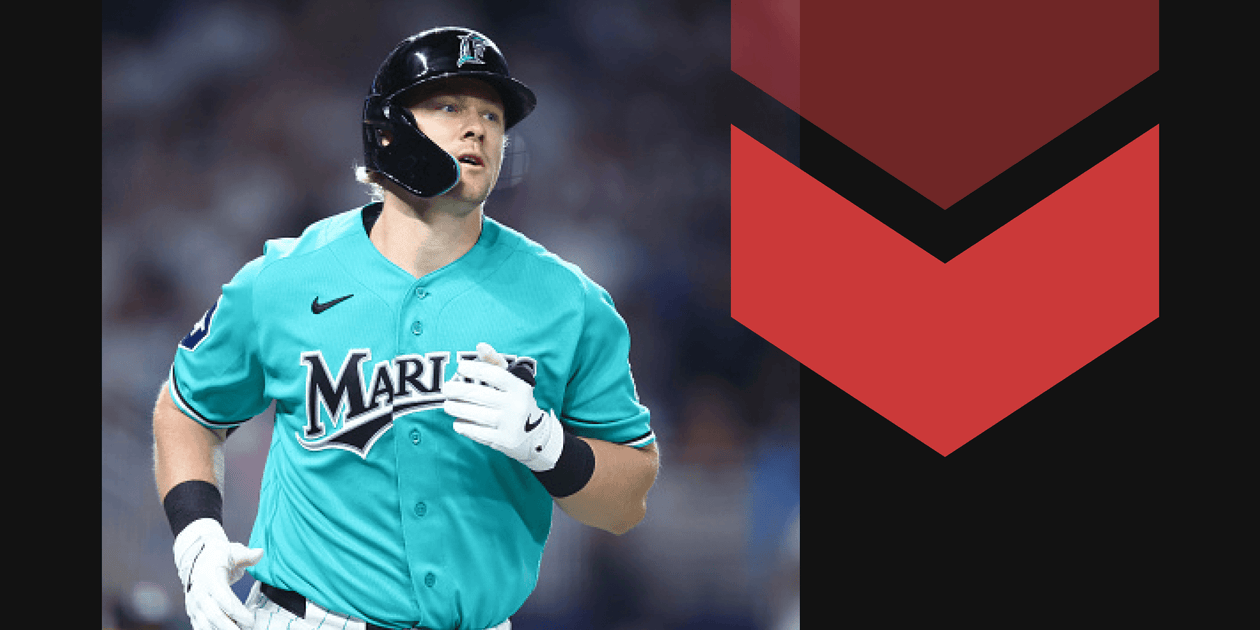
If we had done this a few weeks ago, we would have said the Marlins were much, much better than a year ago, but a prolonged losing streak, which they snapped Monday night, has dumped Miami back into familiar territory. The Marlins are back below .500, and any thought of being sneaky playoff contenders — and thus trade deadline buyers — is much harder to justify. Instead, the they could be heading for a trade deadline similar to last year when they were minor sellers, trading away Nick Fortes and Jesús Sánchez. If they decide to sell, the Marlins should have some pitchers with value, but that would be a disappointing turn of events for a team that seemed poised to add. — Jennings
Record: 50-57
Last Power Ranking: 18
Power Ranking a year ago: 7
How they reacted: Acquired Charlie Morton, Codi Heuer, Paul Sewald, Kyle Finnegan, Rafael Montero, Chris Paddack and Randy Dobnak, then had a monthslong fainting spell
This year: Yeeesh
You can’t say the Tigers didn’t go for it at last year’s deadline, and you can’t blame them for putting the pedal down (even if the Montero for Jim Jarvis trade hurts now). After all, they were coming off a breakout year in 2024 and led the division by nine games at the deadline. Alas, they proceeded to pull off a catastrophic collapse, frittering away the Central title over the back half of the season.
This year started much the same way the last one ended (many, many losses). But they’ve been — more or less successfully (??) — trying to dig their way out of that hole since the start of June. Under normal circumstances, you could maybe justify a hold-and-see deadline. But uh … these are not normal circumstances. They’re still the most intriguing team at this year’s deadline, and it’s 100 percent down to the keep-or-trade conundrum with Tarik Skubal — Weaver
Record: 53-53
Last Power Ranking: 19
Power Ranking a year ago: 12
How they reacted: By trading one of the best prospects in baseball for Mason Miller
This year: Trying to do the reverse, perhaps, while still buying? It’s complicated
Leo De Vries is currently in Double A for the Athletics, hitting .287/.381/.446 and playing strong defense at short. He is also 19 years old. For all of their A.J. Preller-tinted madness at the deadline every year, the Padres haven’t regretted too many of their biggest trades, with the (very) large exception of James Wood and CJ Abrams as the cost for acquiring Juan Soto.
That was the understandable price of a young Hall of Famer in his prime, though. If De Vries becomes a star, the Mason Miller trade will be remembered differently. Miller has done everything asked of him, but he wasn’t the missing piece, and now he might have to be traded to get the prospects or starting pitcher needed to fuel another frenetic run. It’s a weird, fluid situation. Which is to say, business as usual for the Padres. — Brisbee
Record: 53-54
Last Power Ranking: 20
Power Ranking a year ago: 20
How they reacted: Roster vomit
This year: Holding down their food
If you’ve ever patted a sick kid on the back and said “There, there … just get it all out,” then you understand what I mean. Just get rid of everything that isn’t attached, and then we’ll get you a popsicle.
From a wins-and-losses perspective, I don’t think the Twins are all that surprising this year, but from a standings perspective, well … who could have predicted such a tepid American League? By keeping a few key pillars around (most notably Joe Ryan and Byron Buxton) and getting some good contributions from guys making a name for themselves (see: Taj Bradley, Yoendrys Gómez), they’re hanging around in the AL.
I still think it could go either way for them at the deadline. Let’s see how the next week goes. — Weaver
Record: 52-55
Last Power Ranking: 23
Power Ranking a year ago: 25
How they reacted: Sold a bunch of pending free agents
This year: About the same
When the Orioles sold at last year’s trade deadline, the hope was that 2025 was a momentary blip. They traded away eight big-league players, but almost all were heading to free agency, and this 2026 season was supposed to be a return to the promise of 2023 and 2024. Instead, it’s been a continuation of last season’s disappointment. The American League is bad enough that even a sub-.500 team could reasonably hope to stay in the playoff race — the Orioles’ playoff odds are roughly 20 percent on FanGraphs — but are the Orioles really poised to be significant buyers? If they repeat last year’s formula, Taylor Ward and Trevor Rogers are potential rentals with trade value. — Jennings
Record: 53-55
Last Power Ranking: T-21
Power Ranking a year ago: 9
How they reacted: By accepting Carlos Correa back on a factory recall
This year: Buying, even though they’re under .500
It’s a weak AL West this season, folks. A really, really weak AL West. Remember that year when the Astros were absolutely cooked, but the rest of the division puttered around and allowed them to zoom back and steal the division title? It feels like every season at this point, and the Astros aren’t even pretending to do the will-they-or-won’t-they. They’re buyers.
It almost makes sense, considering they’re witnessing the power of a fully armed and operational Yordan Alvarez this season, and their needs are very clearly defined. They could use a left-handed bat and some more starting pitching. Still, they have the kinds of players — Josh Hader, especially — who could help them perform a quick reload by trading them away. We’ll see if they can justify the confidence of the front office likely to keep them. — Brisbee
Record: 49-58
Last Power Ranking: T-21
Power Ranking a year ago: 6
How they reacted: Four trades, mostly for pitchers
This year: Much, much worse
Coming off an American League pennant and a thrilling, oh-so-close World Series, the Blue Jays seemed ready to make another run at a championship and perhaps finish the job. Instead, they’ve been banged up, their lineup has radically underperformed, and they could be — probably should be — trade deadline sellers. This season isn’t a complete lost cause, but getting back in the race would require a lot of resurgent performances down the stretch. Might be more prudent to trade notable pending free agents (Kevin Gausman, Daulton Varsho, George Springer) and try to make another run at full strength next year. — Jennings
Record: 49-55
Last Power Ranking: T-24
Power Ranking a year ago: 14
How they reacted: Acquired Ke’Bryan Hayes (for Taylor Rogers), Zack Littell, Miguel Andujar
This year: Back to the drawing board
After making the playoffs last year, the Reds started 2026 by finishing April in first place. That has clearly changed, as injuries and underperformance have tanked them back into the NL Central cellar.
Their pitching depth is still impressive, and there’s potential for a bounce-back next season, but this year’s hope appears to be well into the rear-view mirror. They’ll likely trade off a few big-league pieces and reload for the future. — Weaver
Record: 45-61
Last Power Ranking: 26
Power Ranking a year ago: 15
How they reacted: A modest, necessary selloff
This year: More of the same, unless …
That’s right. Last year, the Giants were a normal baseball team, and they were about to pick up manager Bob Melvin’s option. In meme terms, it went something like this:

The Giants would probably like to trade at least one of their infielders who isn’t Luis Arraez, considering the emergence of Casey Schmitt as an everyday player and 30-homer threat. However, those infielders all make a lot of money, so deals would be tricky. They could also trade one of the younger players under contract, such as Schmitt, Heliot Ramos or Jung Hoo Lee in exchange for much shinier prospects, completely blowing up the roster (and the deadline).
What’s most likely, though, is a simple succession of free-agent rentals being traded for modest returns, a bog-standard deadline approach. The Giants can dream, but it’s probably time for them to roll up their sleeves instead. — Brisbee
Record: 45-62
Last Power Ranking: T-24
Power Ranking a year ago: 2
How they reacted: Bought at the deadline, then collapsed
This year: So much worse
It’s been all downhill since last year’s trade deadline. At this time last year, the Mets were near locks to make the playoffs, and FanGraphs was giving them the fourth-best World Series odds. They traded for a veteran center fielder (Cedric Mullins) and a handful of relievers (Ryan Helsley, Tyler Rogers, Gregory Soto) and completely fell apart. They missed the playoffs, radically reworked their roster in the offseason, and the freefall has continued. So, one year later, the Mets have gone from playoff favorites to no-doubt trade-deadline sellers. And it could be back to the drawing board in November. — Jennings
Record: 45-62
Last Power Ranking: 30
Power Ranking a year ago: 18
How they reacted: Acquired Randal Grichuk, Mike Yastrzemski, Bailey Falter, Ryan Bergert and Stephen Kolek
This year: Anyone need a lightly-used Michael Wacha?
Here’s the cautionary tale for about one-third of the league. Kansas City was nowhere near the division lead and 3 1/2 games out of a wild-card spot at last year’s deadline. While the Guardians sold and then got blazing hot, the Royals — fresh off a 2024 postseason appearance — added to their roster in moderation … then missed the playoffs by five games.
Going into Monday’s action, there were 10 teams — five in each league — that sat outside the playoff picture, but were within that same 3 1/2-game range of the last wild-card spot. (The Royals are not one of them.)
I feel confident guessing that all of them would prefer to avoid repeating the Royals’ 2025 outcome. — Weaver
Record: 42-65
Last Power Ranking: 28
Power Ranking a year ago: 23
How they reacted: Trading for bullpen help?
This year: Something different, you would hope
Bless these baseball weirdos. Last year, a very wealthy individual — it’s hard to say exactly whom — probably yelled, “We need bullpen help to win the wild card!” and a bunch of patient, doomed baseball people could not convince him otherwise. So they traded prospects for bullpen help. The Angels did not use this bullpen help to win the World Series, as you know.
This year, there isn’t the distant lure of a third wild card to tempt them into doing something silly. They’ll just do the silly things on their own, unprompted, for the love of the game. — Brisbee
Record: 44-62
Last Power Ranking: 27
Power Ranking a year ago: 26
How they reacted: Trading Mason Miller for one of the best prospects in baseball
This year: Selling again
For a while there, it was easy to believe in the Athletics. They had young power throughout the lineup and enough almost-competent arms to keep them afloat until the deadline, when they could target their specific needs. Then they hit a losing skid that just wouldn’t end, and now they have the worst run differential in baseball. Even worse is that a lot of the struggles have been concentrated in some of their long-term core players, such as Brent Rooker, Lawrence Butler and Jacob Wilson. They’d have to listen on the first two, at least, but it’s hard to imagine anyone calling.
Expect it to be a quiet deadline for the A’s, then. Veterans out, prospects in. Same as it ever was. Same as it ever was. — Brisbee
Record: 42-65
Last Power Ranking: 29
Power Ranking a year ago: 30
How they reacted: Normal, sensible, seller-type trades
This year: More of the same
This is the second year of a more standard deadline approach for the Rockies, where the front office actually “listens” to “trade offers” from “better teams” in an “effort to get better.” They’re calling it the New Moneyball, folks, and it just might stick.
This might be the year the Rockies trade Denver native Kyle Freeland, which would be bittersweet but probably helpful for everyone involved. They’ll also trade depth pieces from up and down the roster, with Mickey Moniak being the most quietly fascinating trade target of the entire deadline. Whatever the actual deals, the template is obvious: Trade players who won’t be on the next good Rockies team for players who might be. — Brisbee